
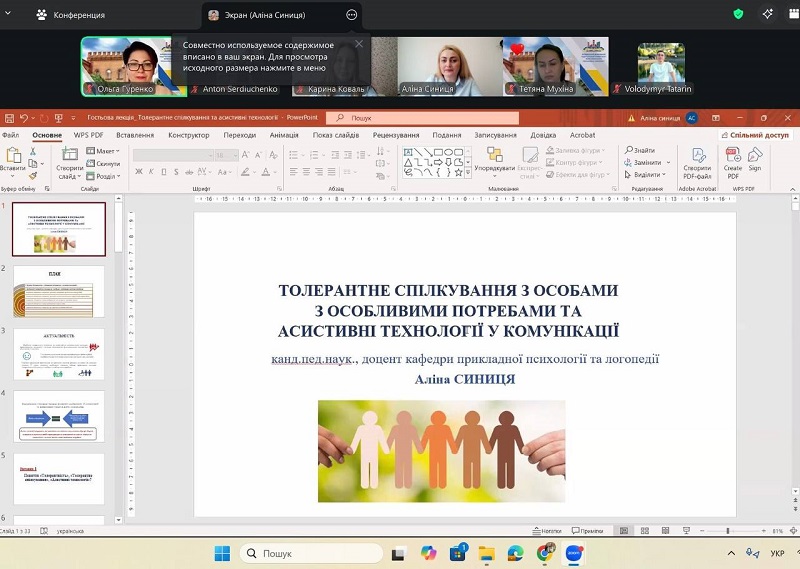
2 квітня 2026 року в межах реалізації освітньої компоненти «Інклюзивні підходи в освіті» (викладачка – докторка педагогічних наук, професорка Ольга Гуренко) для здобувачів третього (освітньо-наукового) рівня вищої освіти було організовано гостьову лекцію кандидатки педагогічних наук, доцентки кафедри прикладної психології та логопедії Аліни Синиці.
Під час лекції учасники разом зі спікеркою звернулися до осмислення понять «толерантність» і «толерантне спілкування», намагаючись не лише дати їм визначення, а й відчути їхній зміст у реальних ситуаціях взаємодії. У процесі обговорення поступово вимальовувалося розуміння того, що толерантність – це не просто прийняття іншого, а готовність будувати з ним повноцінний діалог, у якому є місце повазі, чутливості та відповідальності за власні слова й дії.
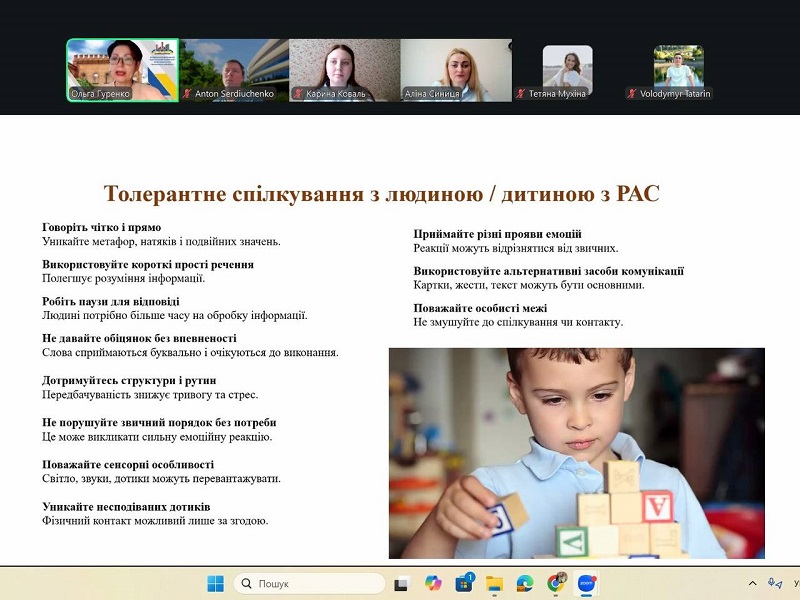
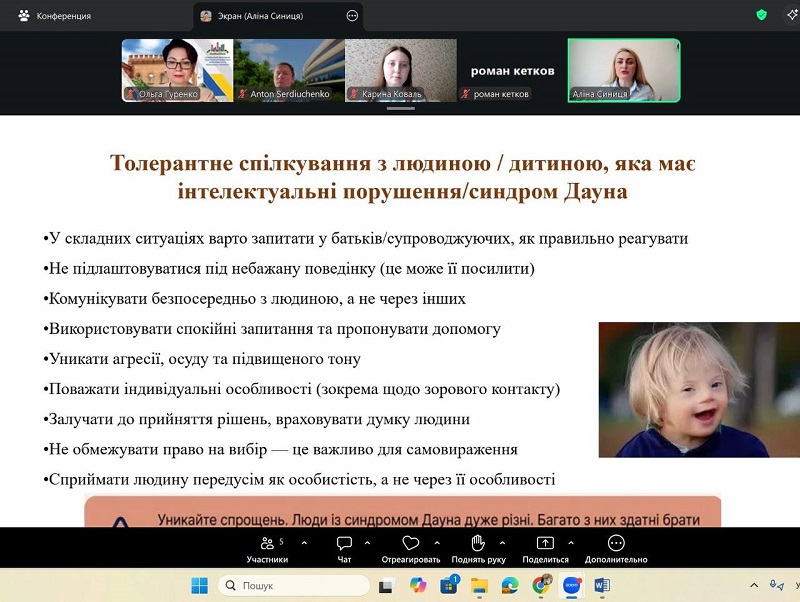
Жваву зацікавленість викликали питання взаємодії з людьми, які мають різний досвід і різні способи комунікації, зокрема з особами з розладами аутистичного спектра, дитячим церебральним паралічем, а також із тими, хто має порушення зору або слуху. Через приклади й обговорення учасники дійшли висновку, що ефективна комунікація передбачає не універсальні правила, а уважність до конкретної людини, її потреб і можливостей.
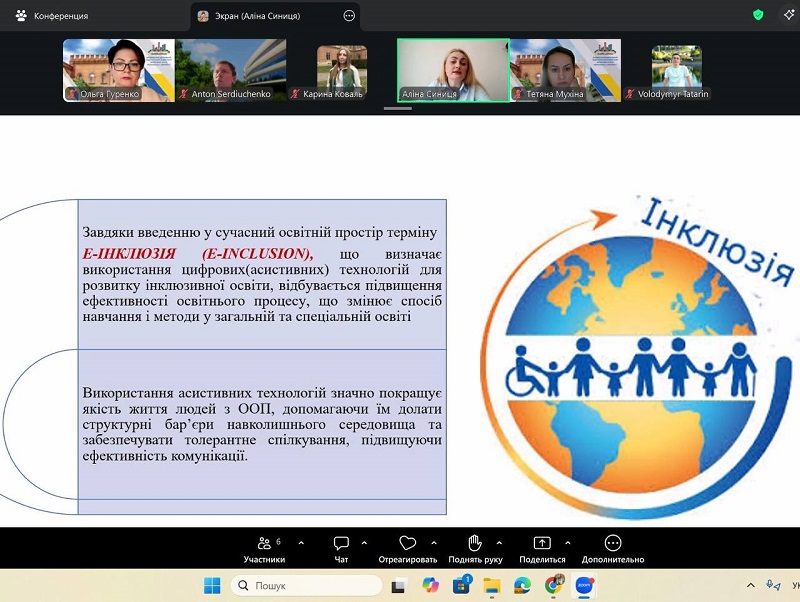
Не менш важливою частиною зустрічі стало знайомство з асистивними технологіями, які відкривають додаткові можливості для спілкування та допомагають подолати бар’єри, що виникають у взаємодії. Це дозволило подивитися на комунікацію ширше, як на процес, у якому важливу роль відіграють не лише слова, а й засоби, що роблять ці слова доступними для кожного.
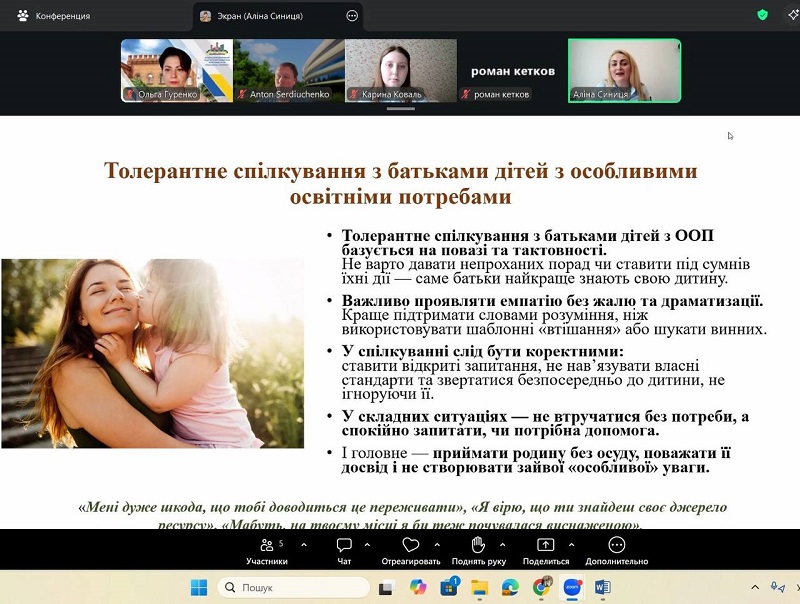
Окрему увагу під час зустрічі приділили коректному спілкуванню з батьками дітей з особливими освітніми потребами, зокрема тому, як надавати підтримку та допомогу, не порушуючи особистих меж і зберігаючи повагу до їхнього досвіду. Йшлося про важливість чутливого ставлення, уміння слухати та будувати взаємодію на засадах довіри й партнерства, адже саме така комунікація створює сприятливі умови для розвитку дитини.
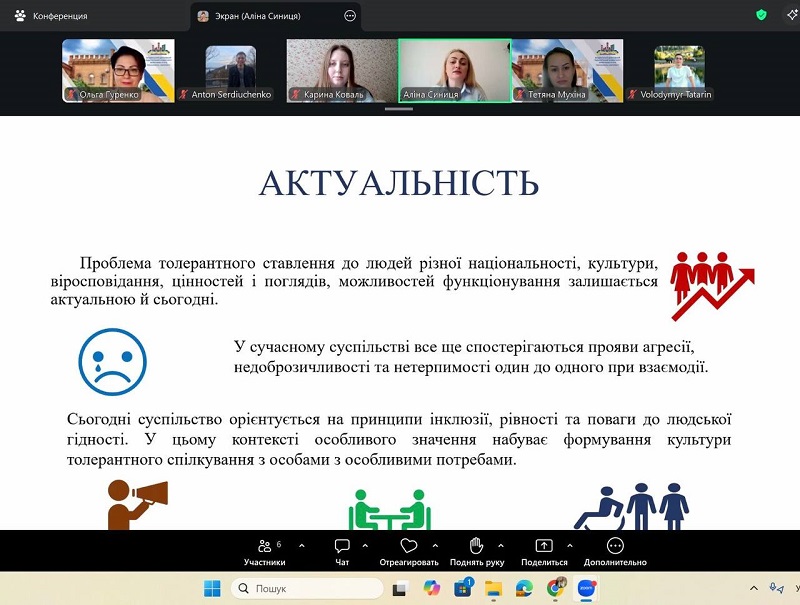
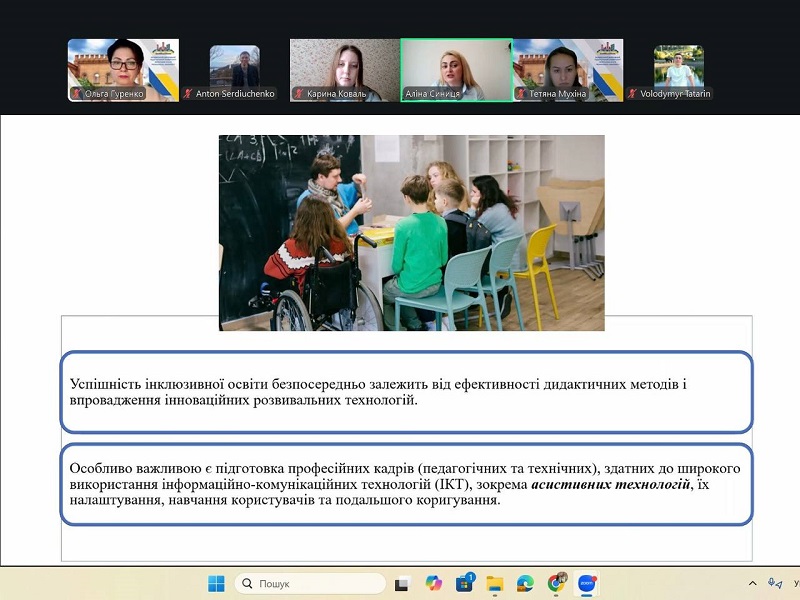
У сучасних умовах розвитку інклюзивної освіти особливої актуальності набувають питання формування культури толерантного спілкування та використання ефективних засобів комунікації з особами, які мають особливі освітні потреби. Саме тому проведений захід став важливим освітнім майданчиком для поглиблення теоретичних знань і розширення практичних уявлень студентів щодо асистивних технологій та етичних аспектів взаємодії.
За матеріалами здобувачів третього (освітньо-наукового) рівня вищої освіти
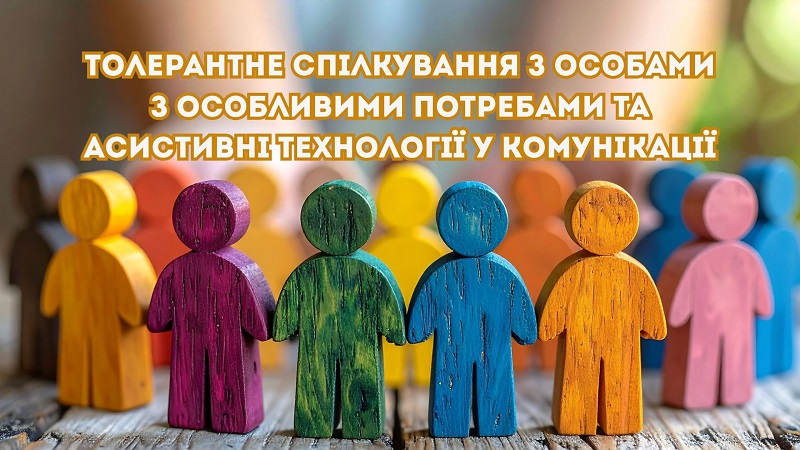
Tolerant communication with individuals with special needs and assistive technologies in communication
On April 2, 2026, within the framework of the educational component “Inclusive Approaches in Education” (lecturer – Doctor of Pedagogical Sciences, Professor Olha Hurenko), a guest lecture was organized for third-level (educational and scientific/PhD) higher education students. The lecture was delivered by Candidate of Pedagogical Sciences, Associate Professor of the Department of Applied Psychology and Speech Therapy, Alina Synytsia.
During the lecture, participants, together with the speaker, explored the concepts of “tolerance” and “tolerant communication,” seeking not only to define them but also to understand their meaning in real-life interaction contexts. Throughout the discussion, it gradually became clear that tolerance is not merely the acceptance of others, but a willingness to build meaningful dialogue that includes respect, sensitivity, and responsibility for one’s words and actions.
Particular interest was sparked by issues related to interaction with people who have diverse experiences and different ways of communication, including individuals with autism spectrum disorders, cerebral palsy, as well as those with visual or hearing impairments. Through examples and discussions, participants concluded that effective communication is not based on universal rules, but rather on attentiveness to each individual, their needs, and their capabilities.
An equally important part of the meeting was the introduction to assistive technologies, which open up additional opportunities for communication and help overcome barriers that arise in interaction. This allowed participants to view communication more broadly—as a process in which not only words matter, but also the tools that make these words accessible to everyone.
Special attention was also given to appropriate communication with parents of children with special educational needs, particularly regarding how to provide support and assistance without violating personal boundaries and while maintaining respect for their experiences. The discussion emphasized the importance of sensitivity, active listening, and building interaction based on trust and partnership, as such communication creates favorable conditions for a child’s development.
In the modern context of inclusive education development, the issues of fostering a culture of tolerant communication and using effective means of interaction with individuals who have special educational needs are becoming increasingly relevant. Therefore, the event served as an important educational platform for deepening theoretical knowledge and expanding students’ practical understanding of assistive technologies and ethical aspects of interaction.
Based on materials prepared by third-level (educational and scientific/PhD) higher education students
