Рятувальник прокату човнів надривається в гучномовець:
– Човен 99, гребіть до берега!!! Ваш час закінчився!!! Човен 99, гребіть до берега!!! Ваш час закінчився!!!
Підходить напарник і каже:
– Чого ти верещиш? У нас усього 70 човнів!
Рятувальник замислено дивиться на нього. Потім знову кричить у гучномовець:
– Човен 66!!! У Вас що – проблеми?…
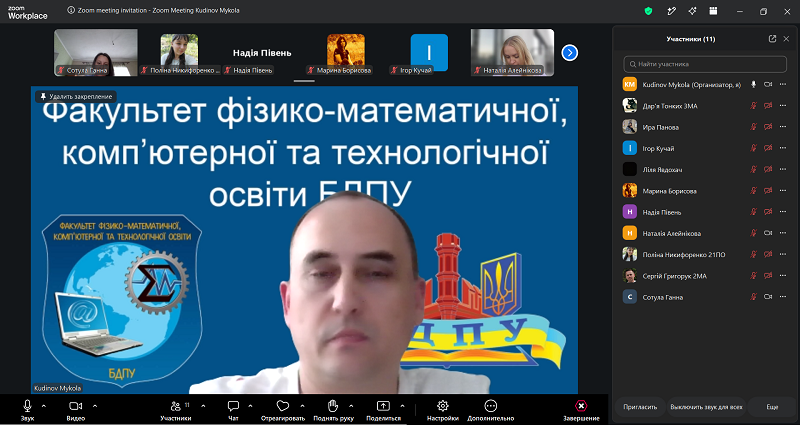
Минулого разу ми згадали математичну спадщину Леонарда Ейлера, а сьогодні, у черговий раз у межах роботи математичного гуртка факультету ФМКТО БДПУ, відбулося захопливе заняття, присвячене дивовижному світу наочної математики – теорії фігурних та трикутних чисел!
Учасники занурилися у простір, де арифметика зустрічається з геометрією, перетворюючи звичайні числа на справжні «арифметичні скульптури». На прикладі найпростіших сум натуральних рядів здобувачі освіти побачили, як звичайні точкові конфігурації народжують глибоку алгебраїчну структуру, що поєднує античну піфагорійську традицію з сучасною теорією чисел.
Заняття показало, як трикутні числа виступають фундаментальними «цеглинами» для дискретної математики та комбінаторики, закладаючи естетичний та геометричний базис для розуміння складніших математичних закономірностей.
Під час засідання учасники детально розглянули:
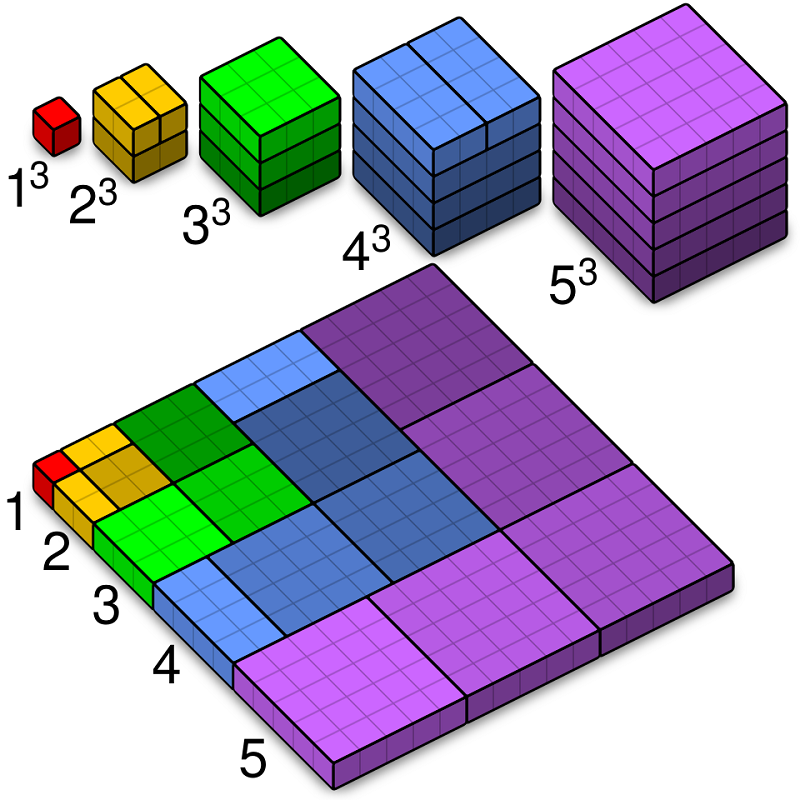
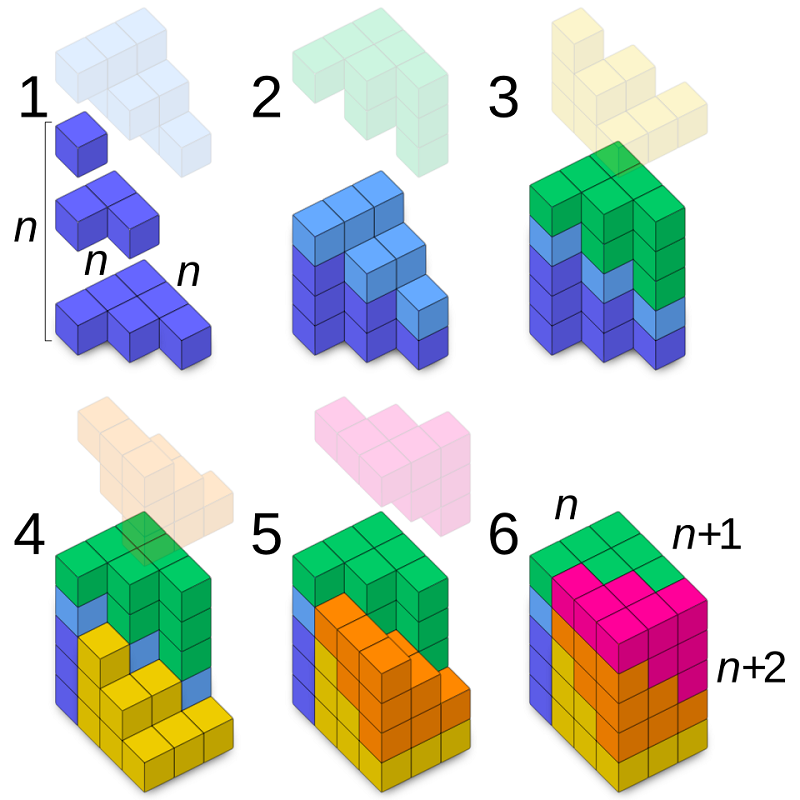
- Основи та дивовижні властивості трикутних чисел: від найпростіших точкових побудов і формули Плутарха до дивовижної теореми Нікомаха, що пов’язує куби натуральних чисел із квадратами трикутних;
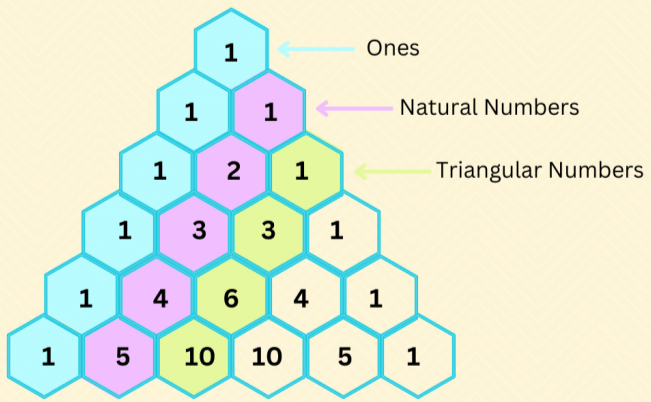
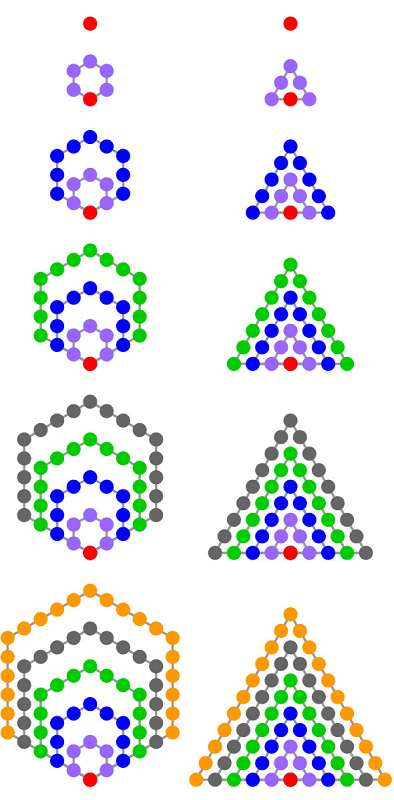
- Зв’язок із комбінаторикою та іншими фігурами: інтерпретацію трикутних чисел через біноміальні коефіцієнти та трикутник Паскаля, а також їхній геометричний взаємозв’язок із шестикутними, прямокутними та тривимірними тетраедральними числами;
- «Еврика-теорему» Гаусса: знаменитий результат про те, що будь-яке натуральне число можна подати у вигляді суми не більше ніж трьох трикутних чисел;
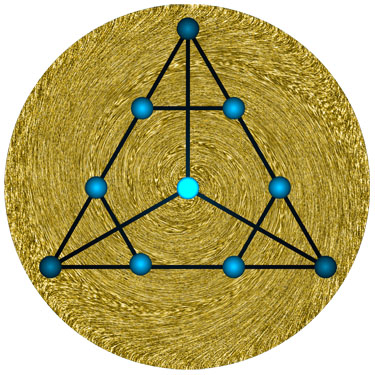
- Трикутні числа навколо нас: приклади прояву фігурних чисел у природі, криптографії, алгоритмах і навіть у боулінгу, більярд, та кількості рукостискань.
Заняття ще раз продемонструвало, як найпростіші геометричні структури здатні об’єднати наочність і строгість, відкриваючи учасникам гармонію дискретного світу.
Такі зустрічі нагадують нам, що математика – це не лише набір сухої символіки, а живе мистецтво мислення, де за кожною формулою стоїть витончена краса та досконала геометрична форма.
Повна версія: When Numbers Become Arithmetic Sculptures How Triangles Are Born from Simple Sums
За матеріалами кафедри фізики, математики та методики навчання
When Numbers Become Arithmetic Sculptures: How Triangles Are Born from Simple Sums
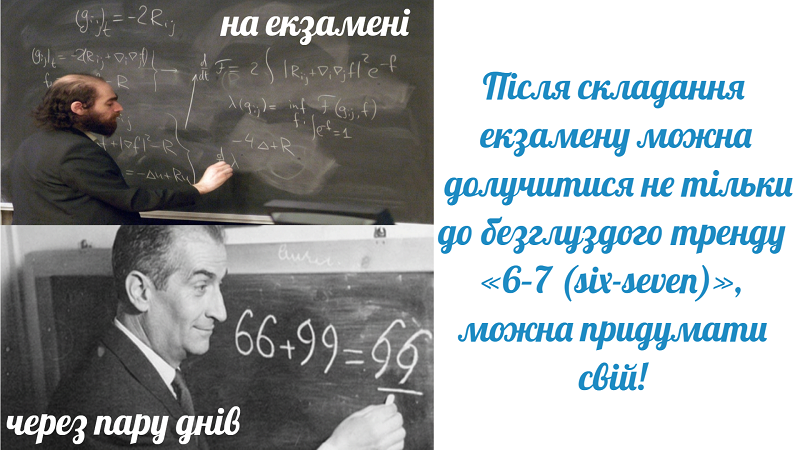
A boat rental lifeguard is screaming into a megaphone:
– Boat 99, row to the shore! Your time is up! Boat 99, row to the shore! Your time is up!
His partner walks up and says:
– What are you yelling for? We have only 70 boats!
The lifeguard looks at him thoughtfully. Then he yells into the megaphone again:
– Boat 66! Are you in trouble over there?!
Last time we recalled the mathematical legacy of Leonhard Euler, and today, as part of the ongoing activities of the student mathematics club at the Faculty of Physics, Mathematics, Computer and Technological Education (FPMCTE) of BSPU, an exciting session was held dedicated to the fascinating world of visual mathematics the theory of figurate and triangular numbers!
Participants immersed themselves in a space where arithmetic meets geometry, turning ordinary numbers into true “arithmetic sculptures.” Using the simplest sums of the sequence of natural numbers as an example, students saw how basic point configurations give rise to a deep algebraic structure that bridges ancient Pythagorean tradition with modern number theory.
The session demonstrated how triangular numbers serve as fundamental “building blocks” for discrete mathematics and combinatorics, laying an aesthetic and geometric foundation for understanding more complex mathematical patterns.
During the meeting, the participants explored in detail:
- The fundamentals and remarkable properties of triangular numbers: from basic dot patterns and Plutarch’s formula to Nicomachus’s theorem connecting the cubes of natural numbers with the squares of triangular ones;
- Connections with combinatorics and other shapes: the interpretation of triangular numbers through binomial coefficients and Pascal’s triangle, as well as their geometric relationships with hexagonal, oblong (pronic), and three-dimensional tetrahedral numbers;
- Gauss’s “Eureka Theorem”: the famous result stating that every natural number can be represented as the sum of at most three triangular numbers;
- Triangular numbers around us: real-world occurrences of figurate numbers in nature, cryptography, algorithms, and even in bowling, billiards, and counting handshakes.
The meeting once again demonstrated how the simplest geometric structures can combine visual clarity with mathematical rigor, revealing the harmony of the discrete world to the participants.
Such gatherings remind us that mathematics is not merely a set of dry symbols, but a living art of thinking, where behind every formula lies refined beauty and perfect geometric form.
Full version: When Numbers Become Arithmetic Sculptures How Triangles Are Born from Simple Sums
