Сучасна вища освіта – це не лише опанування академічних знань, а й простір для свідомого вибору власної освітньої траєкторії, професійного розвитку, наукового пошуку та партнерської взаємодії.
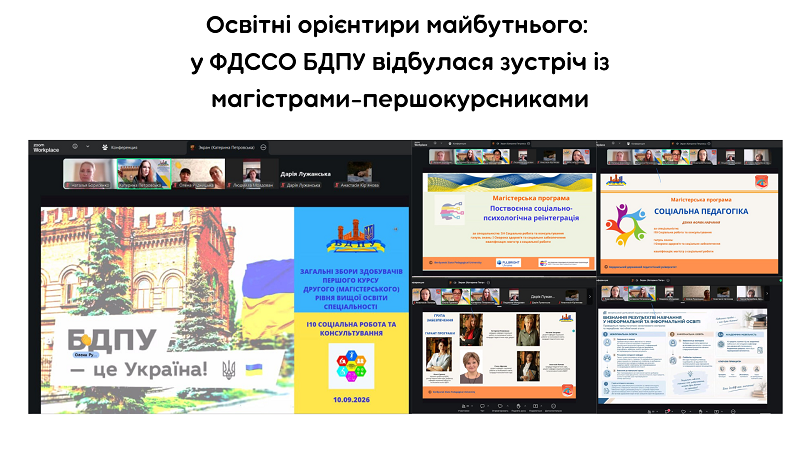
10 вересня 2026 року відбулася традиційна welcome-зустріч викладачів кафедри соціальної роботи та інклюзивної освіти зі здобувачами першого курсу другого (магістерського) рівня вищої освіти денної та заочної форм навчання, які навчаються за освітньо-професійними програмами «Поствоєнна соціально-психологічна реінтеграція» та «Соціальна педагогіка» спеціальності І10 Соціальна робота та консультування. Захід об’єднав здобувачів, колектив кафедри, гарантів освітніх програм та членів груп забезпечення для знайомства, відкритого діалогу й визначення ключових орієнтирів навчання.
Із вітальним словом до магістрів звернулася завідувачка кафедри Катерина Володимирівна Петровська, яка ознайомила присутніх з історією кафедри соціальної роботи та інклюзивної освіти, її традиціями, здобутками та сучасними напрямами освітньої, наукової і практичної діяльності. Окрему увагу було приділено знайомству з викладачами кафедри та можливостями взаємодії зі студентською спільнотою протягом навчання.
Важливою частиною зустрічі стала презентація освітніх можливостей кожної з магістерських програм. Гаранти ОПП Ольга Іванівна Гуренко та Анастасія Сергіївна Попова представили здобувачам цілі, особливості, зміст і логіку побудови освітніх програм, їхні освітні компоненти, професійне спрямування та можливості подальшого професійного й академічного розвитку.
ОПП «Поствоєнна соціально-психологічна реінтеграція» орієнтована на підготовку фахівців із соціальної роботи, здатних працювати у сфері психосоціальної підтримки, соціальної стійкості та реінтеграції осіб, сімей, соціальних груп і громад в умовах війни та поствоєнного відновлення.
ОПП «Соціальна педагогіка» спрямована на підготовку фахівців, здатних проєктувати, організовувати та реалізовувати соціально-педагогічну підтримку, супровід і соціалізацію особистості, сім’ї та соціальних груп, застосовувати сучасні технології професійної діяльності, здійснювати дослідження та впроваджувати інновації.
Окремий блок зустрічі було присвячено формуванню індивідуальної освітньої траєкторії здобувачів. Магістрам представили можливості вибору освітніх компонентів та сертифікатних програм, визнання результатів навчання, здобутих у неформальній та інформальній освіті, а також інші механізми, що дають змогу доповнювати основну освітню програму відповідно до власних професійних інтересів. Зокрема, здобувачі можуть обрати сертифікатні програми «Соціальна медіація» та «Управління соціальними закладами», вибір яких здійснюється вже у першому семестрі.
Значну увагу приділили організації освітнього процесу та правилам взаємодії. Здобувачів ознайомили з особливостями дистанційного навчання, синхронної та асинхронної комунікації, використанням Moodle і Zoom, правилами онлайн-взаємодії та комунікації в месенджерах. Було окреслено основні канали комунікації з викладачами та організаційні принципи, які допоможуть зробити навчання системним, зрозумілим і комфортним для здобувачів обох форм навчання.
Не менш важливим стало ознайомлення магістрів з основними нормативними документами, що регулюють освітній процес у БДПУ, а також із правами, можливостями й обов’язками здобувачів вищої освіти. Особливу увагу звернули на принципи академічної доброчесності, правила виконання навчальних і кваліфікаційних робіт та відповідальність усіх учасників освітнього процесу за дотримання академічних стандартів.
Окремий змістовий блок було присвячено майбутній кваліфікаційній роботі. Магістрам представили нормативні та методичні документи, що регламентують її підготовку, ознайомили з основними етапами роботи та важливими організаційними термінами.
Здобувачі також познайомилися з потенційними науковими керівниками та механізмом їх вибору. Особливий акцент було зроблено на тому, що вибір наукового керівника та тематики дослідження має здійснюватися з урахуванням власних наукових і професійних інтересів здобувача та наукової проблематики викладачів. Такий підхід дає можливість уже з першого семестру вибудовувати індивідуальний напрям дослідницької роботи та поступово готуватися до виконання кваліфікаційної роботи.
Окремим напрямом стало обговорення можливостей для активної участі здобувачів в університетському житті та їхнього професійного й особистісного розвитку. Магістрів ознайомили з можливостями участі у студентському самоврядуванні, діяльності Ради молодих учених факультету, студентських наукових гуртках, освітніх, наукових і комунікаційних заходах. Наголошено також на можливостях розвитку soft skills, розширення професійних контактів, реалізації власних ініціатив та долучення до різних форматів позааудиторної діяльності. Про актуальні заходи, ініціативи та можливості здобувачі регулярно отримуватимуть інформацію через визначені канали комунікації.
Зустріч стала також простором для зворотного зв’язку: магістри мали можливість поставити запитання, уточнити організаційні аспекти навчання, обговорити власні освітні й наукові інтереси та визначити найближчі кроки на початку навчального року.
Welcome-зустріч стала першим кроком до формування спільного освітнього простору, у якому здобувач не лише навчається за визначеною програмою, а й усвідомлено формує власну освітню траєкторію, обирає напрями професійного та наукового розвитку, користується можливостями університету й бере активну участь в освітньому процесі.
Попереду на магістрів чекають навчання, професійні дискусії, дослідницькі пошуки та нові можливості. Бажаємо нашим першокурсникам упевненого старту, натхнення, професійного зростання та успішної реалізації власних освітніх і наукових задумів!
За матеріалами кафедри соціальної роботи та інклюзивної освіти
Educational Pathways for the Future: FPESE BSU Welcomes First-Year Master’s Students
Modern higher education is not only about acquiring academic knowledge; it is also a space for making informed choices about one’s individual educational pathway, pursuing professional development and research, and building partnerships.
On 10 September 2026, the Department of Social Work and Inclusive Education held its traditional welcome meeting with first-year students pursuing the second (Master’s) level of higher education in both full-time and part-time modes of study under the educational and professional programmes “Post-War Socio-Psychological Reintegration” and “Social Pedagogy”, within speciality I10 Social Work and Counselling. The event brought together students, the Department’s academic staff, programme guarantors, and members of the programme support teams for introductions, open dialogue, and discussion of the key priorities and directions for their studies.
The Master’s students were welcomed by Kateryna Petrovska, Head of the Department, who introduced them to the history of the Department of Social Work and Inclusive Education, its traditions and achievements, as well as its current educational, research, and practice-oriented activities. Particular attention was paid to introducing the Department’s academic staff and the opportunities for interaction within the student community throughout the period of study.
An important part of the meeting was the presentation of the educational opportunities offered by each Master’s programme. Programme guarantors Olha Hurenko and Anastasiia Popova presented the programmes’ aims, distinctive features, content and structure, educational components, professional focus, and opportunities for further professional and academic development.
The educational and professional programme “Post-War Socio-Psychological Reintegration” is designed to train social work professionals capable of working in the areas of psychosocial support, social resilience, and the reintegration of individuals, families, social groups, and communities in the context of war and post-war recovery.
The educational and professional programme “Social Pedagogy” aims to train professionals capable of designing, organising, and delivering socio-pedagogical support, assistance, and socialisation for individuals, families, and social groups; applying contemporary technologies in professional practice; conducting research; and implementing innovations.
A separate part of the meeting focused on the development of students’ individual educational pathways. Master’s students were introduced to opportunities for choosing educational components and certificate programmes, the recognition of learning outcomes acquired through non-formal and informal education, and other mechanisms enabling them to complement their core educational programme in accordance with their individual professional interests. In particular, students may choose the certificate programmes “Social Mediation” and “Management of Social Institutions”, with the choice being made during the first semester.
Considerable attention was also given to the organisation of the educational process and the rules of interaction. Students were introduced to the specifics of distance learning, synchronous and asynchronous communication, the use of Moodle and Zoom, and the rules for online interaction and communication via messaging platforms. The main channels of communication with academic staff and the organisational principles designed to make the learning process systematic, clear, and comfortable for students in both modes of study were outlined.
Equally important was familiarising the Master’s students with the key regulatory documents governing the educational process at BSU, as well as with the rights, opportunities, and responsibilities of higher education students. Particular attention was paid to the principles of academic integrity, the requirements for completing academic assignments and qualification works, and the responsibility of all participants in the educational process to uphold academic standards.
A separate thematic section was devoted to the students’ future qualification works. The Master’s students were introduced to the regulatory and methodological documents governing their preparation, the main stages of the process, and important organisational deadlines.
Students were also introduced to potential research supervisors and the procedure for selecting a supervisor. Particular emphasis was placed on ensuring that the choice of supervisor and research topic takes into account both the student’s own academic and professional interests and the research areas of the academic staff. This approach enables students to develop an individual research direction from the very first semester and to prepare progressively for completing their qualification work.
Another focus of the meeting was the discussion of opportunities for students to participate actively in university life and pursue their professional and personal development. Master’s students learned about opportunities to participate in student self-government, the activities of the Faculty Council of Young Scientists, student research groups, and educational, research, and communication events. Attention was also drawn to opportunities for developing soft skills, expanding professional networks, implementing their own initiatives, and engaging in various forms of extracurricular activity. Students will regularly receive information about current events, initiatives, and opportunities through the designated communication channels.
The meeting also provided a space for feedback and open dialogue: Master’s students had the opportunity to ask questions, clarify organisational aspects of their studies, discuss their educational and research interests, and identify their next steps at the beginning of the academic year.
The welcome meeting marked the first step towards building a shared educational environment in which students not only follow a defined programme but also consciously shape their own educational pathways, choose directions for professional and research development, make use of the opportunities offered by the University, and actively participate in the educational process.
The Master’s students now have a period of learning, professional discussions, research exploration, and new opportunities ahead of them. We wish our first-year students a confident start, inspiration, professional growth, and every success in bringing their educational and research ideas to life!
Based on materials provided by
the Department of Social Work and Inclusive Education
