Щодня ми гортаємо стрічки, слухаємо музику, читаємо новини й коментарі, часто не помічаючи, як усе це впливає на наші думки, звички й рішення. В умовах війни, коли інформаційний простір став ще одним фронтом, уміння перевіряти джерела, розпізнавати маніпуляції та відповідально поводитися в мережі стає необхідністю. Саме тому інформаційна гігієна – одна з ключових навичок сучасної людини.
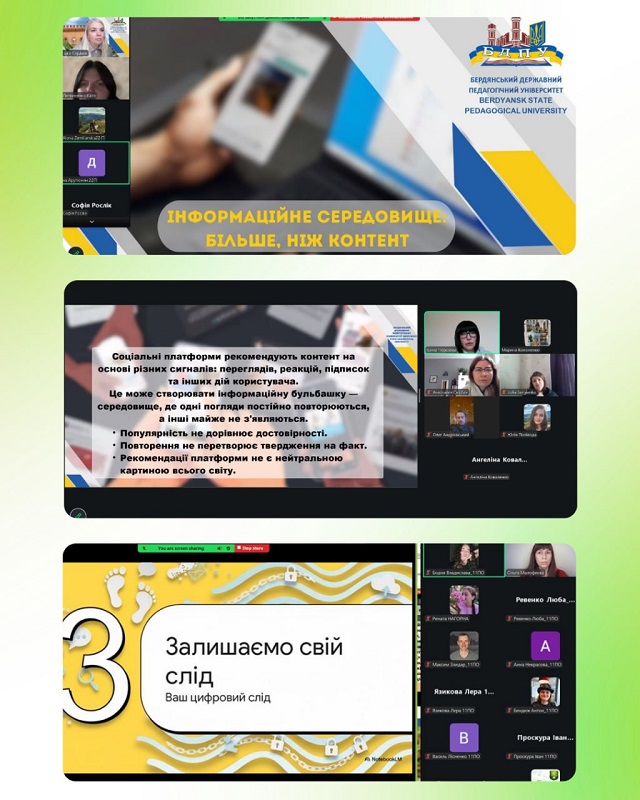
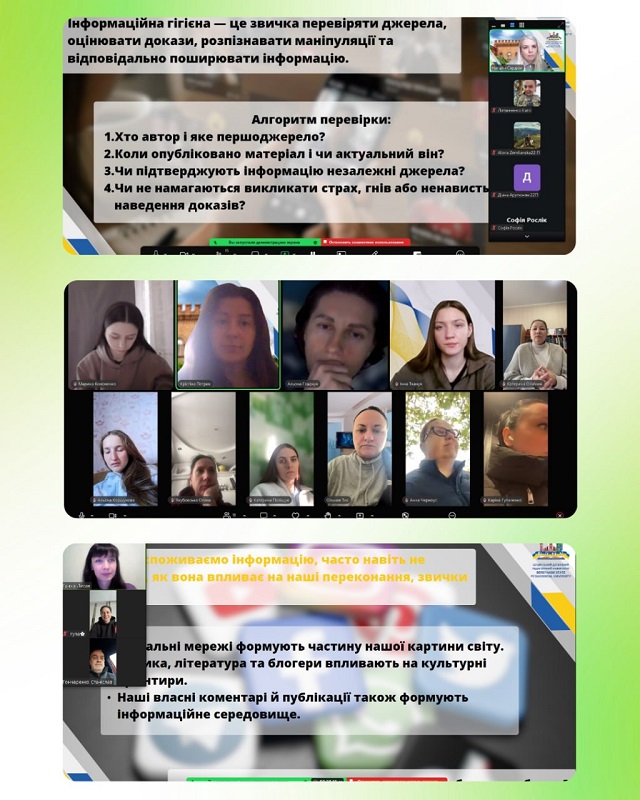
З огляду на це на факультеті психолого-педагогічної освіти та мистецтв Бердянського державного педагогічного університету в академічних групах відбулися виховні години на тему «Інформаційне середовище: більше, ніж контент». Разом із кураторами здобувачі освіти говорили про те, як формується наше інформаційне середовище і яку роль у цьому відіграє кожен із нас.
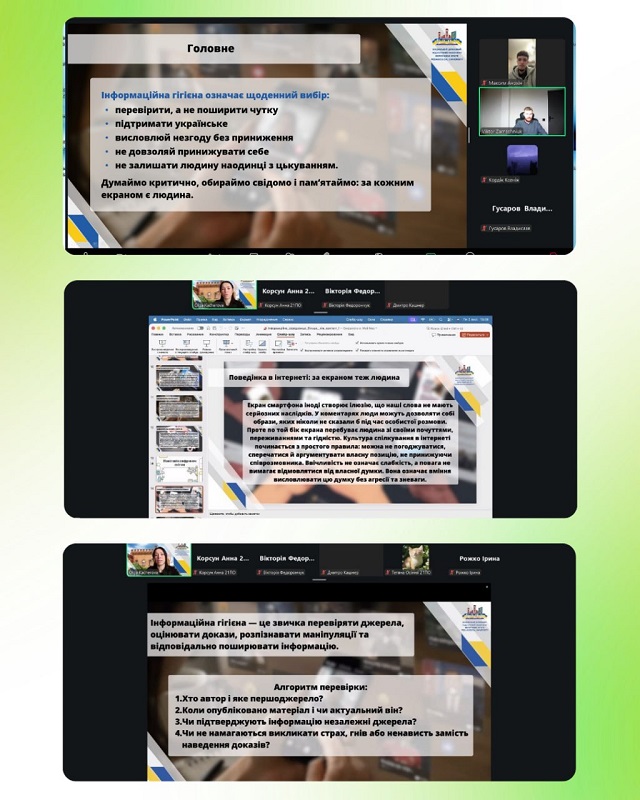
Учасники обговорили, як алгоритми соціальних мереж добирають контент і чому через це виникають інформаційні бульбашки, у яких одні погляди постійно повторюються, а інші майже не з’являються. Окремо зупинилися на правилах перевірки інформації: хто автор і яке першоджерело, чи актуальний матеріал, чи підтверджують його незалежні джерела і чи не намагаються замість доказів викликати страх або гнів.
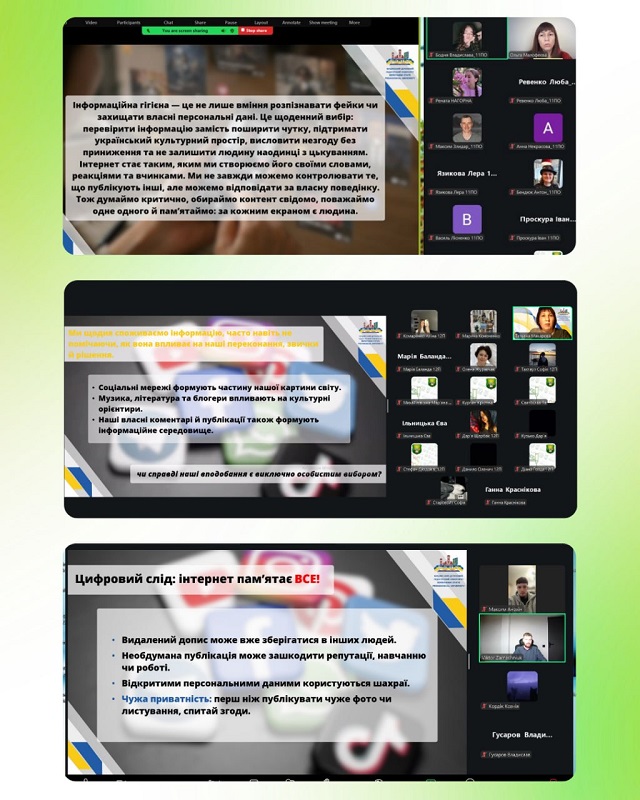
Важливою частиною розмови стала тема свідомого вибору контенту. Говорили про те, що кожен перегляд, лайк і поширення допомагає матеріалу ставати популярнішим, а підтримка української музики, літератури, кіно й незалежних авторів розвиває наш культурний простір.
Також ішлося про цифровий слід і приватність, культуру спілкування в мережі, різницю між конструктивною критикою, хейтом і тролінгом, а також про кібербулінг і те, як діяти, якщо зіткнувся з цькуванням. Тематичні відео допомогли краще зрозуміти механізми інформаційної війни та маніпуляцій.
Підсумок зустрічей простий: інтернет стає таким, яким ми творимо його своїми словами, реакціями та вчинками. Тож думаймо критично, обираймо контент свідомо, поважаймо одне одного й пам’ятаймо, що за кожним екраном є людина.
Дякуємо кураторам і студентам за щиру та змістовну розмову!
За матеріалами ФППОМ
Information hygiene as an everyday choice
Every day we scroll through feeds, listen to music, and read news and comments, often without noticing how all of this shapes our thoughts, habits and decisions. In wartime, when the information space has become another front line, the ability to check sources, recognize manipulation and behave responsibly online is a necessity. That is why information hygiene is one of the key skills a person needs today.
With this in mind, the Faculty of Psychological and Pedagogical Education and Arts at Berdiansk State Pedagogical University held group sessions for its academic groups on the topic “The Information Environment: More Than Content.” Together with their group curators, students discussed how our information environment takes shape and what role each of us plays in it.
Participants talked about how social media algorithms select content and why this creates information bubbles, where some views keep repeating while others hardly appear at all. They also looked at how to check information: who the author is and what the original source is, whether the material is up to date, whether independent sources confirm it, and whether it tries to stir up fear or anger instead of offering evidence.
An important part of the conversation was about choosing content consciously. Students discussed how every view, like and share helps content become more popular, and how supporting Ukrainian music, literature, film and independent creators strengthens our cultural space.
The sessions also covered digital footprints and privacy, online communication culture, and the difference between constructive criticism, hate speech and trolling. They covered cyberbullying as well, including what to do if you face it. Themed videos helped participants better understand how information warfare and manipulation work.
The takeaway was simple: the internet becomes what we make it through our words, reactions and actions. So let’s think critically, choose content consciously, respect one another, and remember that there is a person behind every screen.
We thank the curators and students for a sincere and meaningful conversation!
Based on materials from the FPPEA
