
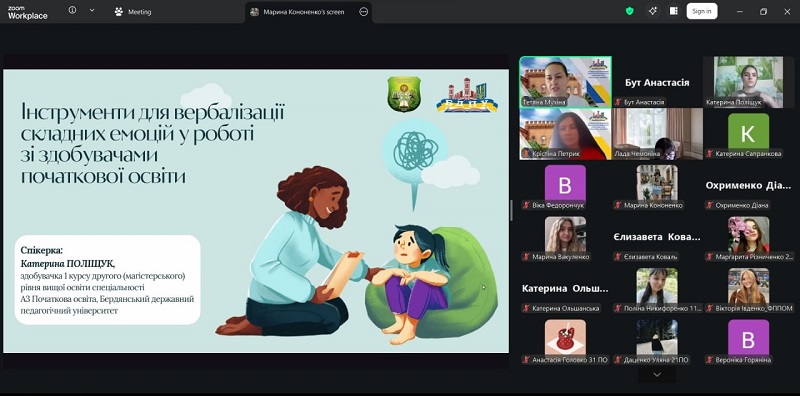
Сучасна психологія та нейропедагогіка одностайні: здатність називати власні емоції – це не вроджена риса, а навичка, яку можна і треба розвивати. Саме навколо цієї ідеї був побудований воркшоп «Інструменти для вербалізації складних емоцій у роботі зі здобувачами початкової освіти», організований Радою молодих учених факультету психолого-педагогічної освіти та мистецтв БДПУ. Спікеркою виступила Катерина Поліщук, членкиня РМУ ФППОМ, здобувачка другого (магістерського) рівня вищої освіти спеціальності «Початкова освіта».
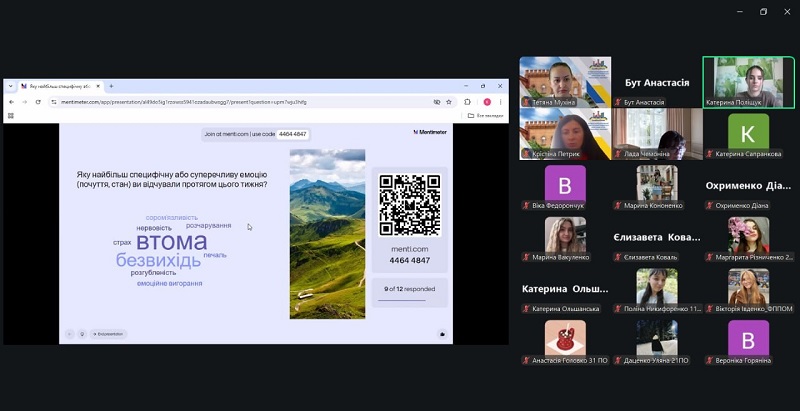
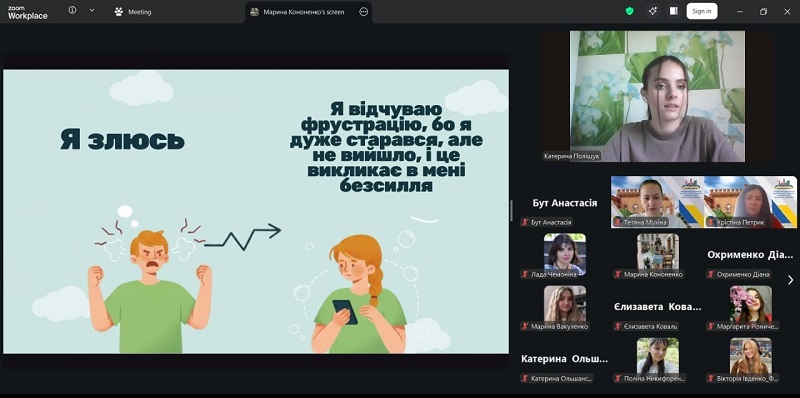
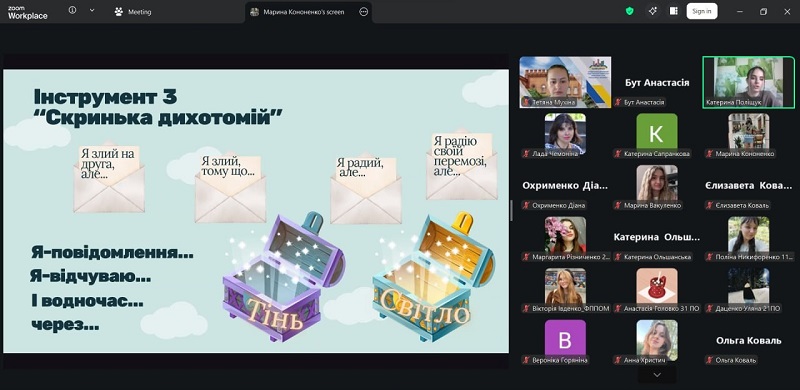
Під час зустрічі слухачі поглибили розуміння ключової тези: поведінкові реакції молодшого школяра найчастіше є лише наслідком відсутності емоційного словника. Через інтерактивні вправи, практичні техніки та спільне обговорення вони вчилися розпізнавати складні емоції, диференціювати їх відтінки та допомагати учням знаходити точні слова для внутрішніх станів.
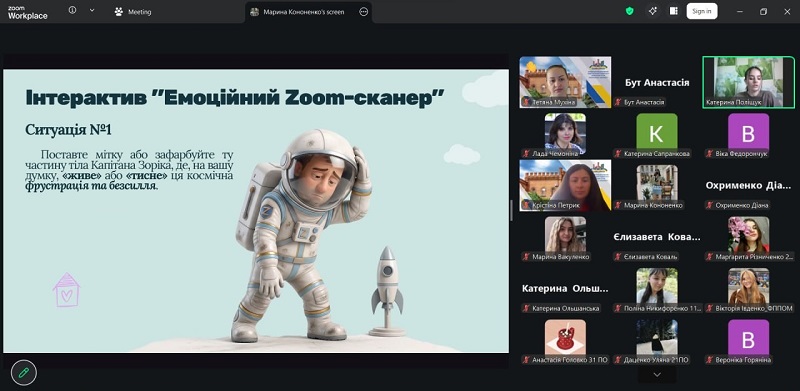
Особливу зацікавленість викликала робота з тілесними маркерами емоцій: учасники досліджували, де в тілі «живе» фрустрація, а де «палає» сором – і переконалися, що тіло знає відповідь навіть тоді, коли слів ще немає.
Захід завершився спільним висновком: вміння допомогти дитині назвати свій емоційний стан – це не додаток до педагогічної майстерності, а її серце. Адже вербалізація – це контроль: коли учень може висловити емоцію словами, напруга знижується, а усвідомлення зростає. І саме уважний, емоційно грамотний дорослий поруч є найпотужнішим інструментом у цій роботі.
За матеріалами Ради молодих учених ФППОМ БДПУ
Emotional literacy in the work of the modern educator and psychologist
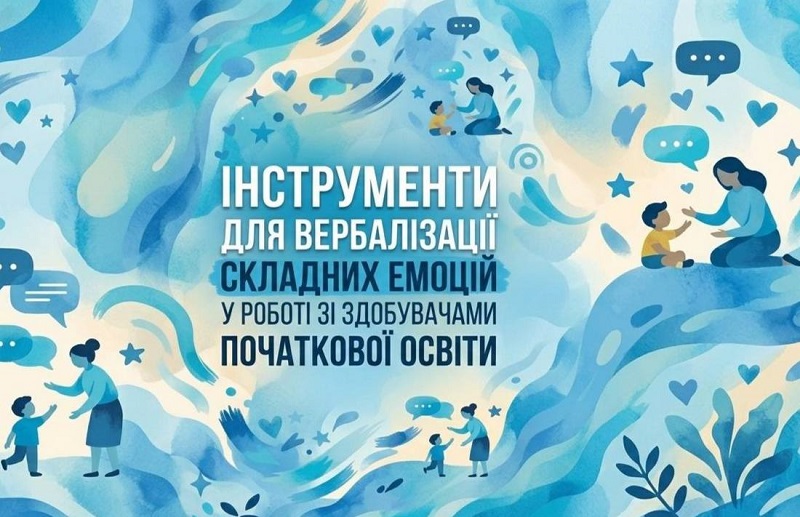
Modern psychology and neuropedagogy are unanimous: the ability to name one’s own emotions is not an innate trait, but a skill that can and must be developed. It was around this idea that the workshop «Tools for Verbalizing Complex Emotions in Working with Primary Education Students» was built, organized by the Young Scientists Council of the Faculty of Psychological-Pedagogical Education and Arts of BSPU. The speaker was Kateryna Polishchuk, a member of the YSC FPPEA, a second (master’s) level student majoring in Primary Education.
During the session, attendees deepened their understanding of a key premise: the behavioral reactions of younger schoolchildren are most often simply a consequence of the absence of an emotional vocabulary. Through interactive exercises, practical techniques, and group discussion, they learned to recognize complex emotions, differentiate their nuances, and help pupils find precise words for their inner states.
Particular interest was sparked by the work with bodily markers of emotions: participants explored where frustration «lives» in the body and where shame «burns» – and discovered that the body knows the answer even when words are not yet available.
The event concluded with a shared insight: the ability to help a younger student name their emotional state is not an addition to pedagogical excellence, but its very heart. Verbalization is control – when a pupil can express an emotion in words, tension decreases and awareness grows. And it is the attentive, emotionally literate adult nearby who remains the most powerful tool in this work.
Based on materials from the Young Scientists Council of FPPEA BSPU
