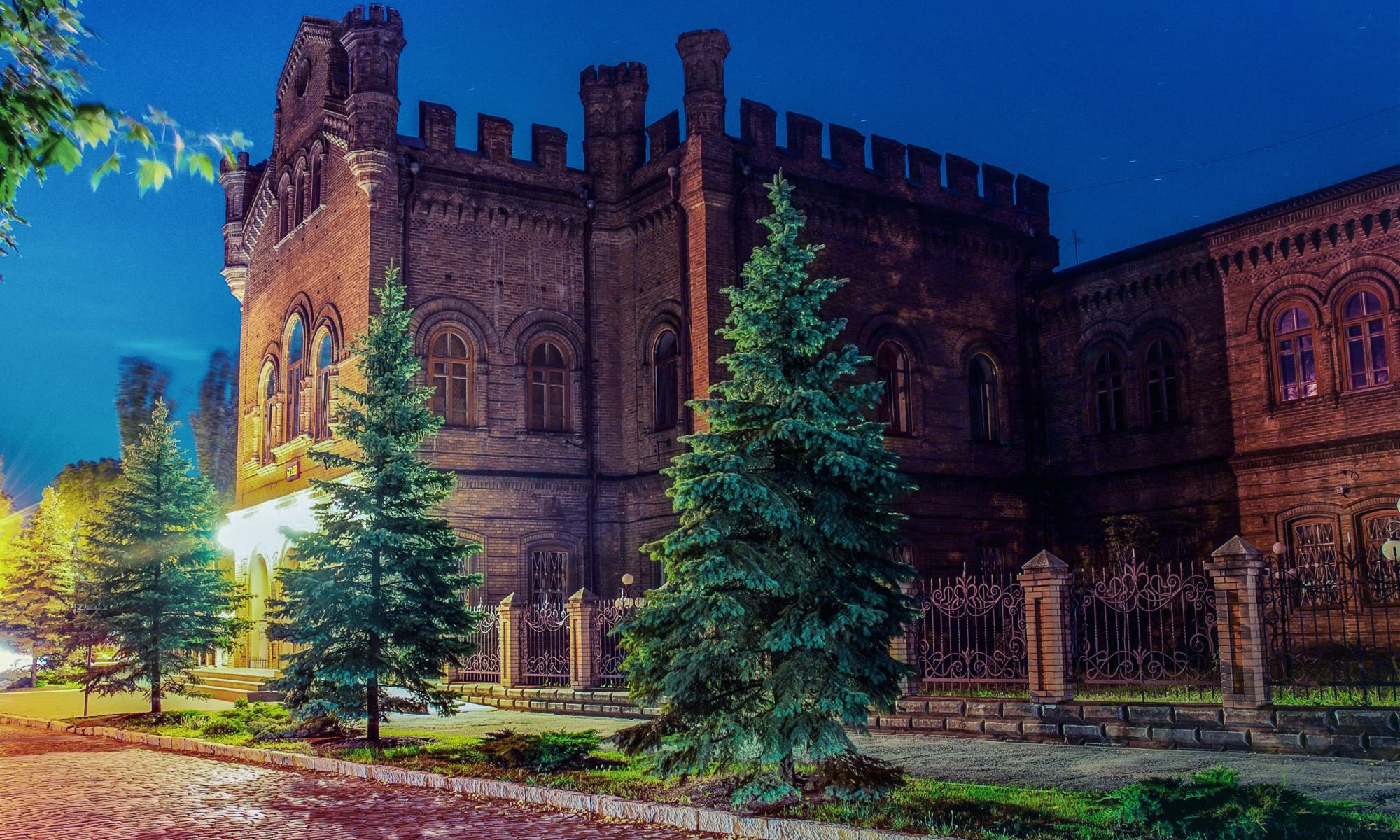
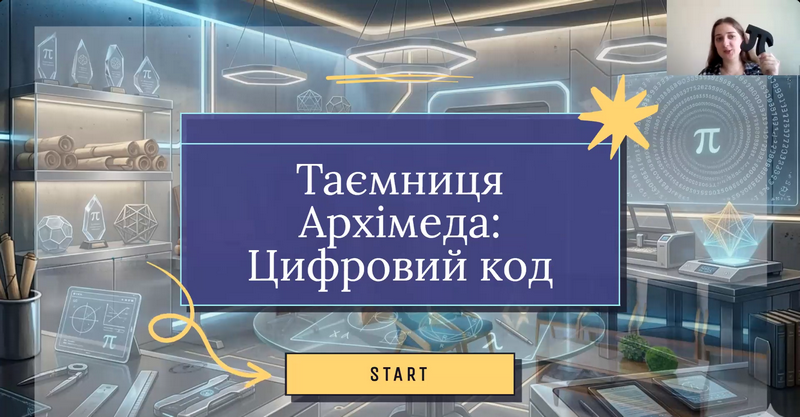
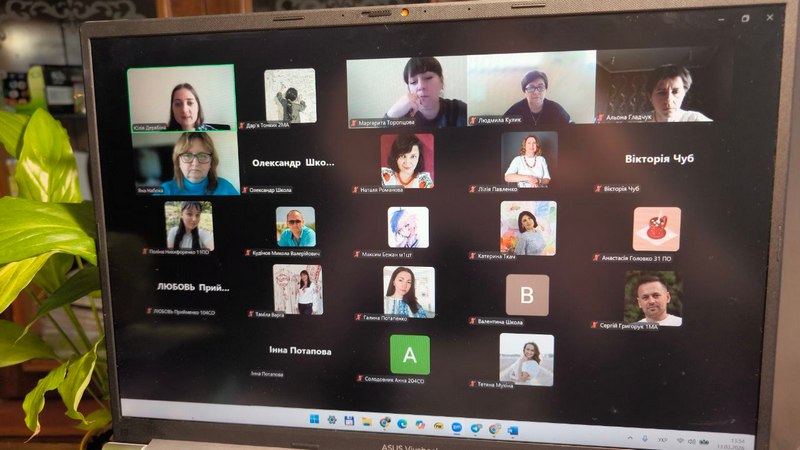
13 березня факультет фізико-математичної, комп’ютерної та технологічної освіти вкотре довів, що навчання може бути справжньою пригодою. На платформі Zoom відбувся захоплюючий онлайн-квест «Таємниця Архімеда: цифровий код», який об’єднав енергійних здобувачів різних спеціальностей навколо магії математики. Організатором заходу стала асистентка кафедри фізики, математики та методики навчання Юлія Дерябіна.
Сюжет заходу переніс учасників у незвичайні обставини: вони опинилися у «замкненій» віртуальній лабораторії загадкового Професора Пі. Щоб знайти вихід і підібрати секретний цифровий код, студенти мали пройти через низку інтелектуальних випробувань. Програма квесту була насиченою та неординарною: учасники займалися інтелектуальним детективом, розгадуючи цікаві факти та занурюючись у багатовікову історію найвідомішої математичної константи, а також перейшли до експериментальної зони, де власноруч вимірювали число Пі, переконуючись у його незмінності та досконалості. Особливо захоплюючою стала творча майстерня, де на перетині дисциплін здобувачі складали тематичні «пі-вірші» та навіть слухали дивовижну музику, створену за цифрами числа Пі. Логічний штурм та розв’язання нестандартних задач стали ключем до отримання підказок, що крок за кроком наближали команди до фіналу.
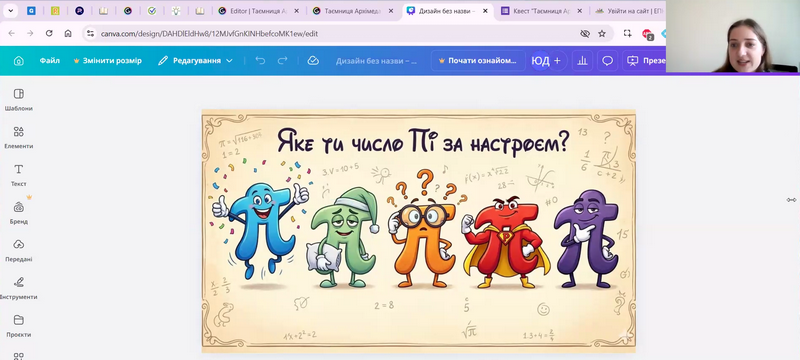
Розгадавши всі таємниці та зібравши частини коду, учасники успішно «вийшли» з лабораторії. Такі заходи вкотре демонструють, що завдяки креативному підходу математика відкривається як неймовірно цікава та жива наука, яка виходить далеко за межі звичайних підручників і формул. На завершення зустрічі було проведено інтерактивну рефлексію «Яке ти число Пі сьогодні?», під час якої здобувачі поділилися позитивними емоціями та натхненням.
Дякуємо всім учасникам за активність, допитливість та готовність до викликів. Разом ми вкотре довели, що для справжніх дослідників не існує зачинених дверей!
За матеріалами факультету фізико–математичної,
комп’ютерної та технологічної освіти
More Than Just Numbers: The Magic of Pi in Archimedes’ Virtual Laboratory
On March 13, the Faculty of Physics, Mathematics, Computer, and Technological Education once again proved that learning can be a true adventure. The captivating online quest “Archimedes’ Mystery: Digital Code” was held on the Zoom platform, bringing together energetic students from various specialties to explore the magic of mathematics. The event was organized by Yulia Deriabina, Assistant at the Department of Physics, Mathematics, and Teaching Methodology.
The plot of the quest transported participants into an extraordinary setting: they found themselves “locked” in the mysterious virtual laboratory of Professor Pi. To find the exit and crack the secret digital code, students had to pass a series of intellectual challenges. The program was both rich and unconventional: participants engaged in intellectual detective work, uncovering fascinating facts and diving into the centuries-old history of the world’s most famous mathematical constant. They also moved to the experimental zone, where they manually measured the number Pi, witnessing its consistency and perfection firsthand. A particularly captivating part of the event was the creative workshop, where at the intersection of disciplines, students composed “Pi-poems” and even listened to the amazing music created from the digits of Pi. Logical brainstorming and solving non-standard problems became the key to obtaining clues that brought the teams step-by-step closer to the finale.
Having solved all the mysteries and collected the parts of the code, the participants successfully “exited” the laboratory. Such events demonstrate once again that through a creative approach, mathematics reveals itself as an incredibly interesting and living science that goes far beyond the boundaries of ordinary textbooks and formulas. At the conclusion of the meeting, an interactive reflection titled “Which Pi Digit Are You Today?” was held, during which students shared positive emotions and inspiration.
We thank all participants for their activity, curiosity, and readiness for challenges. Together, we have proven once again that for true researchers, there are no locked doors!
Based on materials from the Faculty of Physics,
Mathematics, Computer, and Technological Education
