
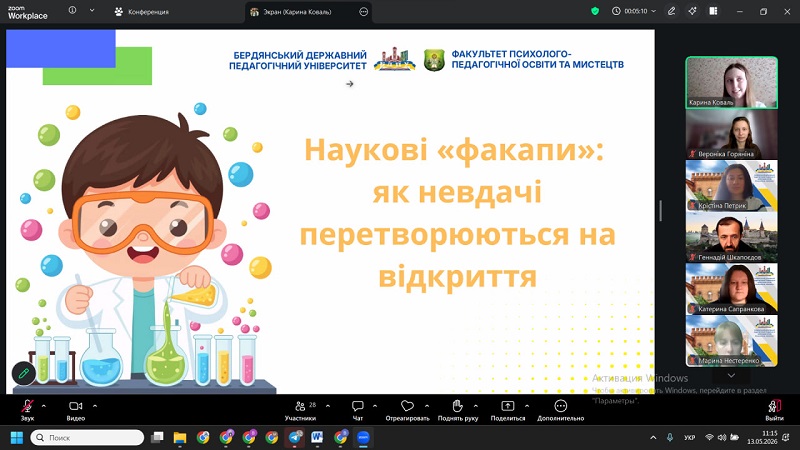
13 травня 2026 року на факультеті психолого-педагогічної освіти та мистецтв Бердянського державного педагогічного університету відбувся науково-популярний захід «Наукові «факапи»: як невдачі перетворюються на відкриття» (спікер – асистентка кафедри педагогіки Карина Коваль).
Під час зустрічі учасники зосередили увагу на важливій, але часто недооцінюваній складовій наукової діяльності – помилках, невдалих експериментах, хибних гіпотезах та ситуаціях, коли отримані результати не відповідають очікуванням дослідника. Було підкреслено, що науковий процес за своєю природою є нелінійним і передбачає багатоетапний пошук, перевірку гіпотез, уточнення результатів та їх критичне переосмислення.
Окремо акцентовано, що помилка є не відхиленням від наукової норми, а органічною частиною дослідницької практики. Вона виконує важливу методологічну та пізнавальну функцію, сприяючи розвитку критичного мислення, формуванню дослідницької гнучкості та здатності до наукової рефлексії. Саме аналіз невдалих результатів часто стає підґрунтям для формулювання нових наукових ідей і вдосконалення дослідницьких підходів.
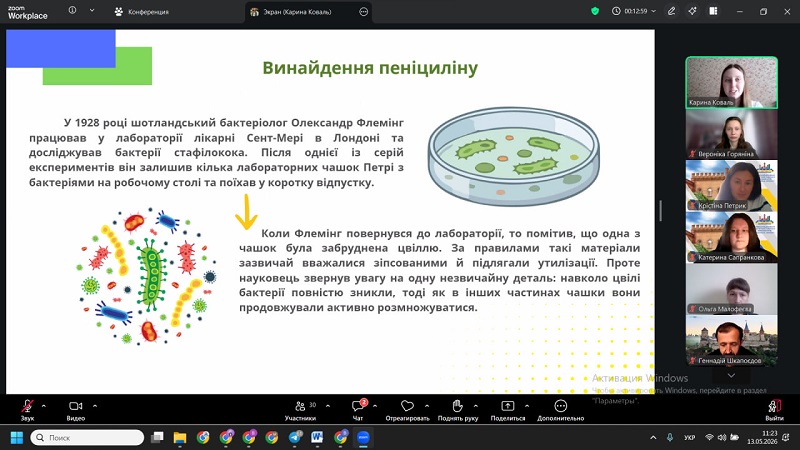
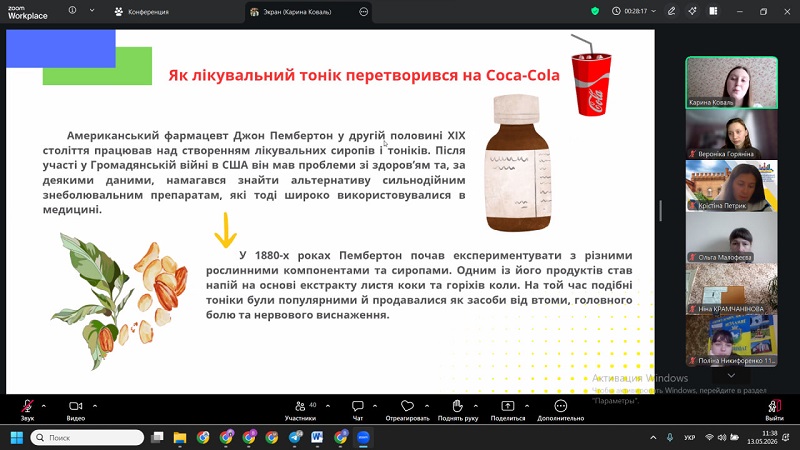
У межах заходу були розглянуті класичні приклади з історії науки, коли випадкові спостереження або нетипові експериментальні результати стали поштовхом до значущих відкриттів у медицині, технологіях та промисловості. Це дозволило учасникам простежити, як елемент випадковості у поєднанні з науковою уважністю та аналітичним мисленням може змінювати траєкторію досліджень.
Важливим компонентом обговорення стали психологічні аспекти ставлення до помилок у науковій та освітній діяльності. Учасники проаналізували чинники формування страху невдач, зокрема вплив соціального оцінювання, академічних вимог та особистісних установок. Окрему увагу приділено концепції «мислення зростання», яка передбачає сприйняття помилки як ресурсу для навчання, розвитку та професійного вдосконалення.
За підсумками зустрічі було констатовано, що помилки є невід’ємною складовою наукового пошуку, а їх системний аналіз та осмислення становлять важливий етап формування дослідницької компетентності та професійного становлення науковця.


За матеріалами кафедри педагогіки
Scientific “Fails”: How Mistakes Turn into Discoveries
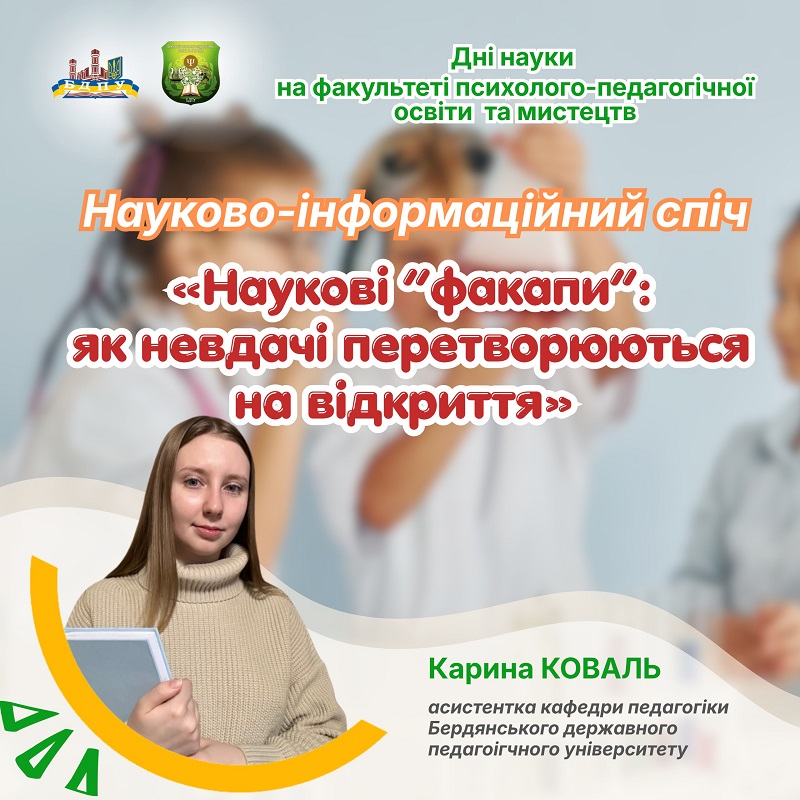
On May 13, 2026, the Faculty of Psychological and Pedagogical Education and Arts of Berdуansk State Pedagogical University hosted a popular science event titled “Scientific ‘Fails’: How Mistakes Turn into Discoveries” (speaker Karina Koval, Assistant Lecturer of the Department of Pedagogy).
During the meeting, participants focused on an important yet often underestimated component of scientific activity mistakes, unsuccessful experiments, incorrect hypotheses, and situations in which research results do not meet the expectations of the researcher. It was emphasized that the scientific process is inherently non-linear and involves a multi-stage search, hypothesis testing, refinement of results, and their critical reconsideration.
Special attention was paid to the idea that mistakes are not a deviation from scientific norms, but rather an organic part of research practice. They perform an important methodological and cognitive function, contributing to the development of critical thinking, research flexibility, and the ability to engage in scientific reflection. It is often the analysis of unsuccessful results that becomes the basis for formulating new scientific ideas and improving research approaches.
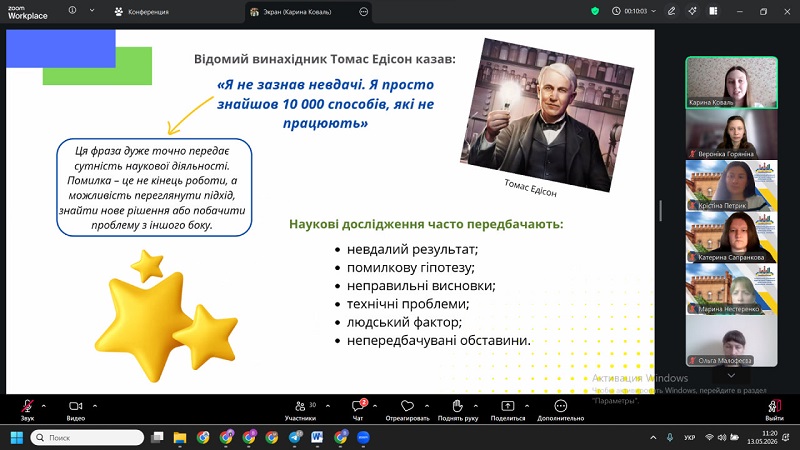
As part of the event, participants examined classic examples from the history of science where accidental observations or unusual experimental results led to significant discoveries in medicine, technology, and industry. This enabled attendees to trace how elements of chance, combined with scientific attentiveness and analytical thinking, can change the trajectory of research.
An important component of the discussion focused on the psychological aspects of attitudes toward mistakes in scientific and educational activities. Participants analyzed the factors contributing to the fear of failure, including the influence of social evaluation, academic requirements, and personal attitudes. Particular attention was given to the concept of a “growth mindset,” which views mistakes as a resource for learning, development, and professional improvement.
At the conclusion of the meeting, it was emphasized that mistakes are an integral part of scientific inquiry, while their systematic analysis and reflection constitute an important stage in the development of research competence and the professional growth of a scientist.
Based on the materials of the Department of Pedagogy
