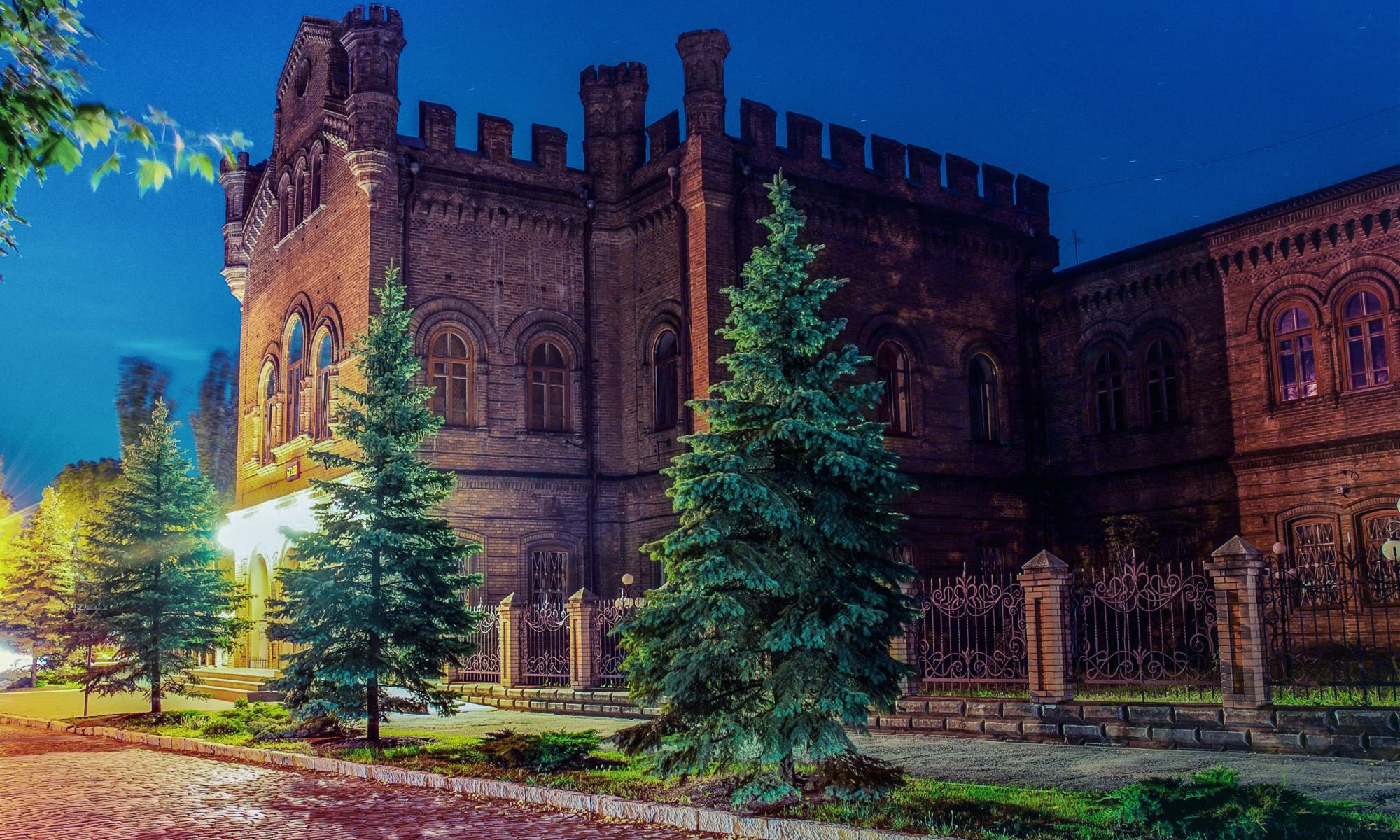
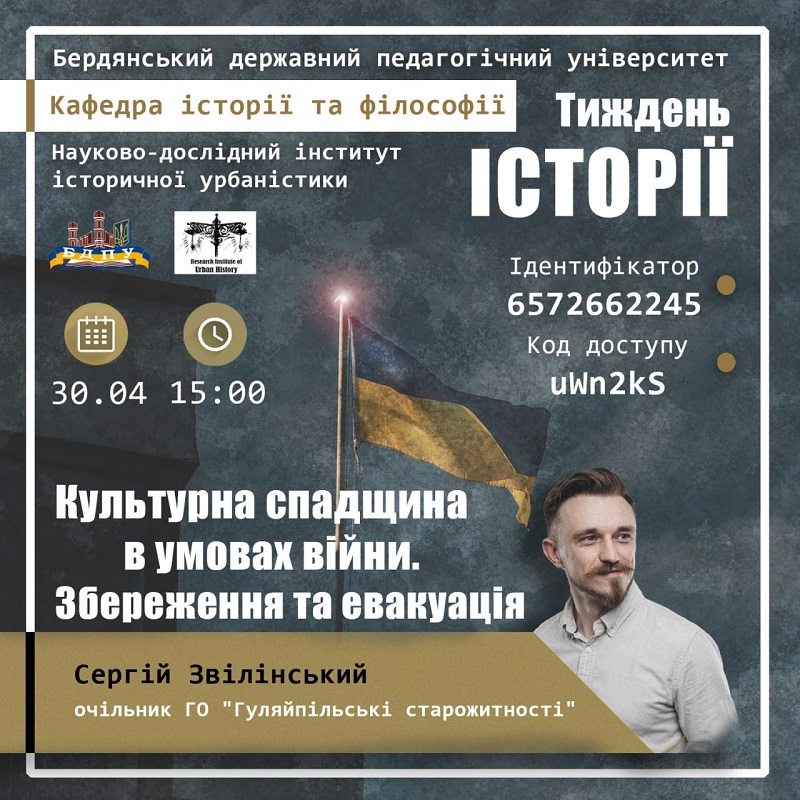
30 квітня 2026 року в Бердянському державному педагогічному університеті відбулася заключна зустріч у межах Тижня історії. Тема третього дня – «Культурна спадщина в умовах війни. Збереження та евакуація» – стала логічним завершенням дискусій про роль історика у часи широкомасштабної російської агресії.
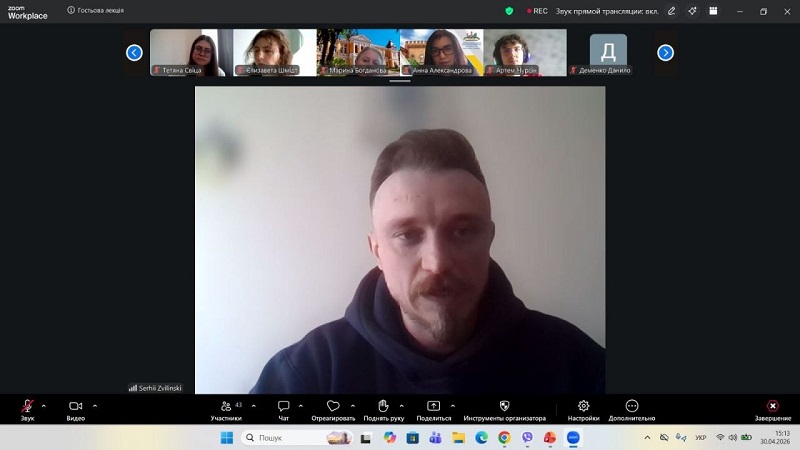
Головним спікером сьогоднішньої зустрічі виступив Сергій Звілінський, очільник ГО «Гуляйпільські старожитності». Його оповідь, підкріплена відеокадрами реальних експедицій, вразила аудиторію масштабами роботи, яка ведеться буквально на лінії вогню. Мова йшла про два вектори діяльності: емпіричний (експедиційний) та виставковий.
Особливу увагу доповідач приділив евакуації колекцій, які формально не входять до державного музейного фонду, а отже – є найбільш вразливими. Це приватні зібрання, шкільні музеї у прифронтових селах, що постраждали від тотального знищення окупантами, а також родинні архіви. Як згадував гість зустрічі, лише за останній час вдалося врятувати понад 100 таких архівів за запитами самих людей. Також він наголосив, що фотофіксація та заміри у прифронтових селищах сьогодні мають неоціненне значення, оскільки ці знімки візуалізують села, в яких ми, можливо, вже ніколи не зможемо побувати у їхньому колишньому вигляді. Окрім захисту артефактів, іншим пріоритетом ГО є документування вигляду вулиць і будівель, що поступово зникають під вогнем окупантів.
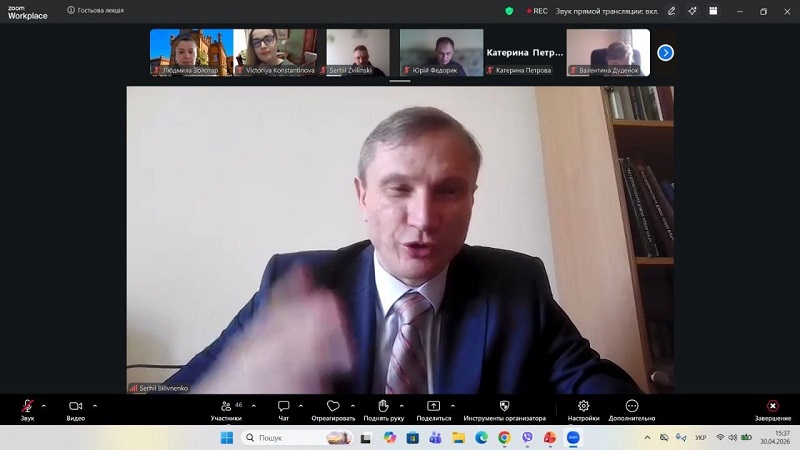
Несподіваним і надзвичайно цінним гостем зустрічі став кандидат історичних наук, очільник наукового товариства імені Якова Новицького Сергій Білівненко. Сергій Миколайович особисто бере участь у виїздах до громад, що перебувають під постійними обстрілами. Гість поділився важкими спогадами про села, де вони встигали зібрати пам’ятки буквально за лічені дні до їхнього тотального руйнування рашистами.
Під час роздумів учасники заходу зачепили питання внутрішньої мотивації: як і коли приходить усвідомлення необхідності рятувати цінності, ризикуючи життям. Було підкреслено, що у нинішніх умовах критично важливо не «розчинитися», а зберегти унікальну етнокультурну спадщину Запорізького краю для майбутніх поколінь.
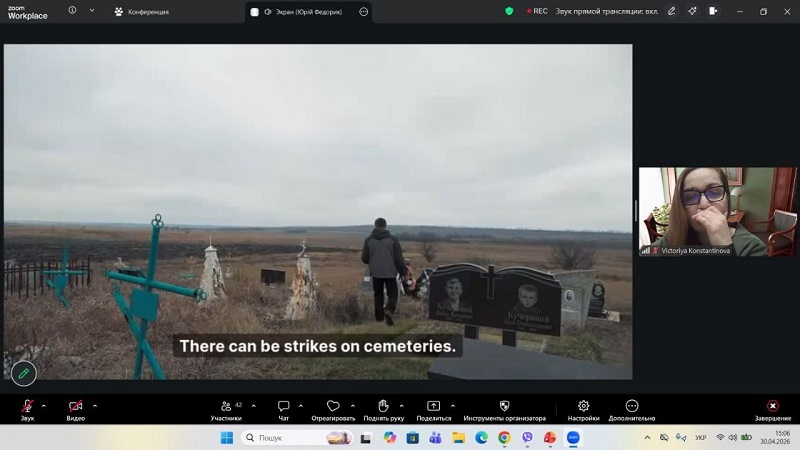
Відповідаючи на одне з питань аудиторії щодо реставраційної діяльності ГО «Гуляйпільські старожитності», Сергій Звілінський зазначив, що у Запоріжжі вже відкрито реставраційну майстерню, де дають друге життя врятованим меблям та скриням. За його оцінками, наразі опрацьовано близько 20 подібних об’єктів. Також він акцентував на важливості оцифрування сільських кладовищ, що є ще одним фронтом роботи організації.
Наостанок гість зустрічі поділився планами проведення літньої школи для молоді, яка готова долучитися до порятунку та реставрації предметів старовини. Побажаємо йому в цьому удачі!
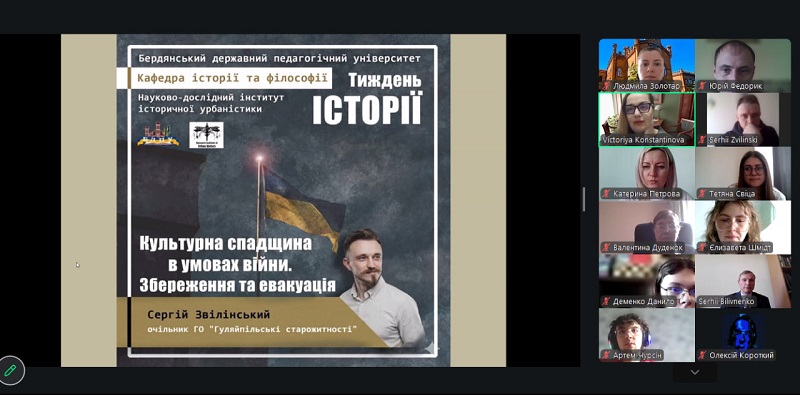
Підсумовуючи Тиждень історії, проведений кафедрою історії та філософії БДПУ та Науково-дослідним Інститутом історичної урбаністики, можна констатувати, що три онлайн-зустрічі об’єднали викладачів, науковців та здобувачів Бердянського державного педагогічного університету, Херсонського державного університету та Запорізького національного університету навколо теми «Історик та війна». Боротьба з російською дезінформацією в історичній науці, усноісторичні дослідження, евакуація та збереження історичних пам’яток – усе це є невід’ємною частиною загальнонаціональної боротьби проти спільного ворога.
Ми дякуємо всім спікерам та учасникам за небайдужість. Повідомляємо, що записи всіх ефірів будуть оприлюднені на сайті Науково-дослідного Інституту історичної урбаністики.
За матеріалами кафедри історії та філософії
Rescue to Preserve: How Cultural Heritage is Evacuated Under Shelling in the Zaporizhzhia Region
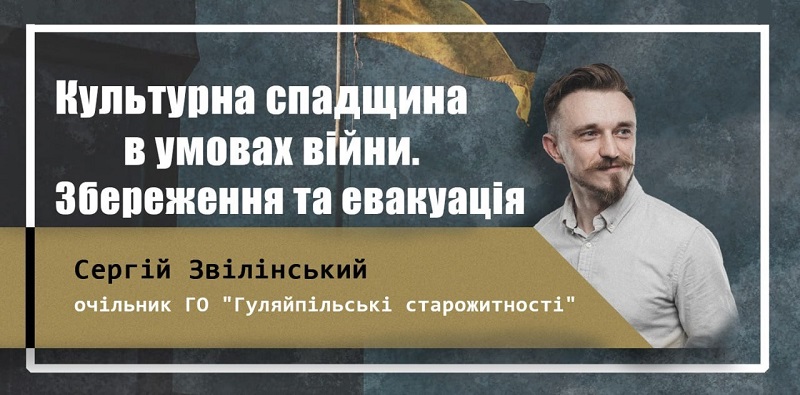
On April 30, 2026, Berdyansk State Pedagogical University hosted the final meeting of History Week. The theme of the third day—”Cultural Heritage in the Conditions of War: Preservation and Evacuation”—served as a logical conclusion to the discussions regarding the historian’s role during the full-scale Russian aggression.
The keynote speaker for today’s session was Serhii Zvilinskyi, head of the NGO “Huliaypole Antiquities.” His narrative, supported by video footage from real expeditions, struck the audience with the sheer scale of work conducted literally on the frontline. The discussion focused on two primary vectors of activity: empirical (expeditionary) and exhibitionary.
The speaker paid particular attention to the evacuation of collections that do not formally belong to the state museum fund and are, therefore, the most vulnerable. These include private collections, school museums in frontline villages facing total destruction by the occupiers, and family archives. As the guest noted, more than 100 such archives have been rescued recently based on requests from the public. He also emphasized that photographic documentation and measurements in frontline settlements are of invaluable importance today, as these images visualize villages that we may never again be able to visit in their original form. Beyond protecting artifacts, another priority for the NGO is documenting the appearance of streets and buildings that are gradually disappearing under enemy fire.
An unexpected and highly distinguished guest of the meeting was Dr. Serhii Bilivnenko, Candidate of Historical Sciences and head of the Yakiv Novytskyi Scientific Society. Serhii Mykolaiovych personally participates in expeditions to communities under constant shelling. He shared harrowing memories of villages where they managed to collect artifacts just days before their total destruction by the Russian forces.
During reflections, participants touched upon the question of internal motivation: how and when the realization comes that it is necessary to save cultural values while risking one’s life. It was emphasized that in current conditions, it is critically important not to “dissolve,” but to preserve the unique ethno-cultural heritage of the Zaporizhzhia region for future generations.
Responding to an audience question regarding the restoration activities of “Huliaypole Antiquities,” Serhii Zvilinskyi noted that a restoration workshop has already opened in Zaporizhzhia, giving a second life to rescued furniture and chests. According to his estimates, about 20 such objects have been processed so far. He also highlighted the importance of digitizing rural cemeteries, which constitutes another front of the organization’s work.
Finally, the guest shared plans for holding a summer school for young people ready to join the rescue and restoration of antiquities. We wish him the best of luck in this endeavor!
Summarizing History Week, organized by the Department of History and Philosophy of BSPU and the Research Institute of Urban History, it can be stated that the three online meetings united faculty, scholars, and students from Berdyansk State Pedagogical University, Kherson State University, and Zaporizhzhia National University around the theme “The Historian and the War.” The struggle against Russian disinformation in historical science, oral history research, and the evacuation and preservation of historical monuments are all integral parts of the nationwide struggle against a common enemy.
We thank all the speakers and participants for their commitment. Please be advised that recordings of all sessions will be published on the website of the Research Institute of Urban History.
Based on materials from the Department of History and Philosophy
