
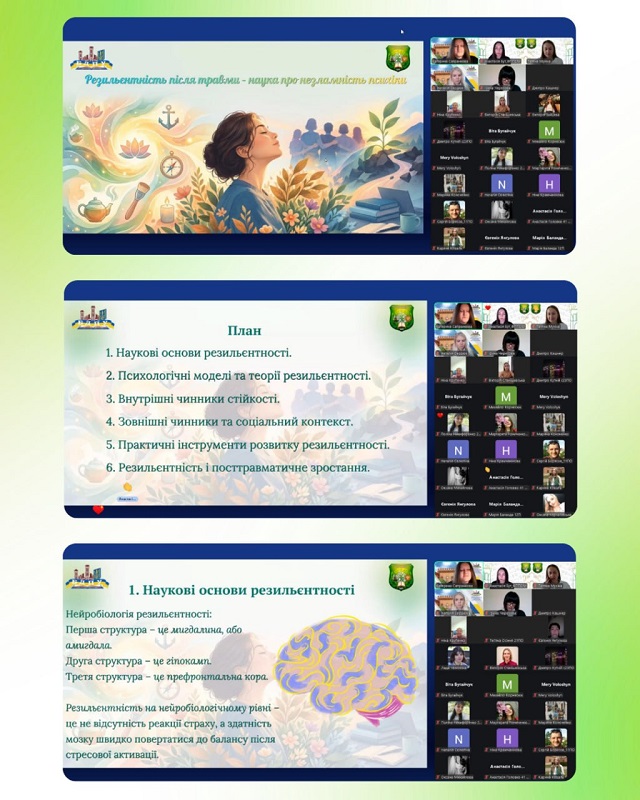
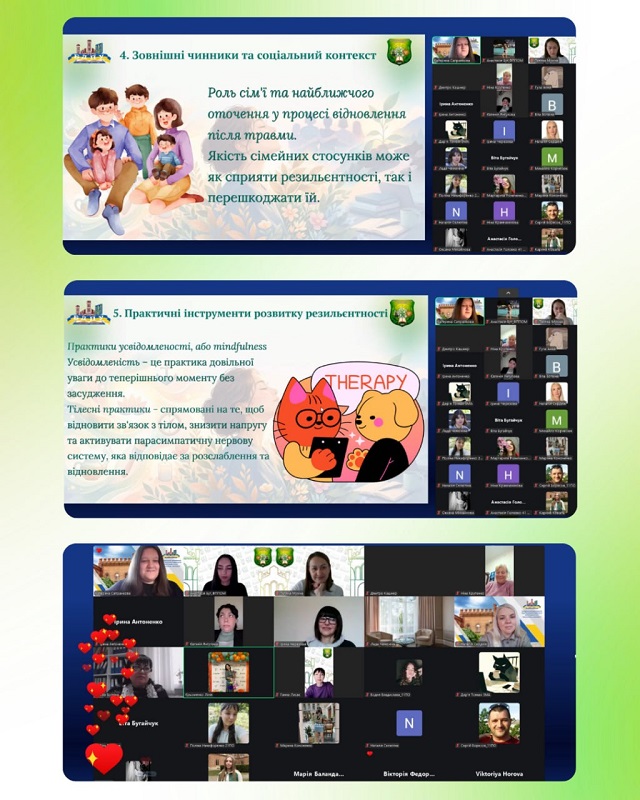
6 листопада 2026 року за сприяння Ради молодих учених факультету психолого-педагогічної освіти та мистецтв (ФППОМ) Бердянського державного педагогічного університету (БДПУ) відбувся освітній спікер-сешн «Резильєнтність після травми – наука про незламність психіки». Захід об’єднав науковців, викладачів та здобувачів вищої освіти для глибокого занурення в актуальні питання психології.
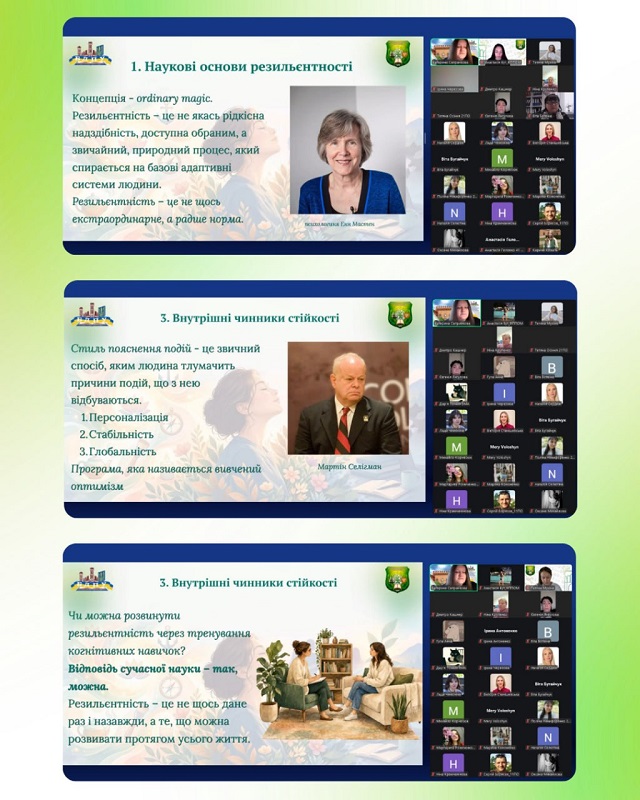
Спікеркою виступила Катерина Сапранкова, членкиня Ради молодих учених ФППОМ, асистентка кафедри психології. Ішлося про феномен резильєнтності – здатність психіки відновлюватися після стресових і травматичних подій. У фокусі – наукові основи стійкості, нейробіологічні механізми (роль мигдалини, гіпокампа та префронтальної кори), а також психологічні моделі подолання наслідків травми.
Окремо зупинилися на практичних аспектах: від теорії самодетермінації та прив’язаності до конкретних інструментів, які допомагають ставати сильнішими. Учасники дізналися, чому важливі когнітивна гнучкість, самоефективність і соціальна підтримка, а також як техніки заземлення та усвідомленості (mindfulness) допомагають повернутися в «тут і зараз».
Для учасників захід став нагодою поглибити знання про сучасні підходи до психічного здоров’я та дізнатися більше про посттравматичне зростання. Розмова спонукала замислитися над силою людського духу та здатністю знаходити сенс навіть у найскладніших життєвих обставинах.
Щиро дякуємо спікерці та організаторам за змістовну зустріч!
За матеріалами Ради молодих учених ФППОМ
Resilience after trauma: the science of an unbreakable mind

On November 6, 2026, the Council of Young Scientists of the Faculty of Psychological and Pedagogical Education and Arts (FPPEA) at Berdiansk State Pedagogical University (BSPU) hosted an educational speaker session titled “Resilience After Trauma: The Science of an Unbreakable Mind.” The event brought together researchers, faculty members and students for an in-depth look at current issues in psychology.
The speaker was Kateryna Saprankova, a member of the FPPEA Council of Young Scientists and an assistant lecturer at the Department of Psychology. The session explored resilience as the mind’s ability to recover from stressful and traumatic events. It focused on the scientific foundations of resilience, its neurobiological mechanisms (the roles of the amygdala, hippocampus and prefrontal cortex), and psychological models of overcoming trauma.
Particular attention was given to practical aspects, from self-determination theory and attachment theory to specific tools that help people grow stronger. Participants learned why cognitive flexibility, self-efficacy and social support matter. They also learned how grounding and mindfulness techniques help bring a person back to the “here and now.”
The event gave participants an opportunity to deepen their knowledge of modern approaches to mental health and to learn more about post-traumatic growth. The discussion encouraged everyone to reflect on the strength of the human spirit and on our ability to find meaning even in the most difficult circumstances.
We sincerely thank the speaker and the organizers for such a meaningful event!
Based on materials from the FPPEA Council of Young Scientists
