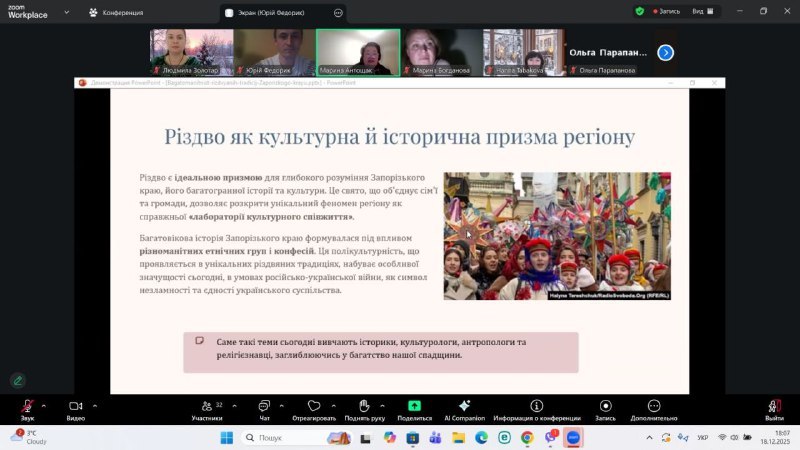
18 грудня 2025 року кафедра історії та філософії провела відкриту онлайн-лекцію, присвячену дослідженню унікального культурного ландшафту нашого регіону через призму Різдвяних свят. Захід став важливою платформою для обговорення полікультурності Запорізького краю як «лабораторії культурного співжиття», де протягом століть переплелися традиції різних етносів та конфесій.
Спікери заходу — викладачі кафедри Юрій Федорик, Марина Антощак та Людмила Золотар — детально зупинилися на етноконфесійному складі краю у XIX — на початку XX століть. Слухачі дізналися про особливості українського Різдва на Запоріжжі, яке стало симбіозом традицій переселенців із Полтавщини, Слобожанщини та Правобережжя. Окрему увагу приділили унікальним локальним символам: степовому дідуху, традиції «вечері для хрещених» та специфіці колядування з Вифлеємською зіркою.
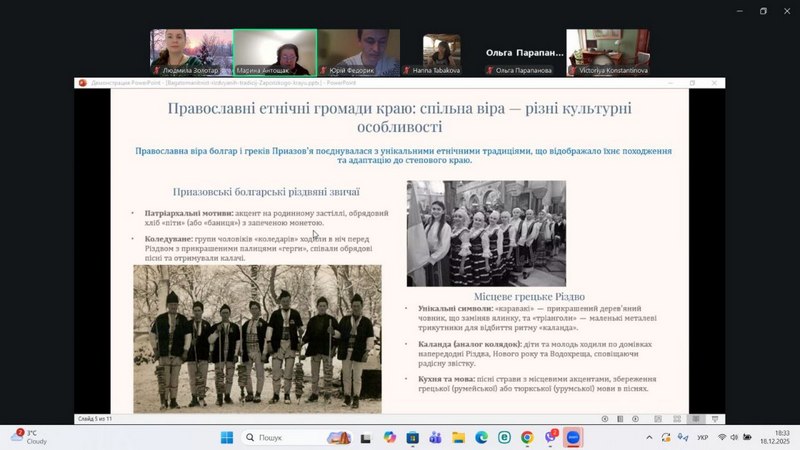
Програма лекції охопила також традиції національних спільнот Приазов’я:
- Болгарські та грецькі звичаї: від обрядового хліба «піти» до грецьких «тріангол» та символічного човника «каравакі».
- Західнохристиянські традиції: святкування Різдва католиками та протестантами, роль Адвенту та німецьких різдвяних ярмарків.
- Паралельні святкові світи: юдейська Ханука та кримськотатарська традиція Йил Геджесі, що демонструють тисячолітню толерантність регіону.
Окремий блок лекції був присвячений трагічному періоду радянських антирелігійних кампаній, коли Різдво намагалися замінити секулярним Новим роком. Спікери підкреслили, що збереження традицій у приватній сфері стало формою тихого спротиву режиму. Завершився захід дискусією про значення культурної спадщини сьогодні. В умовах російської агресії знання про багатоманітність українського Півдня є потужним інструментом опору асиміляції та символом незламності духу.
БДПУ продовжує виконувати місію центру збереження пам’яті про Приазов’я, готуючи фахівців, здатних захищати та популяризувати нашу ідентичність.
Олексій Короткий
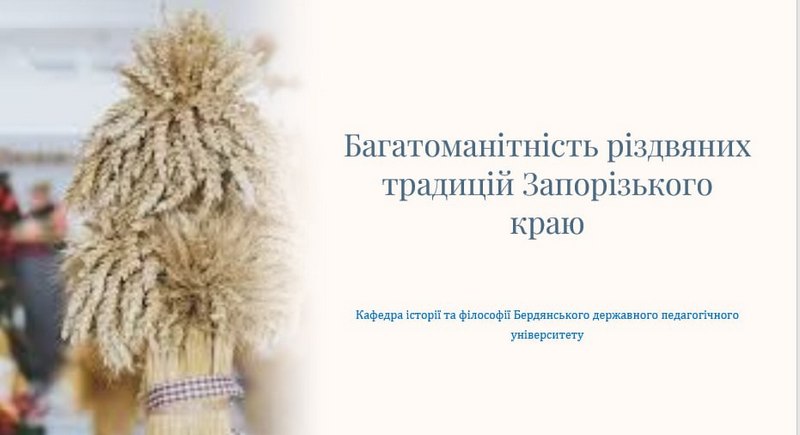
“The Diversity of Christmas Traditions in the Zaporizhzhia Region”
On 18 December 2025, the Department of History and Philosophy held an open online lecture dedicated to exploring the unique cultural landscape of our region through the prism of Christmas holidays. The event became an important platform for discussing the multiculturalism of the Zaporizhzhia region as a “laboratory of cultural coexistence”, where the traditions of different ethnic groups and confessions have intertwined over the centuries.
The speakers at the event — department lecturers Yurii Fedorik, Maryna Antoshchak and Liudmyla Zolotar — focused in detail on the ethnic and religious composition of the region in the 19th and early 20th centuries. The audience learned about the peculiarities of Ukrainian Christmas in Zaporizhzhia, which became a symbiosis of the traditions of migrants from Poltava, Slobozhanshchyna, and the Right Bank. Special attention was paid to unique local symbols: the steppe didukh, the tradition of “evening for the baptised” and the specifics of carolling with the Star of Bethlehem.
The lecture programme also covered the traditions of the national communities of the Azov region:
- Bulgarian and Greek customs: from the ritual bread ‘piti’ to the Greek “triangol” and the symbolic boat ‘karavaki’.
- Western Christian traditions: Christmas celebrations by Catholics and Protestants, the role of Advent and German Christmas markets.
- Parallel festive worlds: Jewish Hanukkah and the Crimean Tatar tradition of Yil Gejes, demonstrating the region’s millennial tolerance.
A separate section of the lecture was devoted to the tragic period of Soviet anti-religious campaigns, when Christmas was replaced by the secular New Year. The speakers emphasised that preserving traditions in the private sphere became a form of silent resistance to the regime. The event concluded with a discussion on the significance of cultural heritage today. In the context of Russian aggression, knowledge about the diversity of the Ukrainian South is a powerful tool for resisting assimilation and a symbol of indomitable spirit.
BDPU continues to fulfil its mission as a centre for preserving the memory of the Azov region by training specialists capable of defending and promoting our identity.
Oleksii Korotkyi
