
20 листопада, у Всесвітній день дитини, викладачі кафедри соціальної роботи та інклюзивної освіти Бердянського державного педагогічного університету разом зі здобувачами бакалаврського та магістерського рівнів вищої освіти спеціальності І10 «Соціальна робота та консультування» долучилися до двох масштабних фахових подій, присвячених захисту дітей, збереженню їхнього психічного здоров’я та підтримці розвитку в умовах війни. Участь у заходах відбувалася в онлайн-форматі.
Професійна спільнота БДПУ стала учасницею IV Конгресу «Діти та війна. Практики відновлення та інструменти психологічної допомоги», організованого Національною дитячою спеціалізованою лікарнею «Охматдит» Міністерства охорони здоров’я України, та міжнародної конференції Gen.Hope «Архітектура дитинства. Як захистити розвиток і майбутнє дітей у часи війни та криз», організованої громадською організацією Gen.Ukrainian за участю створеного нею Центру Gen.Hope.
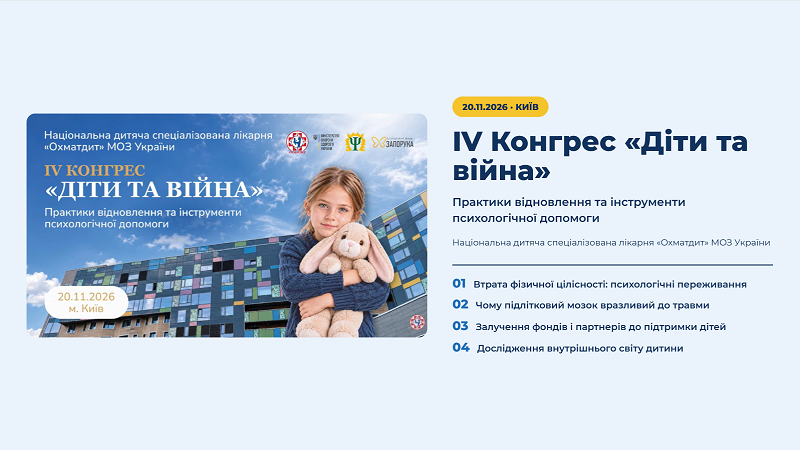
IV Конгрес «Діти та війна» об’єднав фахівців навколо актуальних питань психологічної допомоги дітям, які пережили травматичний досвід війни. У центрі уваги були сучасні підходи до роботи з воєнною травмою, психологічні особливості дітей і підлітків, які зазнали впливу бойових дій та окупації, профілактика й подолання посттравматичних стресових розладів, практики відновлення та інструменти психологічної інтервенції.
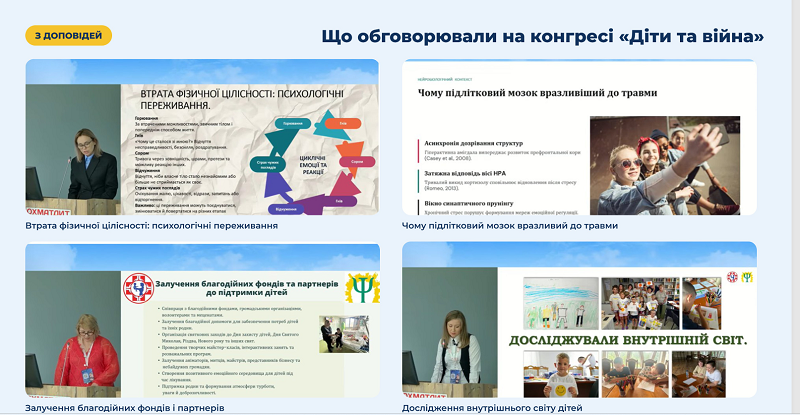
Особливий інтерес становили представлені практичні напрацювання щодо розуміння емоційних реакцій і переживань дітей, психологічних особливостей підліткового віку, залучення благодійних фондів і партнерських організацій до підтримки дитинства. Важливим акцентом стало дослідження внутрішнього світу дитини як основа побудови чутливої та ефективної системи допомоги.
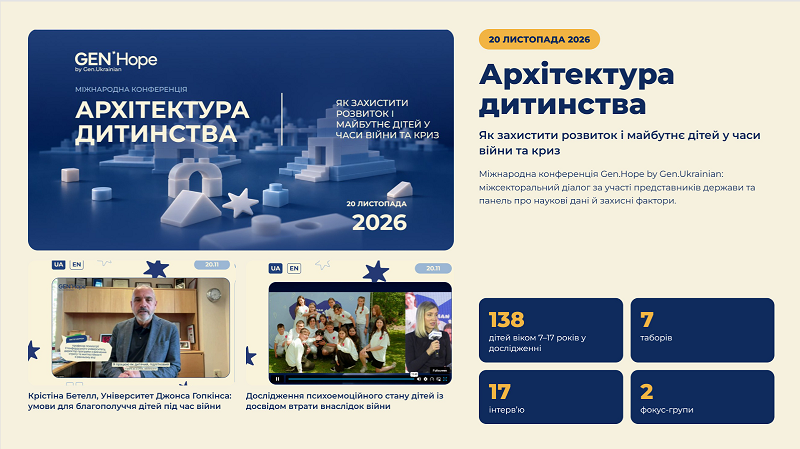
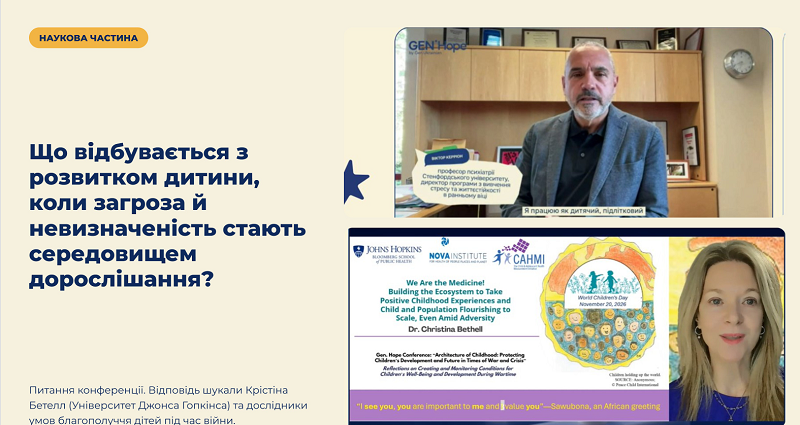
Міжнародна конференція Gen.Hope «Архітектура дитинства» розширила професійний діалог, зосередивши увагу на довгострокових наслідках війни для розвитку дітей. До обговорення долучилися українські та міжнародні дослідники, представники державних інституцій, громадського сектору, фахівці у сферах психології, психічного здоров’я, освіти та соціальної роботи.
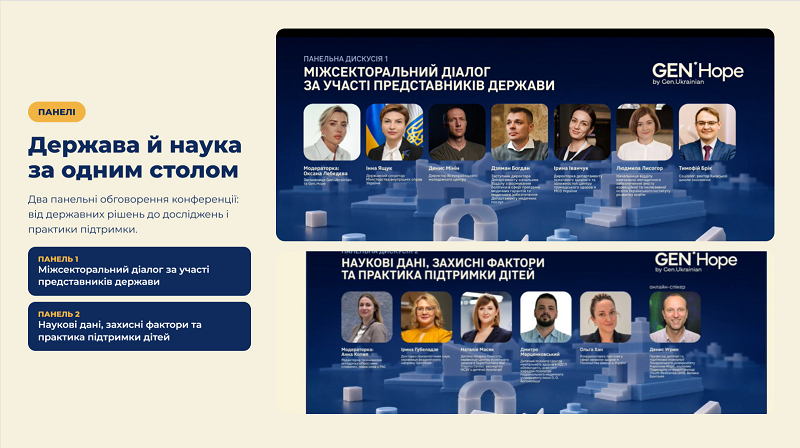
Серед ключових питань конференції — міжсекторальна взаємодія за участю представників держави, наукові дані щодо захисних факторів дитячого розвитку, створення умов для благополуччя дітей під час війни, а також етичні підходи до фіксації шкоди, завданої дитинству. Особливу увагу привернула міжнародна експертна дискусія про те, як створювати й вимірювати умови для благополуччя та розвитку дітей навіть за тривалої загрози й невизначеності.
Важливим змістовим орієнтиром конференції стало переосмислення підходів до підтримки дитинства: допомога не повинна обмежуватися подоланням наслідків уже пережитої травми. Необхідно формувати безпечне й підтримувальне середовище, забезпечувати сталість стосунків, можливості для навчання, соціалізації та повноцінного розвитку дитини.
Для викладачів кафедри та здобувачів спеціальності І10 «Соціальна робота та консультування» участь у цих заходах стала важливою можливістю ознайомитися із сучасними науковими дослідженнями, міжнародним досвідом і практичними інструментами підтримки дітей, які постраждали внаслідок війни. Отримані знання та професійні орієнтири мають безпосереднє значення для вдосконалення підготовки майбутніх фахівців соціальної сфери, адже робота з дітьми та сім’ями в умовах воєнних і поствоєнних викликів потребує доказових підходів, міждисциплінарної взаємодії та глибокого розуміння потреб дитини.
Долучення до таких професійних платформ є важливою складовою академічної та практичної взаємодії кафедри з національною і міжнародною фаховою спільнотою. Адже захист дитинства, збереження психічного здоров’я та створення умов для розвитку кожної дитини – це не лише відповідь на виклики сьогодення, а й інвестиція у майбутнє українського суспільства.
За матеріалами кафедри соціальної роботи та інклюзивної освіти
Childhood in Need of Protection: Academic Staff and Students of the Department of Social Work and Inclusive Education Join the Professional Dialogue on Protecting Childhood in Wartime
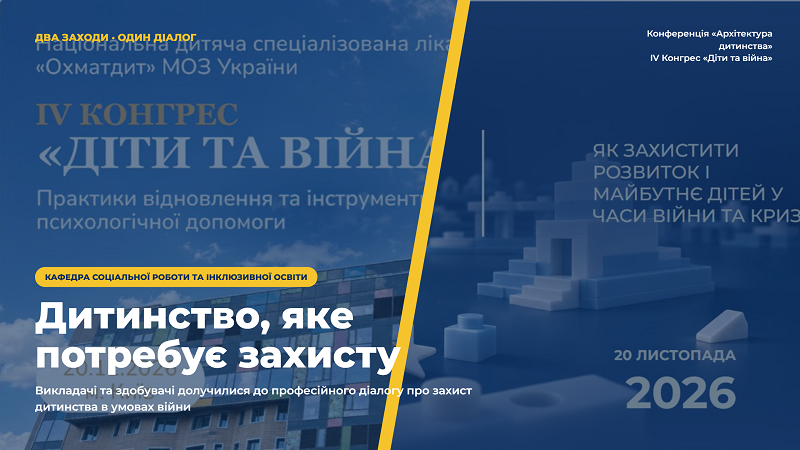
On November 20, World Children’s Day, academic staff of the Department of Social Work and Inclusive Education of Berdyansk State Pedagogical University, together with bachelor’s and master’s students majoring in I10 “Social Work and Counselling,” joined two major professional events dedicated to protecting children, safeguarding their mental health, and supporting their development in times of war. Both events were held online.
The BDPU academic community participated in the IV Congress “Children and War: Recovery Practices and Tools for Psychological Support,” organized by the Okhmatdyt National Specialized Children’s Hospital of the Ministry of Health of Ukraine, and the international Gen.Hope Conference “The Architecture of Childhood: How to Protect Children’s Development and Future in Times of War and Crisis,” organized by the non-governmental organization Gen.Ukrainian through its Gen.Hope Center.
The IV Congress “Children and War” brought together professionals to discuss current approaches to psychological support for children who have experienced the trauma of war. The key topics included modern approaches to working with war-related trauma, the psychological characteristics of children and adolescents affected by hostilities and occupation, the prevention and treatment of post-traumatic stress disorder, recovery practices, and psychological intervention tools.
Of particular interest were practical approaches to understanding children’s emotional responses and experiences, the psychological characteristics of adolescence, and the involvement of charitable foundations and partner organizations in supporting children. An important focus was placed on exploring children’s inner worlds as a foundation for developing sensitive and effective support systems.
The international Gen.Hope Conference “The Architecture of Childhood” expanded this professional dialogue by focusing on the long-term effects of war on children’s development. The event brought together Ukrainian and international researchers, representatives of public institutions and civil society organizations, and specialists in psychology, mental health, education, and social work.
The key issues addressed included cross-sectoral cooperation involving government institutions, scientific evidence on protective factors in child development, creating conditions for children’s well-being during wartime, and ethical approaches to documenting the harm inflicted on childhood. Particular attention was drawn to an international expert discussion on how to create and measure the conditions necessary for children’s well-being and development even amid prolonged threats and uncertainty.
An important conceptual focus of the conference was the need to rethink approaches to supporting childhood: assistance should not be limited to overcoming the consequences of trauma already experienced. It is essential to create safe and supportive environments, ensure stable and caring relationships, and provide opportunities for learning, socialization, and children’s holistic development.
For the academic staff of the Department and students majoring in I10 “Social Work and Counselling,” participation in these events provided a valuable opportunity to explore contemporary research, international experience, and practical tools for supporting children affected by war. The knowledge and professional insights gained are directly relevant to improving the education and training of future social work professionals, as working with children and families amid wartime and post-war challenges requires evidence-based approaches, interdisciplinary cooperation, and a profound understanding of children’s needs.
Participation in such professional platforms is an important component of the Department’s academic and practical engagement with the national and international professional community. Protecting childhood, safeguarding mental health, and creating opportunities for every child to develop are not merely responses to today’s challenges but also an investment in the future of Ukrainian society.
