
Науковиці Бердянського державного педагогічного університету – на сторінках University World News.
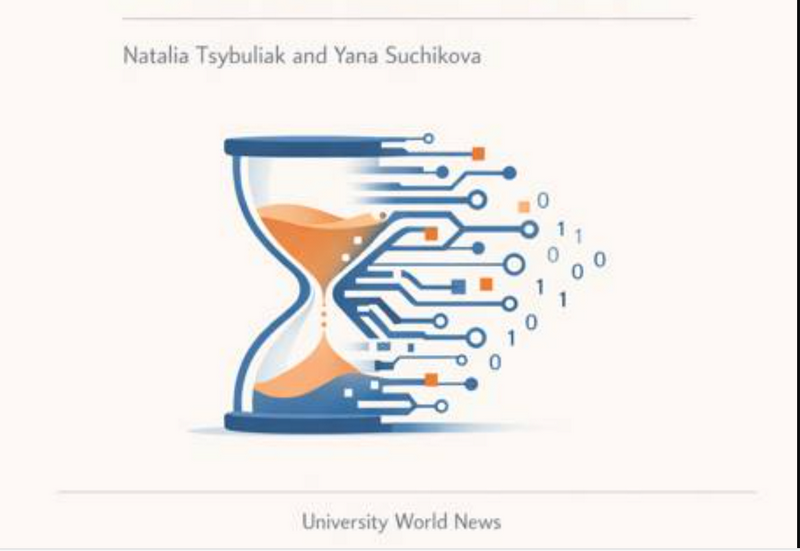
Проректорка з наукової роботи Яна Сичікова та доцентка кафедри прикладної психології та логопедії Наталя Цибуляк опублікували статтю-коментар “Кому в університетах належить час, зекономлений в еру ШІ?”
University World News – глобальне онлайн-видання, що надає вичерпні незалежні новини, коментарі та аналітику стосовно вищої освіти та наукового середовища.
Дослідниці говорять про “інфляцію очікувань”, коли “кожне прискорення автоматично конвертується у підвищення вимог”: штучний інтелект, оптимізуючи процеси, змінює робочі режими. І як результат, індивідуальна перевага конвертується у нову інституційну норму.
Авторки окреслюють чіткі наслідки: збільшення кількості завдань, збільшення інтенсивності робочих навантажень, підвищення вимог до швидкості реагування.
Висновок: “часовий дивіденд” тепер не належить працівникам, “він непомітно перерозподіляється для задоволення вищих робочих вимог”.
Наголошують і на “невидимій праці”: штучний інтелект генерує переконливі матеріали, проте існує очевидна потреба у перевірці його інформації. За збільшення кількості ШІ-процесів збільшується і час, витрачений на верифікацію, “відновлення нюансу та етичну валідацію”. І така праця “залишається невидимою в інституційних метриках, які фіксують швидкість, але не враховують часу на відповідальність”.
Пропозиція науковиць – “податок на перевірку”. Цей механізм полягає у сприйнятті ШІ як будь-якої іншої дослідницької інфраструктури.
Тож, що зробить штучний інтелект в університетах – прискорить процеси і збільшить дефіцит часу чи розширить простір мислення, читання і повільної роботи – у повній залежності від вже існуючого устрою закладу. “Генеративний ШІ не є ні добром, ні загрозою сам по собі. Він є підсилювачем існуючих логік”.
“Amplifier of existing logics”: AI in the academic environment
Scientists of Berdyansk State Pedagogical University – on the pages of University World News.
Vice-Rector for Research Yana Sychikova and Associate Professor of the Department of Applied Psychology and Speech Therapy Natalia Tsybulyak published a commentary article “Who in universities owns the time saved in the AI-era?”
University World News is a global online publication that provides comprehensive independent news, comments and analytics on higher education and the scientific community.
Researchers talk about “expectations inflation”, when “every acceleration automatically converts into increased requirements”: artificial intelligence, optimizing processes, changes working modes. And as a result, individual advantage is converted into a new institutional norm.
The authors outline clear consequences: an increase in the number of tasks, an increase in the intensity of workloads, increased requirements for speed of response.
Conclusion: the “time dividend” no longer belongs to employees, “it is imperceptibly redistributed to meet higher work demands”.
They also emphasize “invisible labor”: artificial intelligence generates convincing materials, but there is an obvious need to verify its information. As the number of AI processes increases, the time spent on verification, “recovery of nuance and ethical validation” also increases. And such labor “remains invisible in institutional metrics that record speed but do not take into account time for responsibility”.
The scientists’ proposal is a “verification tax”. This mechanism consists in perceiving AI as any other research infrastructure.
So what will artificial intelligence do in universities – will it speed up processes and increase the shortage of time or expand the space for thinking, reading and slow work – completely depending on the existing structure of the institution. “Generative AI is neither good nor a threat in itself. It is an amplifier of existing logics”.
According to the Facebook page of Yana Sychikova
