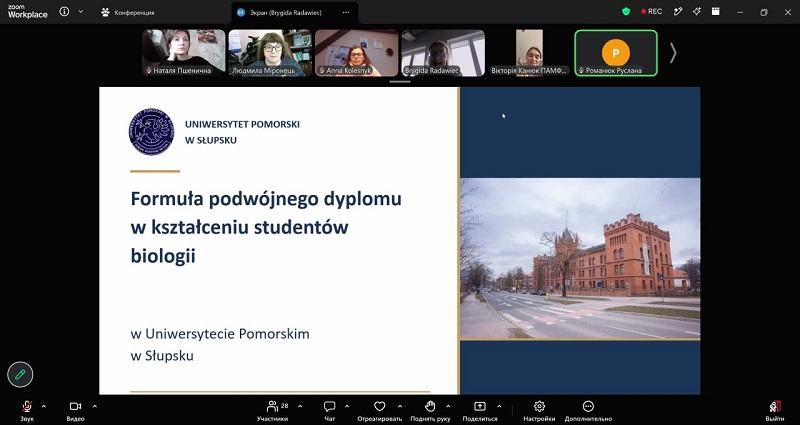
27 листопада 2026 року в межах Міжнародного відкритого міжуніверситетського лекторію «Професійно-методична підготовка педагога з проблем природничої освіти» відбулася гостьова лекція «Формула подвійного диплома у підготовці студентів-біологів у Поморському університеті в Слупську» за участю представниць Поморського університету у Слупську (Республіка Польща), до якої долучилися викладачі та здобувачі кафедри біології, здоров’я людини та фізичної реабілітації Бердянського державного педагогічного університету.
Спікерками зустрічі були Бригіда Радавець, кандидатка біологічних наук, керівниця секції з питань дидактики відділу освіти Поморського університету, та Анна Колесник, представниця відділу міжнародного розвитку та співробітництва, секції міжнародного співробітництва цього університету. Лекція супроводжувалася синхронним перекладом українською мовою.
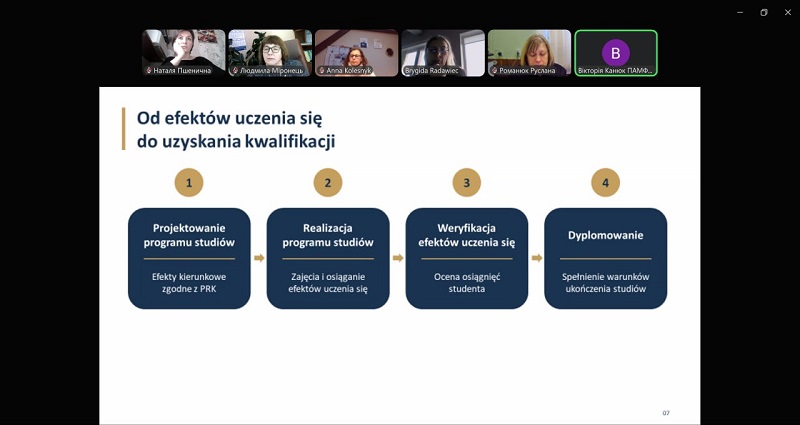
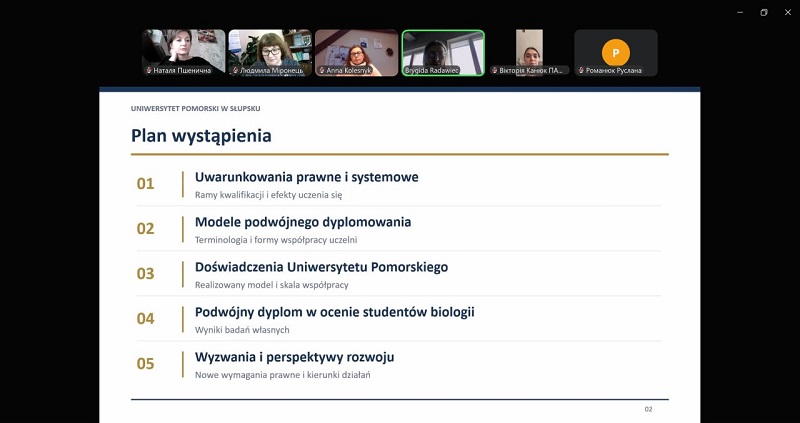
Під час зустрічі учасники ознайомилися з досвідом польського університету в організації міжнародної освітньої співпраці та реалізації програм подвійного диплома. На початку лекції було розглянуто правові й системні передумови такого партнерства, зокрема особливості порівняння кваліфікацій України та Польщі в контексті Європейської рамки кваліфікацій. Окрему увагу приділено значенню результатів навчання, які охоплюють знання, уміння та соціальні компетентності й становлять основу для зіставлення освітніх програм різних країн.
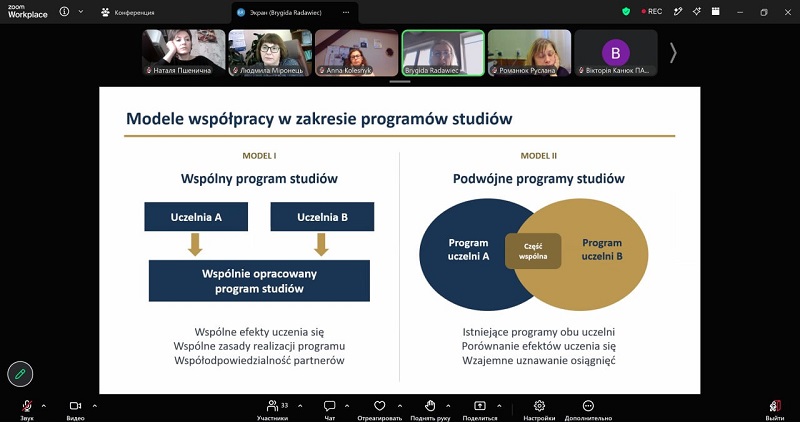
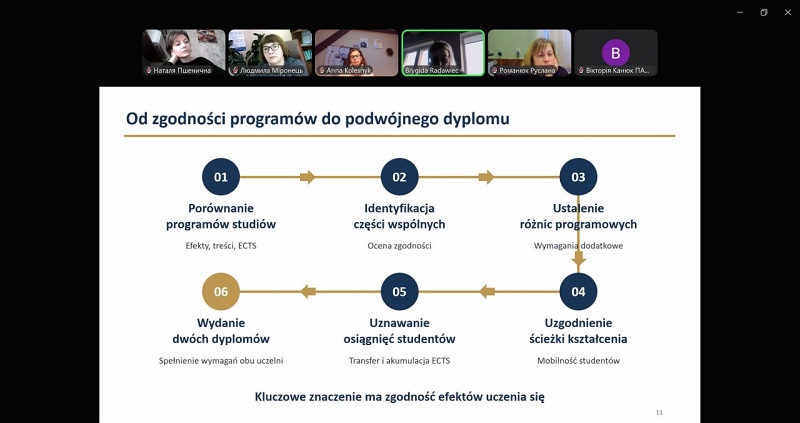
Важливим аспектом стало розмежування понять «подвійний диплом» (double degree) і «спільний диплом» (joint degree), а також моделей співпраці університетів. Лекторки пояснили, що реалізація подвійного диплома передбачає узгодження окремих освітніх програм закладів-партнерів і формування спільної траєкторії навчання. Такий процес потребує порівняння змісту програм, кредитів ECTS і результатів навчання, визначення спільних складників та відмінностей, визнання навчальних досягнень студентів і дотримання вимог обох університетів.
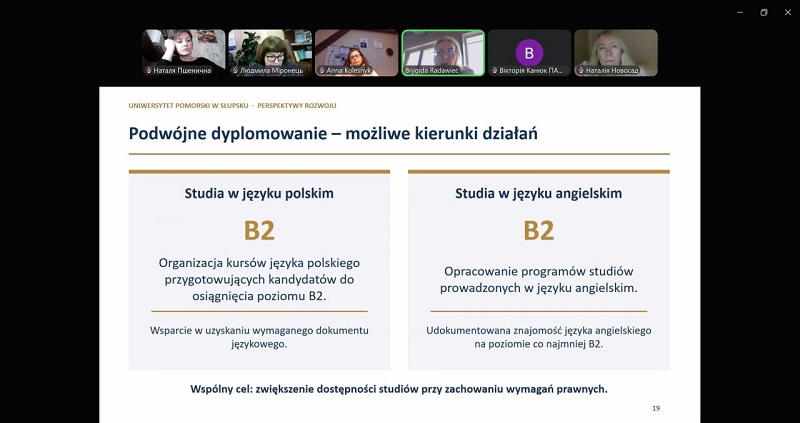
Окремий блок зустрічі стосувався актуальних правових і мовних вимог до організації подвійного диплома в Польщі. Було розглянуто зміни нормативного регулювання, вимоги до підтвердження знання мови навчання на рівні не нижче B2, а також можливі напрями розвитку програм польською та англійською мовами. Ці питання мають практичне значення для університетів, які прагнуть розширювати міжнародну співпрацю та створювати нові можливості академічної мобільності.
Для учасників лекторію зустріч стала нагодою ознайомитися з конкретним досвідом європейського університету, глибше зрозуміти механізми реалізації програм подвійного диплома та окреслити академічні, організаційні, правові й мовні передумови їх упровадження. Особливої актуальності ця тематика набуває в контексті інтернаціоналізації вищої освіти, розвитку партнерства між українськими та європейськими закладами освіти й розширення освітніх можливостей майбутніх фахівців.
Проведення таких зустрічей сприяє обміну міжнародним досвідом, формуванню професійних контактів і розширенню уявлень про сучасні моделі організації вищої освіти. Для професійної підготовки майбутніх педагогів і біологів важливо розуміти не лише зміст освітніх програм, а й ширший європейський контекст їх реалізації, можливості академічної мобільності та перспективи міжнародної співпраці.
Гарант ОПП «Біологія та здоров’я людини»
доцент кафедри біології, здоров’я людини та фізичної реабілітації
Наталя Пшенична
European Experience of Double Degree Programmes in the Education of Biology Students
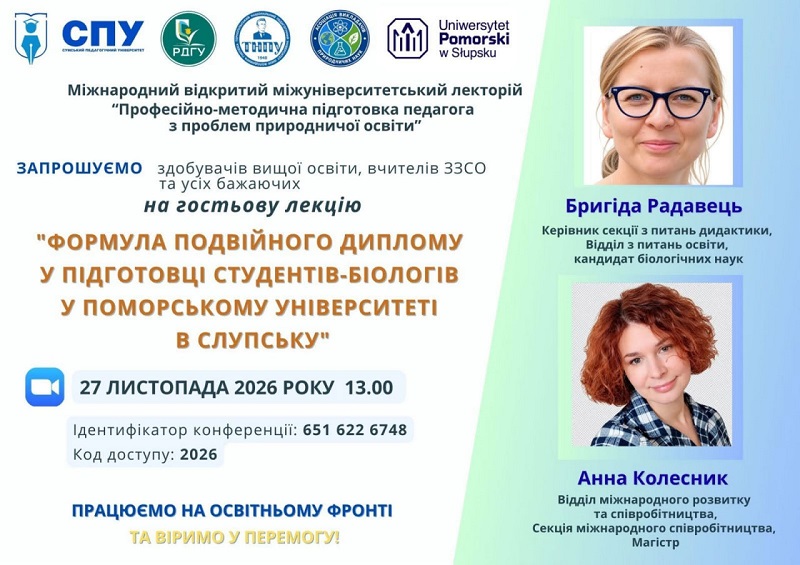
On 27 November 2026, a guest lecture entitled «The Double Degree Formula in the Education of Biology Students at Pomeranian University in Słupsk» was held as part of the International Open Interuniversity Lecture Series «Professional and Methodological Training of Teachers in Natural Science Education». The event featured representatives of Pomeranian University in Słupsk (Republic of Poland) and was attended by academic staff and students of the Department of Biology, Human Health and Physical Rehabilitation of Berdyansk State Pedagogical University.
The speakers were Brygida Radawiec, Candidate of Biological Sciences and Head of the Didactics Section of the Department of Education at Pomeranian University, and Anna Kolesnyk, a representative of the International Development and Cooperation Office, International Cooperation Section, at the same university. The lecture was accompanied by simultaneous interpretation into Ukrainian.
During the meeting, participants learned about the Polish university’s experience in organising international educational cooperation and implementing double degree programmes. The opening part of the lecture addressed the legal and systemic prerequisites for such partnerships, including the specific features of comparing qualifications in Ukraine and Poland within the context of the European Qualifications Framework. Particular attention was paid to the importance of learning outcomes, which encompass knowledge, skills and social competences and provide a basis for comparing educational programmes across different countries.
An important aspect of the discussion was the distinction between the concepts of a “double degree” and a “joint degree”, as well as different models of university cooperation. The speakers explained that implementing a double degree programme involves aligning separate educational programmes offered by partner institutions and developing a joint learning pathway. This process requires comparing programme content, ECTS credits and learning outcomes, identifying common elements and differences, recognising students’ academic achievements, and complying with the requirements of both universities.
Another part of the meeting focused on current legal and language requirements for organising double degree programmes in Poland. The speakers discussed changes in regulatory frameworks, requirements for confirming proficiency in the language of instruction at a level of at least B2, as well as possible directions for developing programmes taught in Polish and English. These issues are of practical importance for universities seeking to expand international cooperation and create new opportunities for academic mobility.
For the participants, the lecture provided an opportunity to learn about the practical experience of a European university, gain a deeper understanding of the mechanisms involved in implementing double degree programmes, and explore the academic, organisational, legal and language-related prerequisites for their introduction. This topic is particularly relevant in the context of the internationalisation of higher education, the development of partnerships between Ukrainian and European higher education institutions, and the expansion of educational opportunities for future professionals.
Events of this kind promote the exchange of international experience, the development of professional contacts and a broader understanding of contemporary models of higher education. For the professional training of future teachers and biologists, it is important to understand not only the content of educational programmes but also the broader European context in which they operate, the opportunities for academic mobility and the prospects for international cooperation.
Programme Guarantor of the Educational and Professional Programme
«Biology and Human Health»
Associate Professor, Department of Biology, Human Health and Physical Rehabilitation
Natalia Pshenychna
