
З початком другого семестру освітній процес набуває нових якісних характеристик, ставлячи перед академічною спільнотою виклики щодо створення справді рівних можливостей для кожного здобувача вищої освіти. Компетентнісний центр інклюзивної освіти Бердянського державного педагогічного університету (БДПУ) наголошує на важливості системного підходу до безбар’єрності та радить ознайомитися з оновленими методичними рекомендаціями щодо зменшення стигматизації.
Представлені матеріали пропонують комплексну стратегію інтеграції ветеранів війни та здобувачів освіти з особливими освітніми потребами (ООП) у освітній процес. Документи базуються на зміні парадигми: від «опікунської» моделі, де людина є лише об’єктом допомоги, до правозахисного підходу, що визнає активну суб’єктність кожного.
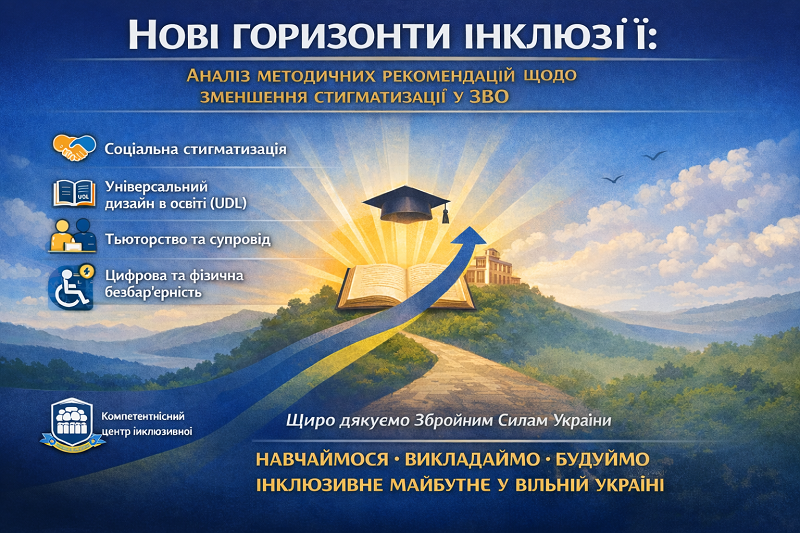
Ключові вектори, деталізовані у нових матеріалах:
- Подолання соціальної стигматизації: Матеріали розкривають механізми виникнення упереджень та пропонують конкретні кроки для формування культури толерантності ‑ визнання різноманітності світу та здатності жити без конфліктів у колективі.
- Універсальний дизайн в освіті (UDL): Акцент робиться на створенні середовища, виробів та інформаційних технологій, які є однаково доступними та зрозумілими для всіх користувачів без необхідності спеціальної адаптації.
- Інститут тьюторства та супроводу: Окрема увага приділяється ролі тьютора (педагога супроводу) ‑ фахівця, який допомагає студентам з ООП адаптуватися та успішно інтегруватися в освітній простір.
- Цифрова та фізична безбар’єрність: Документи містять чіткі індикатори доступності ‑ від стандартів WCAG 2.1 у цифровому контенті до фізичної реабілітації та створення інклюзивних рекреаційних зон.
Компетентнісний центр інклюзивної освіти БДПУ пропонує для глибшого розуміння теми ознайомитися з основним текстом рекомендацій, а також з презентацією (створена за допомогою NotebookLM). Ця презентація є зручним інтерактивним інструментом, що структурує складні поняття ‑ від «ветераноінклюзивної» до методів моніторингу рівня стигми в колективі.
Запропоновані матеріали стануть незамінним дороговказом для викладачів, кураторів та представників територіальних громад у розбудові суспільства, де відмінність не перетворюється на нерівність, а стає джерелом спільного розвитку.
Посилання на матеріали: https://drive.google.com/drive/folders/1YvQIhRphRGiOeVN03rr0VE8lwaKrv6om?usp=drive_link
Сайт Центру: https://fdsso.bdpu.org.ua/kompetentnisnyj-czentr-inklyuzyvnoyi-osvity/
Щиро вдячні Збройним Силам України, завдяки мужності яких ми маємо можливість навчатися, викладати та будувати інклюзивне майбутнє у вільній Україні.
За матеріалами компетентнісного центру інклюзивної освіти
New horizons of inclusion: an analysis of methodological guidelines for reducing stigmatization in higher education institutions
With the beginning of the second semester, the educational process acquires new qualitative characteristics, posing challenges to the academic community in terms of creating genuinely equal opportunities for every higher education student. The Competence Center for Inclusive Education of Berdyansk State Pedagogical University (BSPU) emphasizes the importance of a systemic approach to barrier-free education and encourages stakeholders to familiarize themselves with the updated methodological guidelines aimed at reducing stigmatization.
The presented materials propose a comprehensive strategy for integrating war veterans and students with special educational needs (SEN) into the educational process. The documents are grounded in a paradigm shift ‑ from a “custodial” model, in which an individual is perceived merely as an object of assistance, to a rights-based approach that recognizes the active agency and subjectivity of each person.
The key vectors elaborated in the new materials include:
- Overcoming social stigmatization: The materials reveal the mechanisms underlying prejudice and propose concrete steps for fostering a culture of tolerance ‑ acknowledging the diversity of the world and the ability to coexist without conflict within academic communities.
- Universal Design for Learning (UDL): Emphasis is placed on creating environments, products, and information technologies that are equally accessible and comprehensible to all users without the need for specialized adaptation.
- The institution of tutoring and support: Particular attention is given to the role of the tutor (support educator) ‑ a specialist who assists students with SEN in adapting to and successfully integrating into the educational environment.
- Digital and physical accessibility: The documents provide clear accessibility indicators, ranging from WCAG 2.1 standards for digital content to physical rehabilitation measures and the creation of inclusive recreational spaces.
For a deeper understanding of the topic, the Competence Center for Inclusive Education of BSPU invites readers to review both the main text of the guidelines and an accompanying presentation (created using NotebookLM). This presentation serves as a convenient interactive tool that structures complex concepts ‑ from “veteran-inclusive” approaches to methods for monitoring levels of stigma within academic communities.
The proposed materials will serve as an indispensable guide for educators, academic advisors, and representatives of territorial communities in building a society in which difference does not turn into inequality, but rather becomes a source of shared development.
Access to the materials: https://drive.google.com/drive/folders/1YvQIhRphRGiOeVN03rr0VE8lwaKrv6om?usp=drive_link
Official Website of the Center: https://fdsso.bdpu.org.ua/kompetentnisnyj-czentr-inklyuzyvnoyi-osvity/
We express our sincere gratitude to the Armed Forces of Ukraine, whose courage makes it possible for us to learn, teach, and build an inclusive future in a free Ukraine.
Based on materials from the Competence Center for Inclusive Education
