
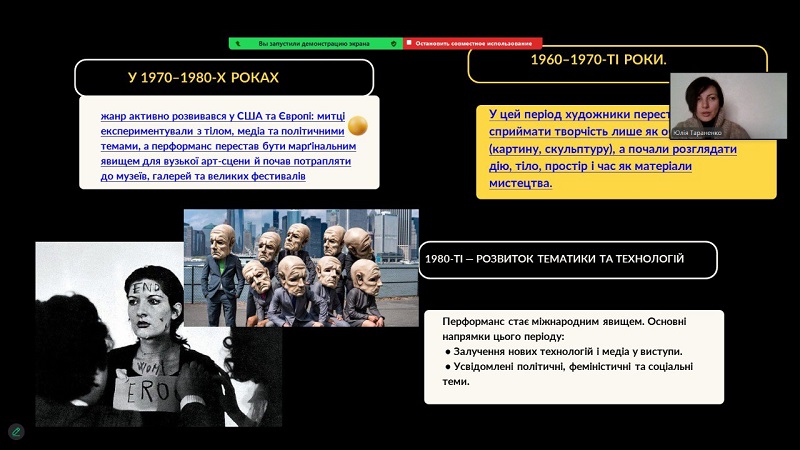
Бінарну лекцію для здобувачів першого (бакалаврського) рівня вищої освіти 1 курсу спеціальності В6 «Перформативні мистецтва» в межах освітнього компонента «Історія мистецтв» провели доцентки кафедри хореографії та фітнесу Юлія Тараненко та Юлія Скиба. Заняття відбулося в онлайн-форматі на платформі Zoom та стало змістовним вступом у професійне поле сучасного мистецького мислення.
Лекція була присвячена знайомству з феноменом перформативного мистецтва, його витоками, естетичними принципами та міждисциплінарною природою. У фокусі уваги опинилися ключові віхи становлення перформансу як художньої практики ХХ–ХХІ століття, зокрема ідеї авангардних рухів, вплив практик дадаїзм, футуризм на формування нової художньої мови дії, присутності та взаємодії з глядачем.
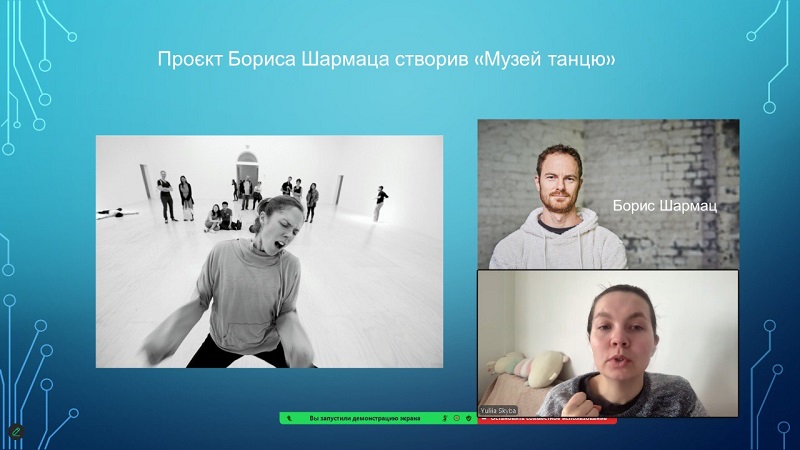
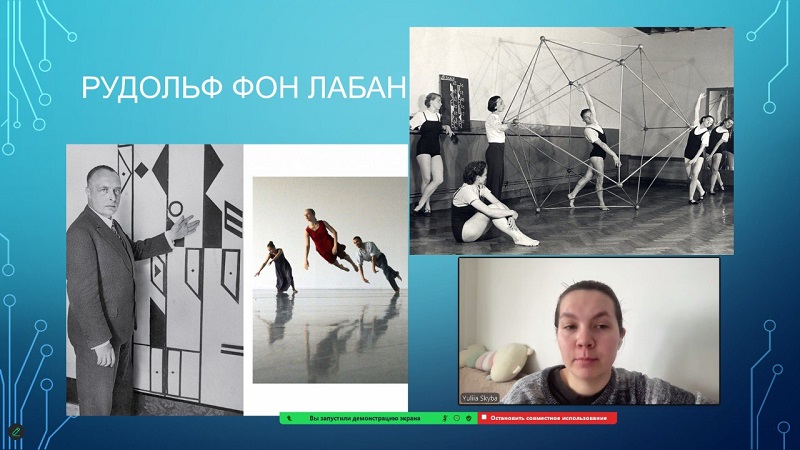
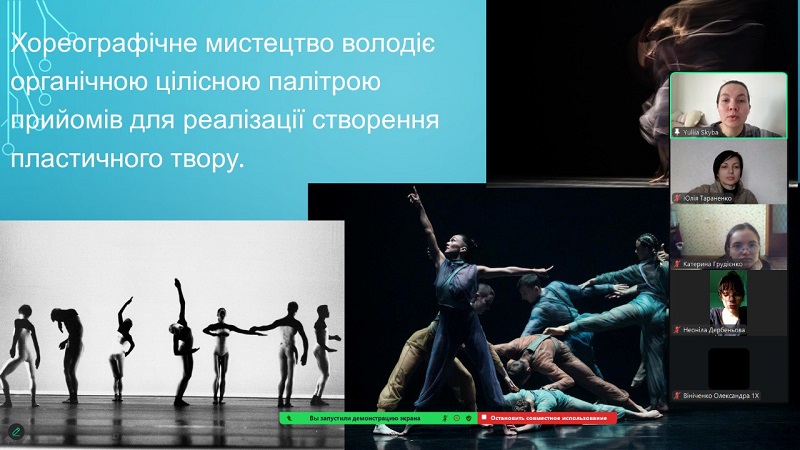
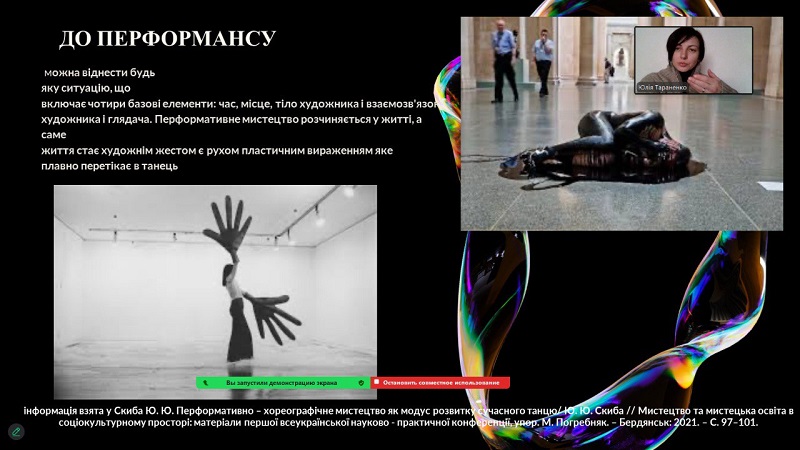
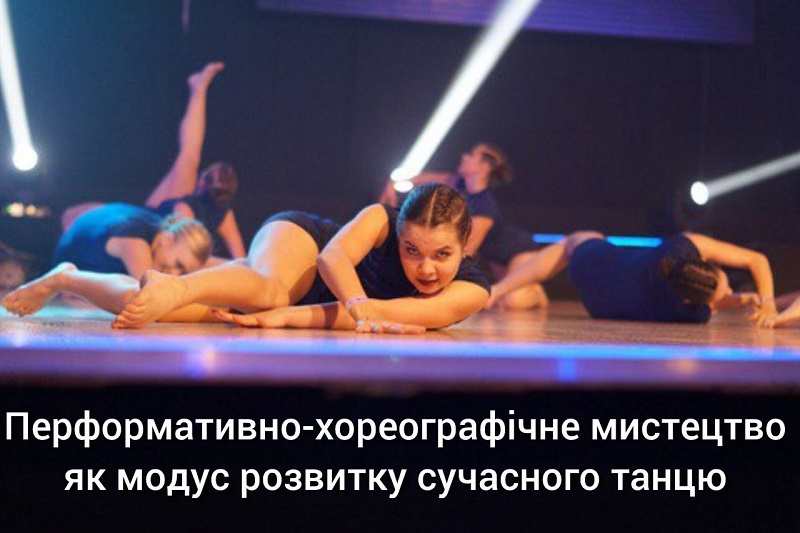
Особливу зацікавленість студентів викликала частина лекції, присвячена перформативно-хореографічному мистецтву. Доцентка Юлія Скиба, авторка дисертаційного дослідження за спеціальністю 024 «Хореографія», поділилася результатами наукових напрацювань щодо пеформативно-хореографічного мистецтва як модусу розвитку сучасного танцю. Було окреслено специфіку тілесності як носія сенсу, зміну ролі виконавця — від інтерпретатора до співавтора події, а також розкрито поняття «перформанс».
Діалог між Юлією Тараненко та Юлією Скибою дозволив поєднати теоретичний аналіз із практичними кейсами, а науковий дискурс — із живою професійною рефлексією. У межах лекції розглядалися приклади синтезу хореографії, театру, візуального мистецтва та медіа, що дозволило студентам усвідомити міжгалузевий характер спеціальності В6 «Перформативні мистецтва».
Попри онлайн-формат, лекція відзначалася активною комунікацією: здобувачі ставили запитання, брали участь в обговореннях, аналізували перформанси.
Бінарна лекція стала важливим кроком у зануренні першокурсників у специфіку перформативного мистецтва як простору експерименту, дослідження та самовираження, а також продемонструвала ефективність інтеграції наукового й практичного досвіду викладачів в освітній процес.

За матеріалами кафедри хореографії та фітнесу
Performing arts in historical and contemporary dimensions: a binary teaching format
A binary lecture for first-year students of the first (Bachelor’s) level of higher education, specialty B6 “Performing Arts,” within the educational component “History of Arts,” was delivered by Associate Professors of the Department of Choreography and Fitness, Yuliia Taranenko and Yuliia Skyba. The class was held online via the Zoom platform and became a meaningful introduction to the professional field of contemporary artistic thinking.
The lecture was devoted to exploring the phenomenon of performing arts, its origins, aesthetic principles, and interdisciplinary nature. The focus was placed on the key milestones in the development of performance as an artistic practice of the 20th and 21st centuries, particularly the ideas of avant-garde movements and the influence of Dadaism and Futurism on the formation of a new artistic language of action, presence, and interaction with the audience.
Particular interest among the students was sparked by the section dedicated to performative-choreographic art. Associate Professor Yuliia Skyba, author of a dissertation in specialty 024 “Choreography,” shared the results of her research on performative-choreographic art as a mode of development of contemporary dance. The lecture outlined the specificity of corporeality as a carrier of meaning, the transformation of the performer’s role—from interpreter to co-author of the event—and clarified the concept of “performance.”
The dialogue between Yuliia Taranenko and Yuliia Skyba enabled the integration of theoretical analysis with practical case studies, and academic discourse with live professional reflection. The lecture included examples of the synthesis of choreography, theatre, visual arts, and media, allowing students to comprehend the interdisciplinary nature of specialty B6 “Performing Arts.”
Despite the online format, the lecture was marked by active communication: students asked questions, participated in discussions, and analyzed performances.
The binary lecture became an important step in immersing first-year students in the specifics of performing arts as a space for experimentation, research, and self-expression, and demonstrated the effectiveness of integrating the scientific and practical experience of lecturers into the educational process.
