
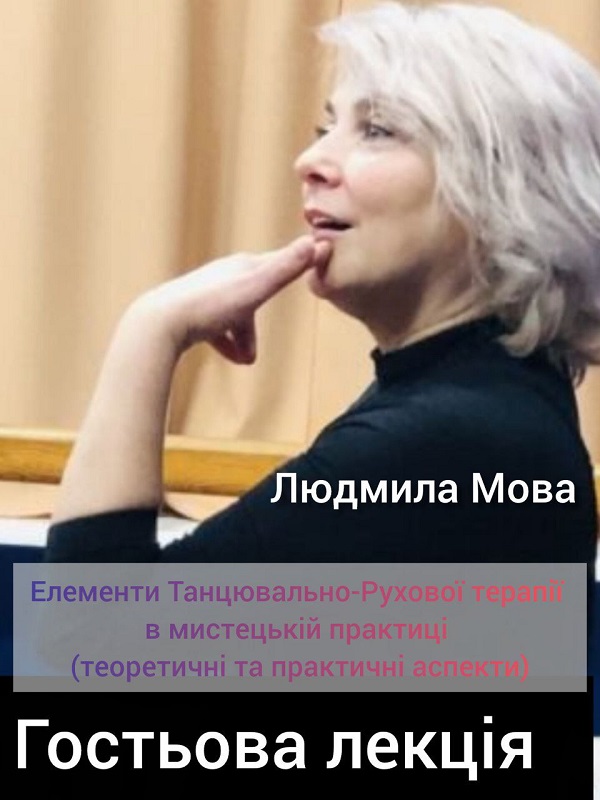
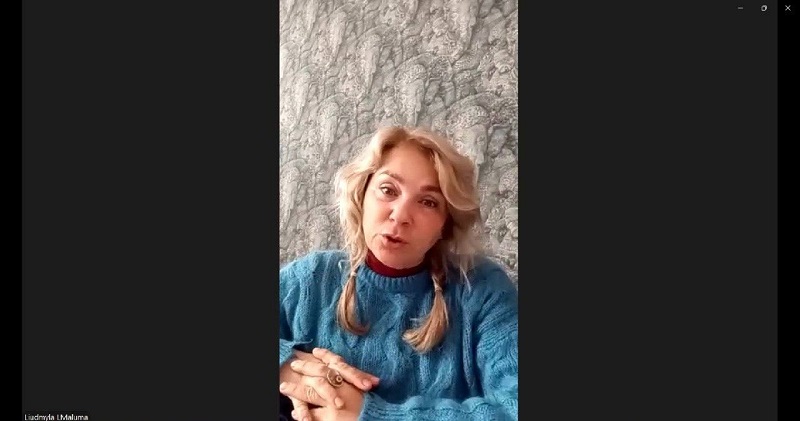
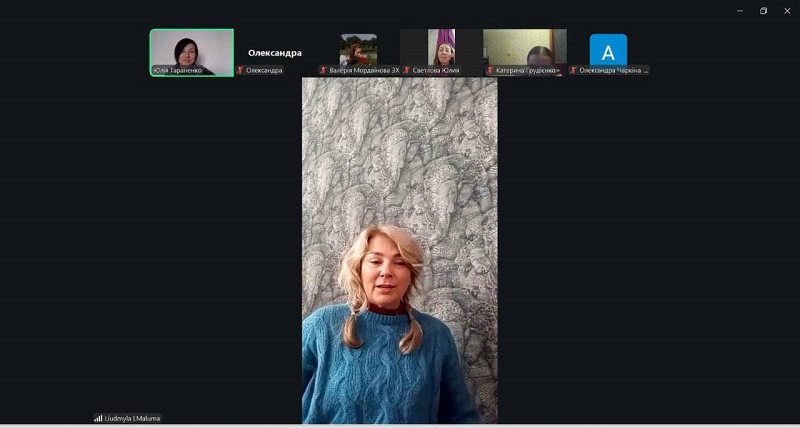
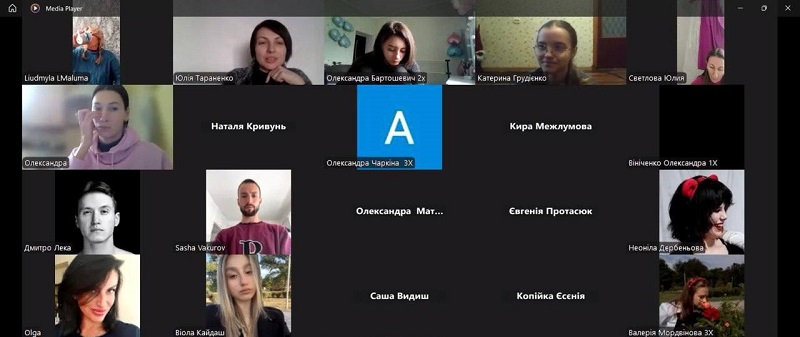
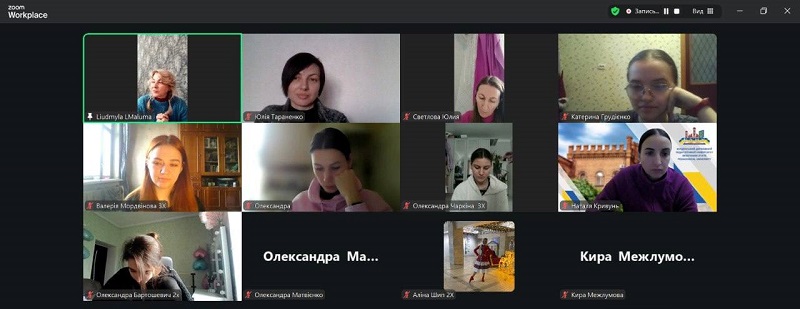
17 лютого 2026 року на кафедрі хореографії та фітнесу відбулася гостьова лекція на тему «Елементи Танцювально-Рухової терапії в мистецький практиці (теоретичні та практичні аспекти)» від докторки педагогогічних наук, професорки кафедри хореографії Київської муніципальної академії естрадного та циркового мистецтва Людмили Мови. Це стало для викладачів та здобувачів вищої освіти важливим кроком до усвідомленого й професійно відповідального використання цього напряму в мистецькому середовищі.
Ініціатором зустрічі виступила завідувачка кафедри хореографії та фітнесу Юлія Тараненко.
Лекторка, Людмила Мова, є психологом, перформером, хореографинею та викладачкою сучасного танцю (техніки контемпорарі, реліз, імпровізації, LMA&BF, танець в рекреаційній системі), членкинею правління та керівницею ГО «Асоціація Танцювально-рухових терапевтів України», спеціалісткою з танцювально-рухової та мультимодальної психотерапії; засновницею і керівницею Центру «LMaluma» в м. Київ.
У ході зустрічі було окреслено історичні витоки напряму та внесок його засновниць — Маріан Чейс, Труді Шуп та Мері Вайтгауз. Окремо підкреслено зв’язок танцювально-рухової терапії з ідеями аналітичної психології Карл Юнг, що розкривають символічну природу руху та його взаємодію з внутрішніми переживаннями людини.
Особливу увагу лекторка приділила етичним аспектам застосування елементів ТРТ у мистецькій діяльності. Було наголошено, що використання цього поняття потребує ґрунтовних знань як у сфері психології, так і хореографії, а також чіткого розуміння професійних меж. Студенти усвідомили, що терапевтична робота вимагає спеціальної підготовки, а інтеграція окремих елементів у педагогічну чи творчо-постановочну практику має здійснюватися відповідально й методично виважено.
Щиро дякуємо Людмилі Мові за професіоналізм, глибину подачі матеріалу та відкритий діалог зі студентами. Гостьова лекція стала цінним внеском у формування відповідального ставлення до використання елементів танцювально-рухової терапії та розширила професійний світогляд майбутніх хореографів.
За матеріалами кафедри хореографії та фітнесу
Guest lecture as a step toward a professional understanding of dance/movement therapy
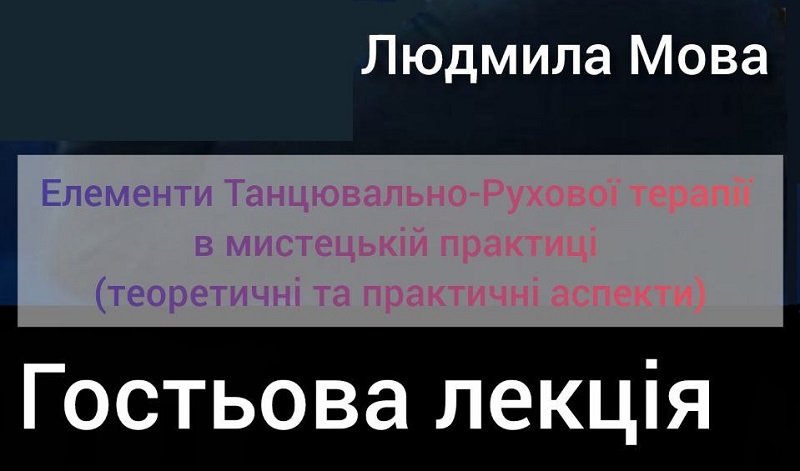
On February 17, 2026, the Department of Choreography and Fitness hosted a guest lecture entitled “Elements of Dance/Movement Therapy in Artistic Practice (Theoretical and Practical Aspects)” delivered by Doctor of Pedagogical Sciences, Professor of the Department of Choreography at the Kyiv Municipal Academy of Variety and Circus Arts, Liudmyla Mova. The event became an important step for faculty members and higher education students toward a conscious and professionally responsible application of this field within the artistic environment.
The meeting was initiated by the Head of the Department of Choreography and Fitness, Yuliia Taranenko.
The lecturer, Liudmyla Mova, is a psychologist, performer, choreographer, and contemporary dance teacher (contemporary technique, release technique, improvisation, LMA & BF, dance in recreational systems), a board member and head of the NGO “Association of Dance/Movement Therapists of Ukraine,” a specialist in dance/movement and multimodal psychotherapy, and the founder and director of the “LMaluma” Center in Kyiv.
During the lecture, the historical origins of the field were outlined, along with the contributions of its founders — Marian Chace, Trudi Schoop, and Mary Whitehouse. Particular attention was paid to the connection between dance/movement therapy and the ideas of analytical psychology developed by Carl Jung, which reveal the symbolic nature of movement and its interaction with a person’s inner experiences.
Special emphasis was placed on the ethical aspects of applying elements of dance/movement therapy in artistic practice. It was stressed that the use of this concept requires in-depth knowledge in both psychology and choreography, as well as a clear understanding of professional boundaries. Students realized that therapeutic work demands specialized training, and that integrating individual elements into pedagogical or creative choreographic practice must be carried out responsibly and methodologically soundly.
We sincerely thank Liudmyla Mova for her professionalism, depth of presentation, and open dialogue with students. The guest lecture made a valuable contribution to fostering a responsible approach to the use of dance/movement therapy elements and broadened the professional outlook of future choreographers.
