
Соціально-виховна виробнича практика є важливою складовою професійної підготовки здобувачів спеціальності І10 «Соціальна робота та консультування». Її метою є розвиток професійних навичок щодо організації соціально-виховної та освітньо-виховної діяльності у реальних умовах роботи з дітьми та молоддю.
Упродовж проходження практики здобувачі 203СР(а)-з та 203СР(б)-з груп мали можливість ознайомитися зі специфікою соціально-виховної роботи в різних типах закладів та організацій, долучитися до організації виховних, соціальних, мотиваційних і дозвіллєвих заходів, а також розвинути професійні компетентності у сфері роботи з дітьми та молоддю.
Базами практики стали заклади освіти, громадські організації та установи, які здійснюють соціально-виховну діяльність із дітьми та молоддю, зокрема ГО «Агенція креативних ініціатив “Більше”», Перещепинський ліцей Перещепинської міської ради, Дніпровський науковий ліцей інформаційних технологій Дніпровської міської ради, Новопокровський ліцей імені В.М. Сиволоба, гімназія №158 Дніпровського району м. Києва, ПТУ №71, Дельжилерський ліцей Татарбунарської міської ради, а також кафедра соціальної роботи та інклюзивної освіти БДПУ.
Практика дала можливість студентам побачити різні напрями соціально-виховної діяльності: організацію виховної роботи у закладах освіти, реалізацію молодіжних та соціальних ініціатив, підтримку дітей з особливими освітніми потребами, проведення просвітницьких і мотиваційних заходів, організацію дозвіллєвої діяльності та роботу з учнівською і студентською молоддю.
Студенти, які проходили практику на базі закладів освіти, долучалися до організації виховних заходів, спостерігали за роботою педагогічних колективів, брали участь у плануванні соціально-виховної роботи, допомагали в організації освітнього процесу та взаємодії з дітьми й молоддю. Особливу увагу було приділено формуванню навичок комунікації, підтримки, організації командної роботи та створення безпечного й підтримуючого середовища.
Важливою складовою практики стала робота в інклюзивному освітньому середовищі. Здобувачі, які проходили практику на базі Перещепинського ліцею Перещепинської міської ради, мали можливість працювати та безпосередньо взаємодіяти з дітьми з інвалідністю.
«Практика дала змогу усвідомити важливість підтримки кожної дитини та значення інклюзивної освіти у сучасному суспільстві. Робота в колективі ліцею була доброзичливою та підтримуючою, а спілкування з дітьми подарувало багато щирих емоцій і натхнення», – зазначають студенти-практиканти.
Практика на базі громадських організацій стала для студентів можливістю долучитися до реалізації соціальних і молодіжних ініціатив, організації просвітницьких заходів та роботи з громадою. Зокрема, здобувачі, які проходили практику в ГО «Агенція креативних ініціатив “Більше”», брали участь у діяльності, спрямованій на розвиток молодіжних ініціатив, підтримку активної молоді та реалізацію соціально значущих заходів.
Частина здобувачів проходила практику за місцем роботи, що дозволило поєднати професійну діяльність із виконанням завдань соціально-виховної практики, поглибити навички організації виховної роботи та проаналізувати особливості взаємодії з різними категоріями дітей і молоді у реальних умовах професійної діяльності.
Окремим напрямом практики стала організація та проведення заходів до Всесвітнього дня соціальної роботи – 2026. У межах соціально-виховної діяльності здобувачі долучилися до підготовки та проведення тематичних онлайн-зустрічей, професійних meet-up’ів та мотиваційних заходів, присвячених людяності, підтримці, інклюзії та соціальним ініціативам.
Однією з таких подій стала професійна зустріч «Кейс-менеджмент в інклюзивній практиці: досвід роботи з дітьми з особливими освітніми потребами», спікеркою якої виступила здобувачка Інна П’ятак. Під час зустрічі учасники обговорювали особливості соціально-педагогічного супроводу дітей з особливими освітніми потребами, важливість співпраці з батьками, педагогами та фахівцями команди супроводу, а також практичні аспекти створення підтримуючого середовища для кожної дитини.
«Участь у такому заході стала цінною можливістю не лише поділитися досвідом, а й підкреслити важливість професії соціального працівника, яка ґрунтується на людяності, підтримці та допомозі тим, хто цього потребує», – ділиться Інна П’ятак.
Ще однією важливою подією стала відкрита зустріч «Людяність у дії: як соціальні ініціативи змінюють громади?», яку провела Марія Епельбаум – здобувачка спеціальності І10 «Соціальна робота та консультування», волонтерка, молодіжна працівниця та авторка блогу «Християнські роздуми».
Під час зустрічі Марія поділилася досвідом реалізації молодіжних і соціальних ініціатив, організації концертів, дитячих таборів, зустрічей та проєктів підтримки для людей поважного віку.
«Для мене соціальна робота — це насамперед покликання до людяності, яке народжується в серці. Щоб змінювати життя, не обов’язково мати великі бюджети – достатньо мати бажання бути джерелом світла там, де є потреба», – зазначила Марія під час зустрічі.
Також у межах практики було організовано онлайн-зустріч «Життя біженців за кордоном: виклики, досвід та нові можливості», присвячену питанням адаптації, підтримки та інтеграції українців за кордоном. Під час заходу учасники обговорювали труднощі адаптації до нового середовища, важливість підтримки громади, роль комунікації та взаємодопомоги у процесі інтеграції.
Частина здобувачів проходила практику на базі кафедри соціальної роботи та інклюзивної освіти БДПУ, долучаючись до організації факультетських соціально-виховних заходів, онлайн-зустрічей, мотиваційних ініціатив та активностей до Всесвітнього дня соціальної роботи. Це дало можливість студентам спробувати себе в ролі організаторів студентських і просвітницьких заходів, розвинути навички роботи з молодіжною аудиторією та командної взаємодії.
За результатами практики студенти вдосконалили навички організації соціально-виховної діяльності, планування та проведення заходів, роботи в команді, комунікації з дітьми та молоддю, розвитку творчих підходів і реалізації соціальних ініціатив. Практика також сприяла розвитку відповідальності, емпатії, креативності та здатності працювати в умовах сучасних соціальних викликів.
Соціально-виховна практика вкотре підтвердила: майбутній соціальний працівник – це не лише фахівець із підтримки, а й організатор середовища довіри, розвитку, взаємодії та людяності.
За матеріалами кафедри соціальної роботи та інклюзивної освіти
Social-educational practice as a space for initiatives, support, and youth work
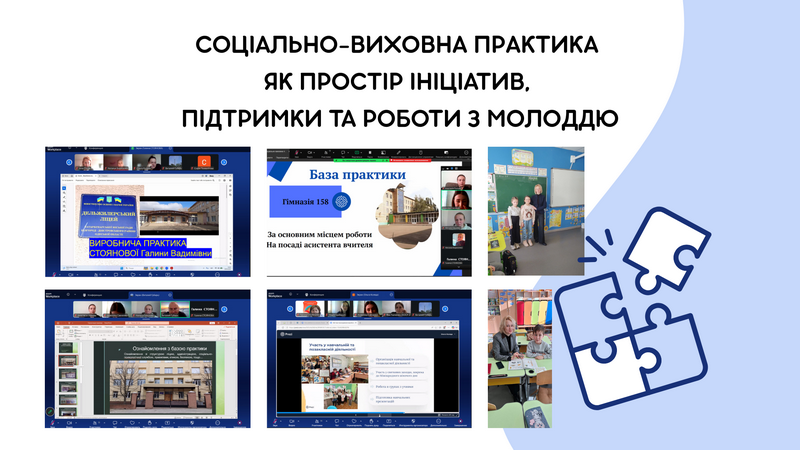
Social-educational field practice is an important component of the professional training of students majoring in I10 “Social Work and Counselling”/231“Social Work”. Its purpose is to develop professional skills related to organizing social-educational and educational activities in real-life settings involving children and youth.
During the practice period, students of groups 203SR(a)-z and 203SR(b)-z had the opportunity to familiarize themselves with the specifics of social-educational work in different types of institutions and organizations, participate in the organization of educational, social, motivational, and leisure activities, and develop professional competencies in the field of work with children and youth.
The practice bases included educational institutions, public organizations, and institutions engaged in social-educational activities with children and youth, including the NGO “Agency of Creative Initiatives ‘Bilʹshe’,” Pereshchepyne Lyceum of the Pereshchepyne City Council, Dnipro Scientific Lyceum of Information Technologies of the Dnipro City Council, Novopokrovskyi Lyceum named after V.M. Syvolob, Gymnasium No. 158 of the Dniprovskyi District of Kyiv, Vocational School No. 71, Delzhyler Lyceum of the Tatarbunary City Council, as well as the Department of Social Work and Inclusive Education of BSPU.
The practice allowed students to observe various areas of social-educational activity, including the organization of educational work in schools, implementation of youth and social initiatives, support for children with special educational needs, organization of awareness-raising and motivational events, leisure activities, and work with school and university youth.
Students who completed their practice at educational institutions participated in organizing educational activities, observed the work of teaching staff, took part in planning social-educational work, assisted in organizing the educational process, and interacted with children and youth. Special attention was paid to developing communication skills, support strategies, teamwork organization, and creating a safe and supportive environment.
An important component of the practice was work in an inclusive educational environment. Students who completed their practice at Pereshchepyne Lyceum had the opportunity to work directly and interact with children with disabilities.
“The practice helped us realize the importance of supporting every child and the significance of inclusive education in modern society. The atmosphere within the lyceum staff was friendly and supportive, while communication with children brought many sincere emotions and inspiration,” the student trainees noted.
Practice within public organizations provided students with the opportunity to engage in social and youth initiatives, awareness-raising activities, and community work. In particular, students who completed their practice at the NGO “Agency of Creative Initiatives ‘Bilʹshe’” participated in activities aimed at developing youth initiatives, supporting active youth, and implementing socially significant projects.
Some students completed their practice at their workplaces, which allowed them to combine professional duties with the objectives of social-educational practice, deepen their skills in organizing educational activities, and analyze the specifics of interaction with different categories of children and youth in real professional settings.
A separate area of the practice involved organizing and conducting activities dedicated to World Social Work Day 2026. Within the framework of social-educational activities, students participated in preparing and conducting thematic online meetings, professional meet-ups, and motivational events devoted to humanity, support, inclusion, and social initiatives.
One of these events was the professional meeting “Case Management in Inclusive Practice: Experience Working with Children with Special Educational Needs,” presented by student Inna Piatak. During the meeting, participants discussed the specifics of socio-pedagogical support for children with special educational needs, the importance of cooperation with parents, teachers, and support team specialists, as well as practical aspects of creating a supportive environment for every child.
“Participation in such an event became a valuable opportunity not only to share experience but also to emphasize the importance of the social worker profession, which is based on humanity, support, and assistance to those who need it,” Inna Piatak shared.
Another important event was the open meeting “Humanity in Action: How Do Social Initiatives Change Communities?”, conducted by Mariia Epelbaum – a student majoring in I10 “Social Work and Counselling,” volunteer, youth worker, and author of the blog “Christian Reflections.”
During the meeting, Mariia shared her experience in implementing youth and social initiatives, organizing concerts, children’s camps, meetings, and support projects for older adults.
“For me, social work is прежде all a calling to humanity that is born in the heart. To change lives, it is not necessary to have large budgets – it is enough to have the desire to become a source of light where there is a need,” Mariia noted during the meeting.
As part of the practice, an online meeting titled “Life of Refugees Abroad: Challenges, Experiences, and New Opportunities” was also organized. The event focused on issues of adaptation, support, and integration of Ukrainians abroad. Participants discussed the difficulties of adapting to a new environment, the importance of community support, and the role of communication and mutual assistance in the integration process.
Some students completed their practice at the Department of Social Work and Inclusive Education of BSPU, participating in the organization of faculty social-educational events, online meetings, motivational initiatives, and activities dedicated to World Social Work Day. This provided students with an opportunity to try themselves in the role of organizers of student and awareness-raising events, as well as to develop skills in working with youth audiences and teamwork.
As a result of the practice, students improved their skills in organizing social-educational activities, planning and conducting events, teamwork, communication with children and youth, developing creative approaches, and implementing social initiatives. The practice also contributed to the development of responsibility, empathy, creativity, and the ability to work under contemporary social challenges.
Social-educational practice once again confirmed that a future social worker is not only a support specialist but also an organizer of an environment of trust, development, interaction, and humanity.
Based on materials provided by the Department of Social Work and Inclusive Education
