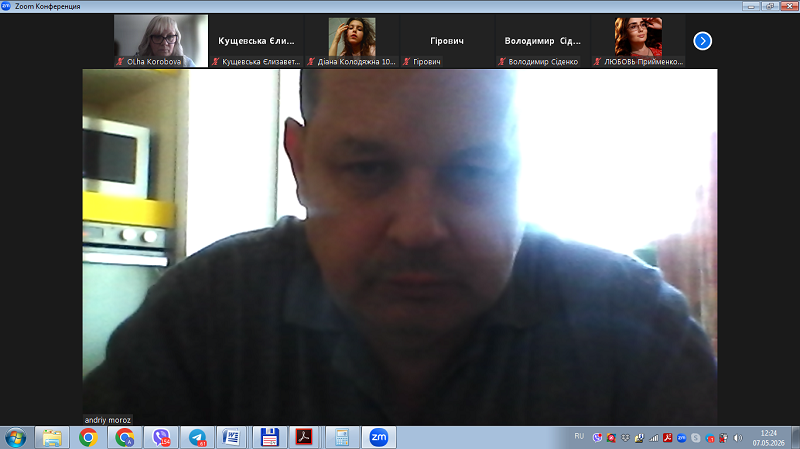
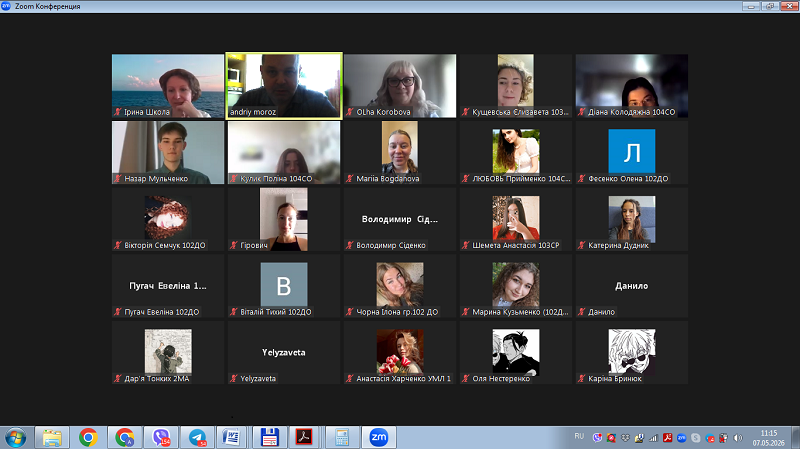
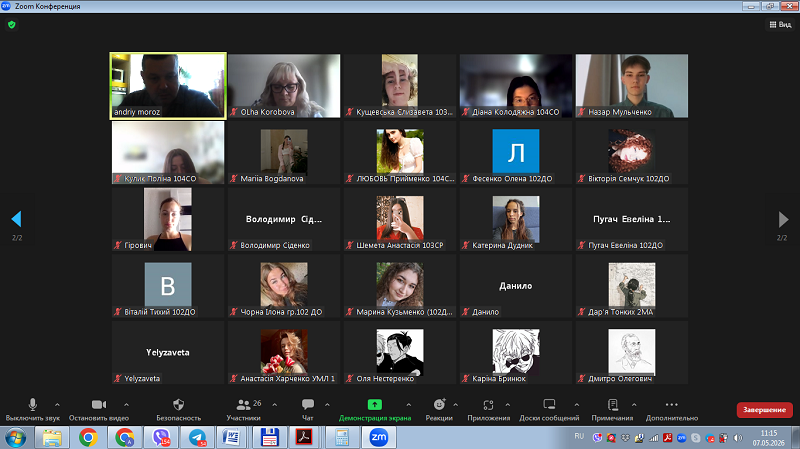
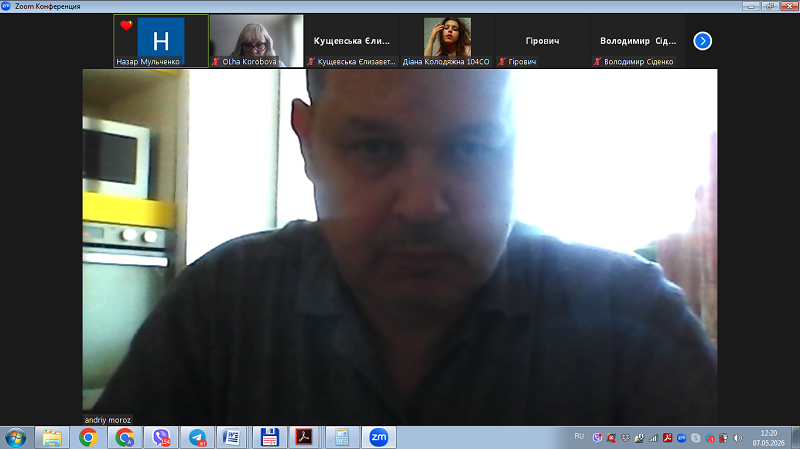
7 травня 2026 року о 11:10 на базі кафедри іноземних мов і методики викладання в межах роботи студентського наукового гуртка «Іноземні мови в сучасному світі» відбулося чергове засідання для здобувачів вищої освіти БДПУ. Керівником гуртка є кандидат філологічних наук, доцент Мороз А. А.
Тема засідання — «Синтаксичні труднощі при перекладі».
Під час засідання було розглянуто основні синтаксичні проблеми, які виникають у процесі перекладу з англійської мови українською та навпаки. Особливу увагу приділено відмінностям у структурі речення, порядку слів, способах вираження підмета й присудка, а також особливостям передачі складнопідрядних і безособових конструкцій.
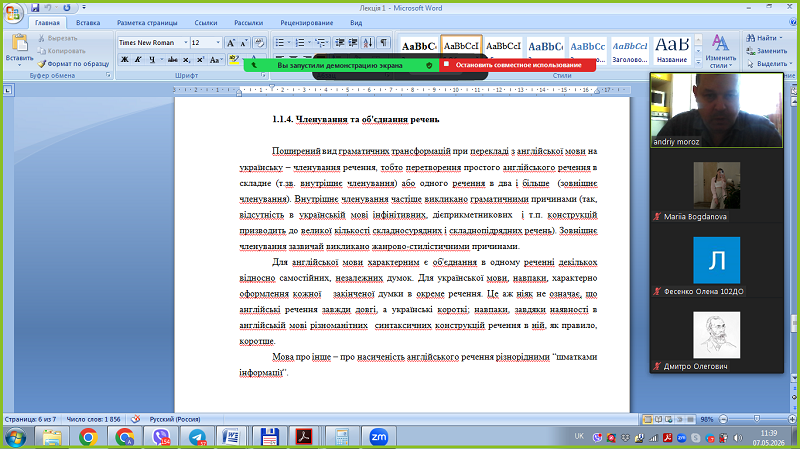
У межах обговорення студенти проаналізували типові труднощі перекладу англійських синтаксичних конструкцій, зокрема пасивного стану, інфінітивних та герундіальних зворотів, складних додатків і складних підметів. Також було розглянуто питання синтаксичної компресії та розгортання речень у художньому й публіцистичному перекладі.
Практична частина засідання передбачала аналіз фрагментів англомовних текстів різних стилів. Студенти пропонували власні варіанти перекладу, порівнювали синтаксичні моделі двох мов та обґрунтовували вибір перекладацьких рішень. Окрему увагу було приділено необхідності збереження логіки висловлювання, стилістичного забарвлення та природності мовлення у мові перекладу.
Засідання мало інтерактивний характер і сприяло розвитку професійних компетентностей майбутніх філологів, формуванню навичок синтаксичного аналізу та вдосконаленню перекладацької майстерності.
Проведене засідання засвідчило актуальність вивчення синтаксичних аспектів перекладу в сучасній філологічній освіті. Отримані знання та практичні навички будуть корисними студентам у подальшій навчальній, науковій і професійній діяльності, зокрема під час виконання перекладацьких завдань, написання наукових робіт та аналізу художніх текстів.
За матеріалами кафедри іноземних мов та методики викладання
Translation transformations as a key tool in the training of future philologists
Last week, an open lecture was held at the Department of Foreign Languages and Teaching Methods as part of the work of the Linguistic Student Scientific Club for higher education students of BSPU. The head of the club is Candidate of Philological Sciences, Associate Professor A. Moroz.
The lecture was devoted to the topical topic “Translation transformations, stylistic techniques and lexical difficulties in literary translation”.
During the lesson, the main types of translation transformations were considered, in particular grammatical, lexical, semantic and stylistic. Particular attention was paid to the need to adapt the text to the norms of the target language in order to preserve the content, style and emotional coloring of the original. Students were familiarized with examples of transformations based on works of fiction in English and world literature.
The lecture analyzed such lexical transformations as concretization, generalization, modulation, and compensation. Practical examples demonstrated how a translator can change the structure of an utterance, select culturally conditioned equivalents, or introduce additional elements to preserve the artistic effect. The difficulties of translating idioms, phraseological units, authorial neologisms, and stylistically marked vocabulary were separately considered.
Considerable attention was paid to stylistic techniques in translation, such as preserving metaphors, rhythm, tone, and register of speech. Students analyzed fragments of works by famous English-speaking authors, comparing the original texts with Ukrainian translations.
The lecture was interactive: the candidates actively participated in the discussion, offered their own translation options, and argued for the choice of certain translation solutions. This format contributed to the development of critical thinking, translation intuition, and professional competencies of future philologists.
The lesson conducted within the framework of the linguistic club’s activities showed that translation transformations are not only a technical technique, but also a creative process that requires in-depth knowledge of languages, cultures, and stylistics. The knowledge gained will be useful for students in their further educational and scientific activities, in particular when writing course and qualification papers, as well as in the practice of literary translation.
