Навчальний рік добіг завершення, а це означає, що настав час підбити підсумки роботи Школи лідерства факультету дошкільної, спеціальної та соціальної освіти. Упродовж 2025–2026 навчального року Школа вкотре стала простором, де майбутні фахівці не лише здобували нові знання, а й розвивали лідерські якості, формували активну громадянську позицію та вчилися реалізовувати власні ініціативи.
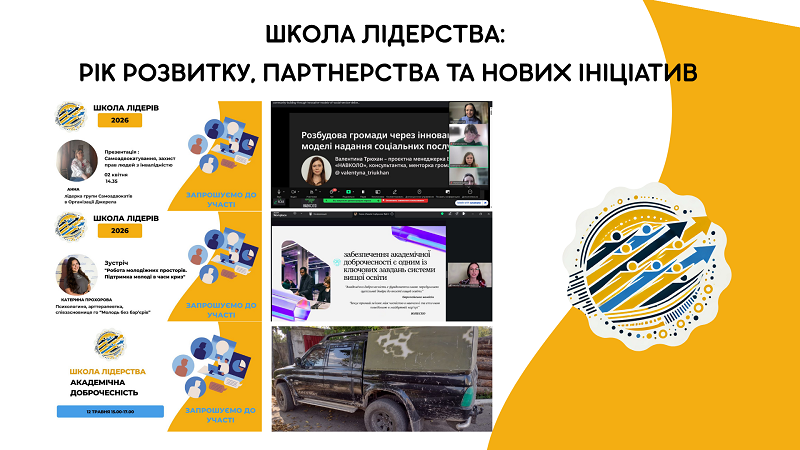
Протягом року відбулося 17 тематичних зустрічей, присвячених актуальним питанням сучасного суспільства та професійної діяльності. Учасники обговорювали академічну доброчесність, українську ідентичність і культуру, самоадвокатування та захист прав людей з інвалідністю, виклики життя українських біженців за кордоном, діяльність молодіжних просторів, медіацію, інноваційні моделі надання соціальних послуг, управління персоналом, розвиток громад, підтримку прифронтових територій, профілактику суїцидальної поведінки серед поранених військових і принципи ненасильницького спілкування.
Важливою особливістю Школи є поєднання академічних знань із практичним досвідом. Саме тому до проведення занять долучилися фахівці різних сфер діяльності. Про самоадвокатування людей з інвалідністю розповідала лідерка групи самоадвокатів ГО «Джерела» Анна Саморай. Психологічні аспекти підтримки та розвитку особистості учасники опрацьовували разом із психологинею та арттерапевткою Катериною Прохоровою і психологинею-тьюторкою ЮНІСЕФ Іриною Шевченко. Практичними інструментами медіації, ефективної комунікації та ненасильницького спілкування поділилася медіаторка Наталія Тітійова. Про сучасне лідерство й управління персоналом говорила HR-бізнес-партнерка Олена Таран.
Не менш цінними стали зустрічі, присвячені розвитку громад і соціальному проєктному менеджменту. Начальник Андрівської сільської військової адміністрації Богдан Ткаченко поділився досвідом роботи в умовах воєнного часу, проєктна менеджерка Валентина Трюхан ознайомила учасників із сучасними підходами до розвитку громад та моніторингу соціальних проєктів, а громадська діячка Єлизавета Бончужна представила практичний досвід підтримки громад Півдня та Сходу України. Окрему увагу питанням реабілітації та підтримки військових приділив фізичний терапевт Мобільної реабілітаційної команди Волинської обласної організації Товариства Червоного Хреста України Олександр Пасевич.
Показовим результатом роботи Школи стала активна участь самих студентів. Шість із сімнадцяти заходів були повністю організовані та проведені учасниками Школи, що стало важливим кроком у розвитку їхніх організаторських, комунікативних і лідерських компетентностей.
Протягом року учасники також реалізували низку позанавчальних ініціатив. Вони долучилися до написання Радіодиктанту національної єдності, провели заняття для українського розмовного клубу для дорослих під керівництвом Ірини Соколової, організували онлайн-майстерню з розпису писанок та дослідження української культури, успішно склали Національний тест із медіаграмотності «Фільтр», а одна з учасниць представила власну відеороботу на конкурс до Всесвітнього дня поезії.
Важливим напрямом діяльності залишалося волонтерство. Розвиваючи навички фандрайзингу та соціального лідерства, учасниці Школи організували благодійний збір коштів на ремонт автомобіля для військових медиків. Завдяки підтримці студентської та викладацької спільноти університету необхідну суму вдалося зібрати, а кошти вже передано на ремонт транспортного засобу.
Підсумки роботи Школи лідерства були представлені на плановому засіданні Ради роботодавців спеціальності І10 «Соціальна робота та консультування». Разом із партнерами обговорено перспективи подальшого розвитку Школи як ефективного інструменту формування лідерського потенціалу, стратегічного мислення, комунікативної компетентності, емоційного інтелекту та адаптивності майбутніх фахівців.
Школа лідерства продовжує об’єднувати студентів, викладачів і практиків навколо спільної мети — підготовки фахівців, здатних відповідально діяти, ініціювати позитивні зміни та брати на себе лідерство у професійній діяльності й розвитку громад.
Діяльність Школи лідерства реалізується відповідно до Цілей сталого розвитку ООН, насамперед ЦСР 4 «Якісна освіта», ЦСР 10 «Скорочення нерівності» та ЦСР 16 «Мир, справедливість та сильні інституції».
За матеріалами Алли Мельничук,
Асистентки кафедри соціальної роботи та інклюзивної освіти,
кураторки Школи лідерства
Leadership school: a year of growth, partnership, and new initiatives
As the academic year comes to a close, it is time to reflect on the achievements of the Leadership School of the Faculty of Preschool, Special and Social Education. Throughout the 2025–2026 academic year, the School once again served as a dynamic platform where future professionals not only acquired new knowledge but also strengthened their leadership skills, developed active citizenship, and learned how to turn ideas into meaningful initiatives.
Over the course of the year, the Leadership School hosted 17 thematic sessions addressing current social challenges and professional issues. Participants explored topics such as academic integrity, Ukrainian identity and culture, self-advocacy and the protection of the rights of persons with disabilities, the experiences of Ukrainian refugees abroad, youth spaces and youth support during times of crisis, mediation, innovative models of social service provision, human resource management, community development, support for frontline communities, suicide prevention among wounded military personnel, and the principles of nonviolent communication.
One of the School’s defining features is its combination of academic learning with practical expertise. Professionals from a wide range of fields joined the programme to share their knowledge and experience. Anna Samorai, a self-advocacy leader from the NGO Dzherela, introduced participants to self-advocacy for persons with disabilities. Psychological well-being and personal development were discussed with psychologist and art therapist Kateryna Prokhorova and UNICEF psychologist-tutor Iryna Shevchenko. Mediator Nataliia Titiiova presented practical approaches to mediation, effective communication, and nonviolent communication, while HR Business Partner Olena Taran shared insights into contemporary leadership and human resource management.
Community development and social project management were another important focus of the programme. Bohdan Tkachenko, Head of the Andriivka Rural Military Administration, discussed local governance under wartime conditions. Project manager Valentyna Triukhan introduced participants to modern approaches to community development and project monitoring and evaluation, while civic activist Yelyzaveta Bonchuzhna shared practical experience in supporting communities in southern and eastern Ukraine. Rehabilitation specialist Oleksandr Pasevych, a physical therapist with the Mobile Rehabilitation Team of the Volyn Regional Organization of the Ukrainian Red Cross Society, spoke about rehabilitation and support for military personnel.
A distinctive achievement of the Leadership School was the active involvement of students themselves. Six of the seventeen sessions were entirely designed and delivered by student participants, providing valuable opportunities to strengthen their organisational, communication, and leadership competencies.
Throughout the year, participants also implemented a number of extracurricular initiatives. They took part in the National Radio Dictation of Unity, conducted sessions for an adult Ukrainian Conversation Club led by Iryna Sokolova, organised an online workshop on traditional Ukrainian Easter egg painting (pysanka) and Ukrainian cultural heritage, successfully completed the National Media Literacy Test “Filter,” and one participant created a video for the World Poetry Day competition.
Volunteering remained an integral part of the Leadership School’s activities. As part of developing fundraising and social leadership skills, participants organised a charity campaign to raise funds for the repair of a vehicle used by military medics. Thanks to the support of the university’s students and academic staff, the fundraising campaign was successfully completed, and the funds have already been transferred for the vehicle’s repair.
The outcomes of the Leadership School were presented at a regular meeting of the Employers’ Advisory Board for the interdisciplinary academic programme I10 Social Work and Counselling. Together with external partners, participants discussed further opportunities to strengthen the School as an effective platform for developing leadership potential, strategic thinking, communication skills, emotional intelligence, and adaptability among future professionals.
The Leadership School continues to bring together students, academics, and practitioners around a shared mission: preparing professionals who are ready to act responsibly, initiate positive change, and demonstrate leadership in their professional practice and community development.
The activities of the Leadership School contribute directly to the United Nations Sustainable Development Goals (SDGs), particularly SDG 4 – Quality Education, SDG 10 – Reduced Inequalities, and SDG 16 – Peace, Justice and Strong Institutions.
Based on materials provided by Alla Melnychuk,
Assistant at the Department of Social Work and Inclusive Education,
Coordinator of the Leadership School
