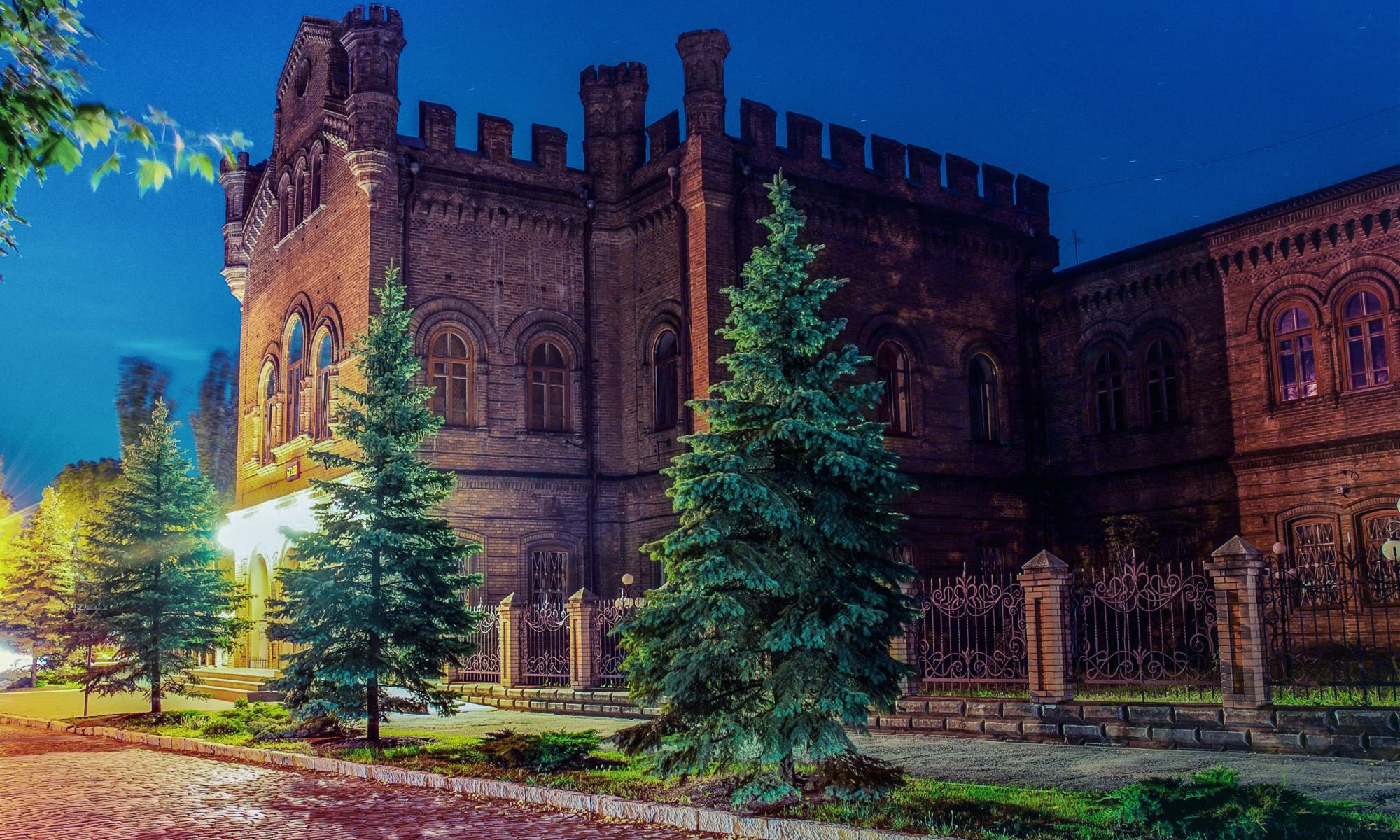
У межах Днів науки на Соціально-гуманітарному факультеті відбувся відкритий семінар «Містицизм в авраамічних релігіях: традиції, практики та вплив на культуру». Захід був ініційований історичним гуртком «Underground history» спільно з кафедрою історії та філософії. Запропонований формат спілкування викладачів та здобувачів використовувався вперше.
Метою семінару було не просто зазирнути за завісу релігійних таємниць, а проаналізувати, як містичний досвід формував культуру, філософію та світогляд цілих епох. Організаторам вдалося зібрати широку аудиторію: від зацікавлених першокурсників до викладачів та гостей.
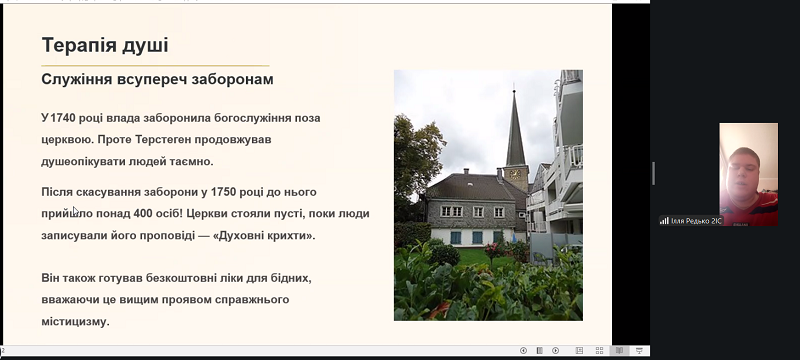
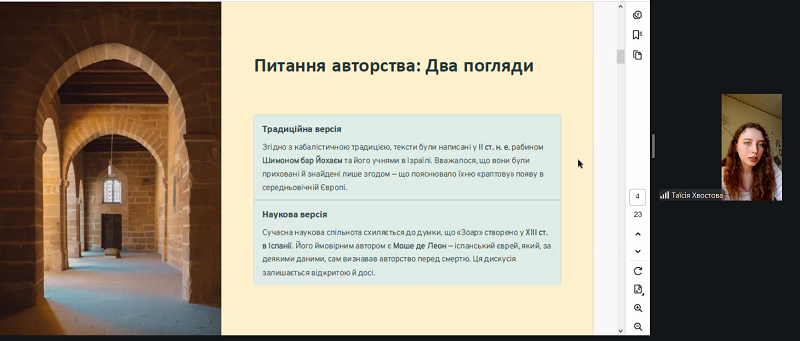
Програма заходу зосередилася на двох контрастних, але однаково захопливих полюсах містичної думки. Основні доповіді представили здобувачі другого курсу: Таїсія Хвостова, яка занурила присутніх у таємниці юдейської традиції з доповіддю «Книга Зоар: містичний коментар до Тори». Слухачі дізналися про складну символіку Каббали та про те, як середньовічні тексти намагалися пояснити зв’язок між Божественним та земним. Ілля Редько переніс аудиторію в атмосферу радикального пієтизму з темою «Генріх Терстеґен: «Тиха революція» протестантського містицизму». Доповідь розкрила історію людини, яка відмовилася від зовнішньої церковної обрядовості заради «внутрішнього світла» та спокою душі.
Після виступів були запитання від викладачів та студентів, що стосувалися як історичної достовірності джерел, так і актуальності містичних практик у сучасному світі. Про зацікавленість аудиторії темами доповідей свідчили запитання та прохання порекомендувати літературу, аби розширити власне бачення запропонованих тем для обговорення.
Містицизм — це не про магію, це про граничний досвід людини. Те, що наші студенти беруться за такі складні теми, свідчить про високий рівень їхньої наукової сміливості.
Золотар Людмила, старша викладачка кафедри історії та філософії
Secrets of Faith – Lifting the Veil with the «Underground History» History Club
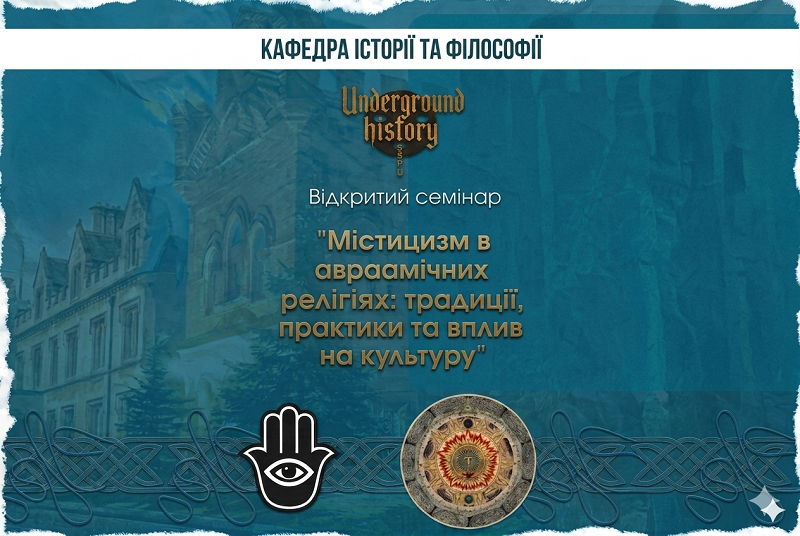
As part of Science Days, the Faculty of Social Sciences and Humanities hosted an open seminar entitled «Mysticism in the Abrahamic Religions: Traditions, Practices and Cultural Influence». The event was organised by the «Underground History» history club in collaboration with the Department of History and Philosophy. This format of interaction between lecturers and students was used for the first time.
The aim of the seminar was not merely to peek behind the curtain of religious mysteries, but to analyse how mystical experience shaped the culture, philosophy and worldview of entire eras. The organisers succeeded in attracting a wide audience: from interested first-year students to lecturers and guests.
The programme focused on two contrasting yet equally fascinating poles of mystical thought. The main presentations were delivered by second-year postgraduate students: Taisiia Khvostova, who immersed the audience in the mysteries of the Jewish tradition with her presentation «The Book of Zohar: A Mystical Commentary on the Torah». The audience learnt about the complex symbolism of Kabbalah and how medieval texts sought to explain the connection between the Divine and the earthly. Ilya Redko transported the audience into an atmosphere of radical pietism with his presentation «Heinrich Ter Stegen: The «Quiet Revolution» of Protestant Mysticism». The presentation revealed the story of a man who renounced external church rituals in favour of «inner light» and peace of mind.
Following the presentations, there were questions from lecturers and students concerning both the historical accuracy of the sources and the relevance of mystical practices in the modern world. The audience’s interest in the topics of the presentations was evident from their questions and requests for recommended reading, with a view to broadening their own understanding of the topics put forward for discussion.
Mysticism is not about magic; it is about the human experience of the extreme. The fact that our students tackle such complex topics testifies to their high level of academic courage.
Lyudmyla Zolotar, Senior Lecturer at the Department of History and Philosophy
