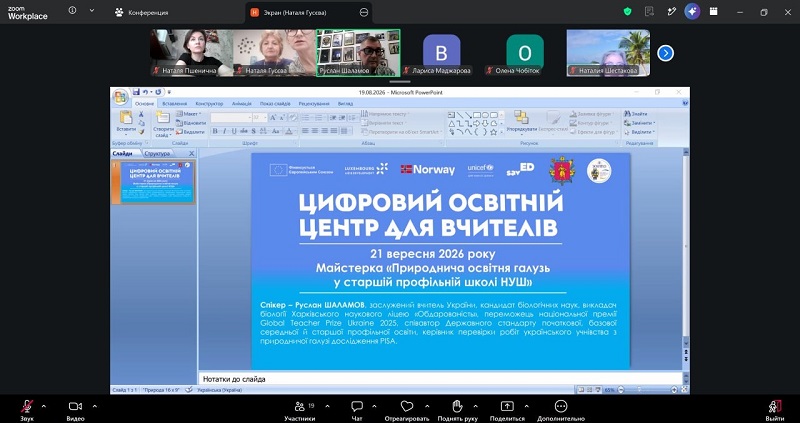
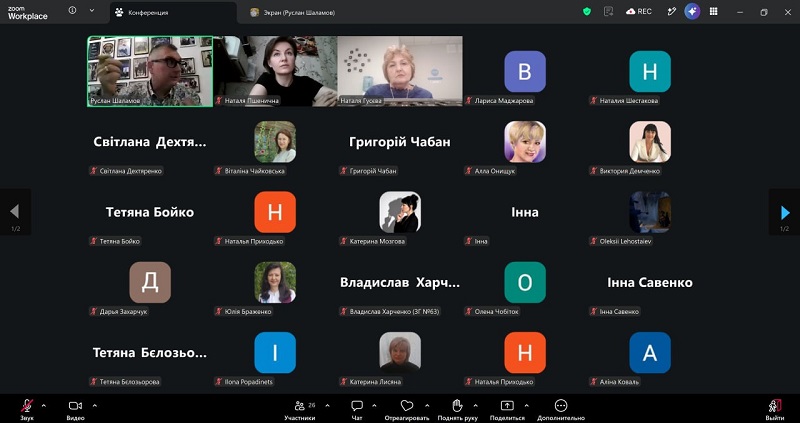
21 вересня 2026 року викладачі кафедри біології, здоров’я людини та фізичної реабілітації та здобувачі магістерського рівня, які навчаються за ОПП «Середня освіта. Біологія та здоров’я людини» та «Біологія та здоров’я людини» долучилися до майстерки «Природнича освітня галузь у старшій профільній школі НУШ», проведеної в межах роботи Цифрового освітнього центру для вчителів від ОНМЦ ЗОІППО.
Спікером заходу став Руслан Шаламов – заслужений вчитель України, кандидат біологічних наук, викладач біології Харківського наукового ліцею «Обдарованість», переможець національної премії Global Teacher Prize Ukraine 2025, співавтор державних стандартів освіти та керівник перевірки робіт українського учнівства з природничої галузі дослідження PISA.
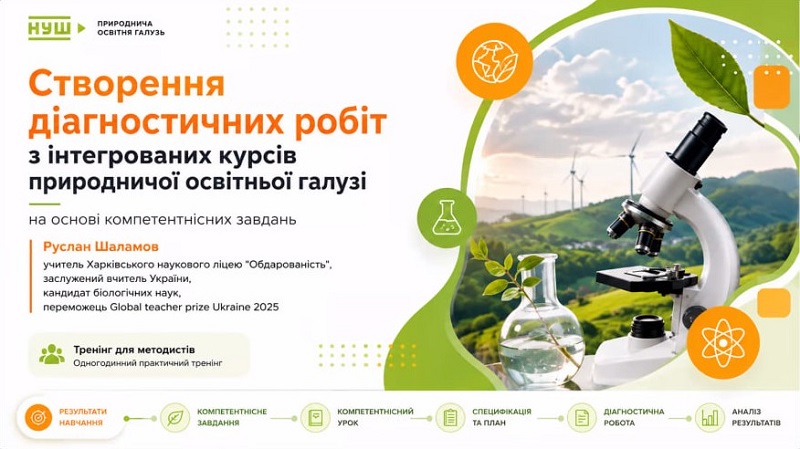
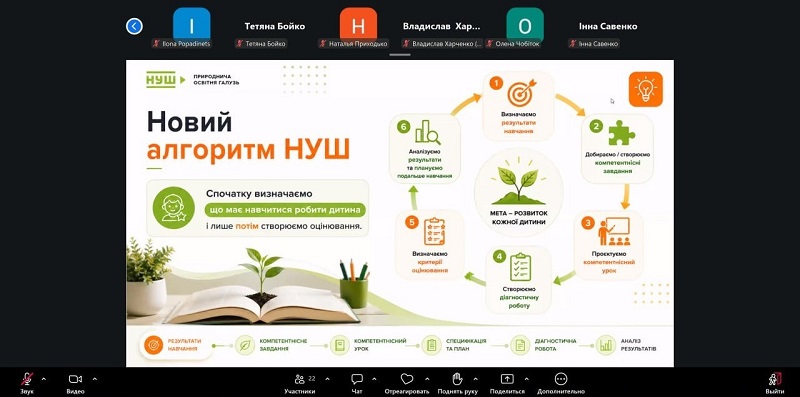
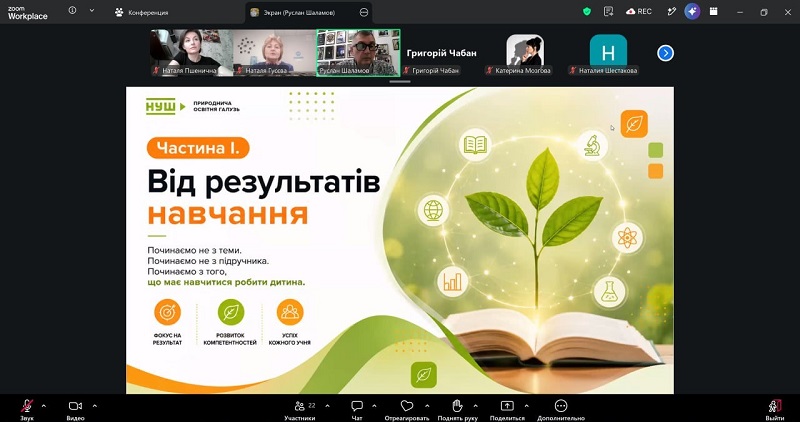
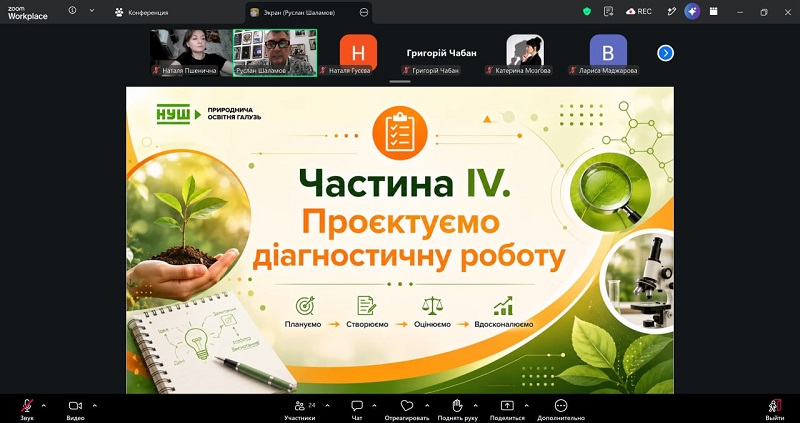
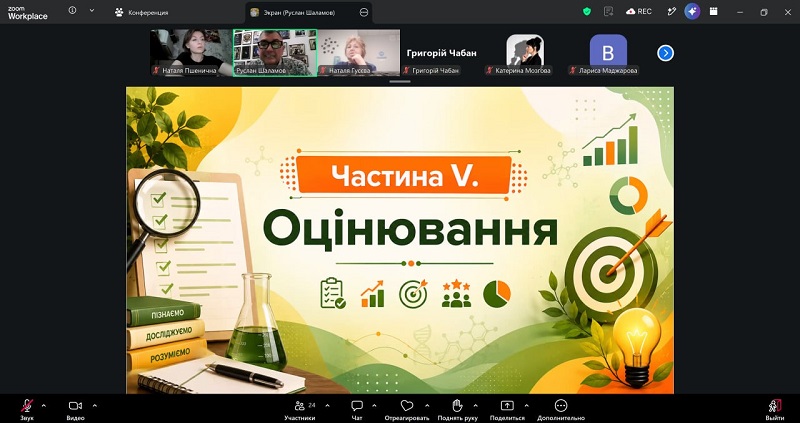
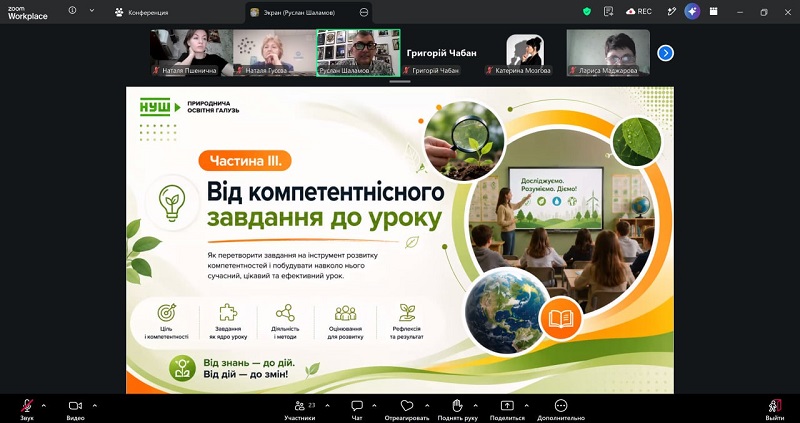
У центрі уваги учасників була одна з найбільш актуальних для сучасної природничої освіти проблем – як перейти від перевірки засвоєних знань до оцінювання сформованих компетентностей учня. Під час практичного тренінгу «Створення діагностичних робіт з інтегрованих курсів природничої освітньої галузі на основі компетентнісних завдань» було розглянуто логіку проєктування навчання від очікуваних результатів до компетентнісного завдання, уроку, діагностичної роботи та подальшого аналізу отриманих результатів.
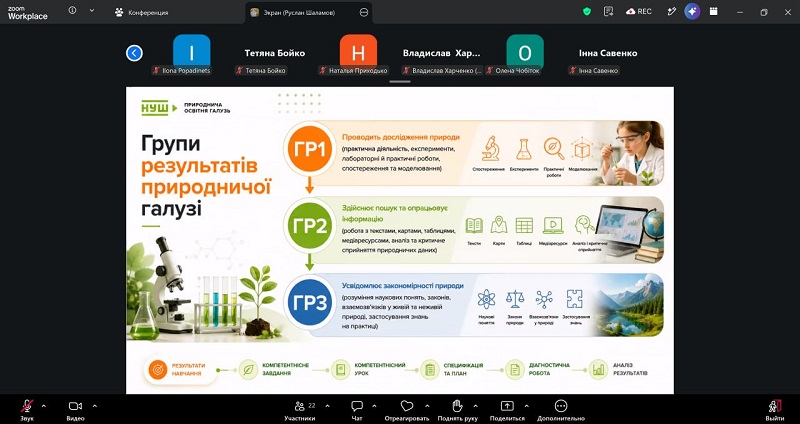
Особливу увагу було приділено групам результатів природничої освітньої галузі та тим видам навчальної діяльності, які дають змогу їх формувати й оцінювати. Йшлося про дослідження та експериментування, роботу з даними й різними джерелами інформації, аналіз та інтерпретацію результатів, установлення закономірностей, аргументацію, моделювання, розв’язання проблем і застосування природничих знань у реальних життєвих ситуаціях.
Важливим акцентом майстерки стало оцінювання заради розвитку, а не заради балів. Результати діагностичної роботи мають бути не завершенням навчання, а підставою для визначення сформованих умінь, виявлення труднощів і планування наступних кроків учителя та учня. Саме тому окремо розглядалися принципи створення специфікації діагностичної роботи, добору різних типів завдань, визначення критеріїв оцінювання та використання аналітичних рубрик.
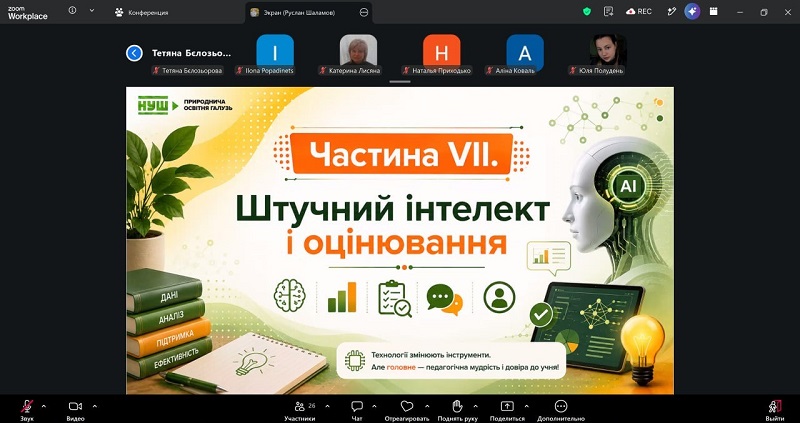
Не оминули й питання, яке сьогодні дедалі більше змінює освітню практику – використання штучного інтелекту. Якщо готову відповідь можна отримати за кілька секунд, завдання вчителя полягає вже не лише в перевірці результату, а у створенні умов, за яких учень має аналізувати, ставити запитання, перевіряти інформацію, знаходити слабкі місця в аргументації та формулювати власний висновок.
Участь у таких заходах має особливе значення для підготовки майбутніх педагогів, адже дозволяє інтегрувати актуальні підходи НУШ безпосередньо у зміст професійної підготовки здобувачів освіти. Майбутні вчителі та викладачі мають не лише знати сучасну біологію, а й уміти перетворювати ці знання на завдання, що спонукають здобувачів освіти досліджувати, аналізувати, аргументувати, робити висновки й застосовувати знання.
Гарант ОПП «Біологія та здоров’я людини»
доцент кафедри біології, здоров’я людини та фізичної реабілітації
Наталя Пшенична
Natural Science Education in the NUS Senior Profile School
On September 21, 2026, lecturers of the Department of Biology, Human Health and Physical Rehabilitation and Master’s degree students enrolled in the educational and professional programmes “Secondary Education. Biology and Human Health” and “Biology and Human Health” joined the workshop “Natural Science Education in the NUS Senior Profile School”, held within the activities of the Digital Educational Centre for Teachers of the ONMЦ ZOIPPO.
The speaker was Ruslan Shalamov, Honoured Teacher of Ukraine, PhD in Biology, Biology teacher at the Kharkiv Scientific Lyceum “Obdarovanist”, winner of the Global Teacher Prize Ukraine 2025, co-author of the State Standards of Education, and head of the assessment of Ukrainian students’ PISA papers in the natural sciences domain.
The workshop focused on one of the most pressing issues in contemporary science education – how to move from assessing acquired knowledge to evaluating students’ developed competencies. During the practical training session “Designing Diagnostic Assessments for Integrated Natural Science Courses Based on Competency-Based Tasks”, participants explored the logic of designing the learning process, from expected learning outcomes to competency-based tasks, lessons, diagnostic assessments, and the subsequent analysis of the results obtained.
Particular attention was paid to the groups of learning outcomes in the natural science educational field and the types of learning activities that enable their development and assessment. These included research and experimentation, working with data and various sources of information, analysing and interpreting results, identifying patterns, reasoning, modelling, problem-solving, and applying scientific knowledge in real-life situations.
An important focus of the workshop was assessment for development rather than for grades. The results of diagnostic assessments should not mark the end of the learning process but should serve as a basis for identifying developed skills, detecting difficulties, and planning the next steps for both teachers and students. Therefore, particular attention was given to the principles of designing diagnostic assessment specifications, selecting different types of tasks, establishing assessment criteria, and using analytical rubrics.
The workshop also addressed an issue that is increasingly transforming educational practice – the use of artificial intelligence. When a ready-made answer can be obtained within seconds, the teacher’s task is no longer limited to checking the result. Instead, teachers need to create conditions in which students analyse, ask questions, verify information, identify weaknesses in arguments, and formulate their own conclusions.
Participation in such events is particularly important for the preparation of future educators, as it enables current NUS approaches to be integrated directly into the professional training of students. Future school teachers and university lecturers should not only have a sound knowledge of modern biology but also be able to transform this knowledge into tasks that encourage students to conduct research, analyse, reason, draw conclusions, and apply their knowledge.
Guarantor of the Educational and Professional Programme “Biology and Human Health”Associate Professor of the Department of Biology,
Human Health and Physical Rehabilitation
Natalia Pshenychna
