
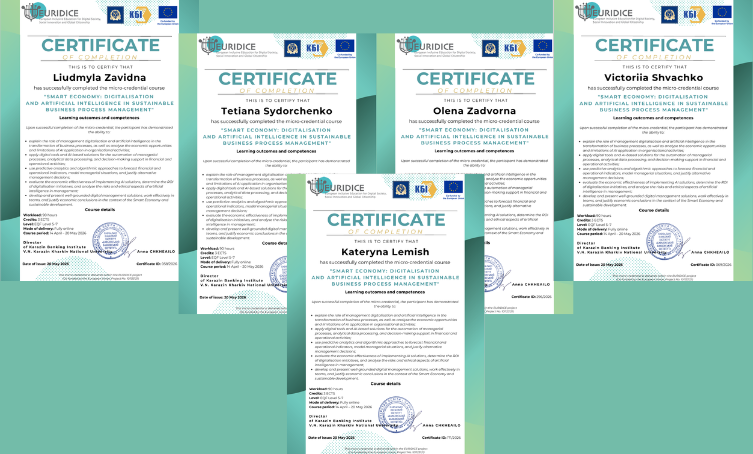
Викладачі кафедри економіки, менеджменту та фінансів Бердянського державного педагогічного університету взяли активну участь у спеціалізованій програмі підвищення кваліфікації – мікрокредитному курсі «Smart-економіка: цифровізація та штучний інтелект у сталому управлінні бізнес-процесами».
Навчання тривало з 14 квітня до 20 травня 2026 року та було організоване в межах міжнародного проєкту EURIDICE за фінансової підтримки Європейського Союзу. Лектором курсу виступив Роман Піскунов, кандидат економічних наук, завідувач кафедри менеджменту, обліку та бізнес-комунікацій ННІ «Каразінський банківський інститут».
Програма курсу охоплювала широкий спектр сучасних управлінських і технологічних аспектів, актуальних для підготовки фахівців нового покоління в умовах цифрової економіки. Учасники розглядали трансформацію управлінської парадигми – перехід від функціонального менеджменту до процесного підходу, за якого управлінська діяльність орієнтується на комплексне керування бізнес-процесами.
Особливу увагу було приділено практичним аспектам застосування технологій штучного інтелекту в управлінні та автоматизації бізнес-процесів. Викладачі опановували сучасні AI-інструменти для оптимізації рутинних операцій, аналізу даних і підтримки управлінських рішень. Окремий блок курсу стосувався предиктивної аналітики як інструменту прогнозування тенденцій та мінімізації потенційних ризиків у діяльності організацій.
У межах навчання також розглядалися можливості використання штучного інтелекту для оптимізації витрат, виявлення прихованих втрат ресурсів і підвищення ефективності управлінських процесів. Важливе місце у програмі посідали питання етичного застосування AI-технологій, а також їхнього потенціалу щодо забезпечення екологічно відповідального ведення бізнесу.
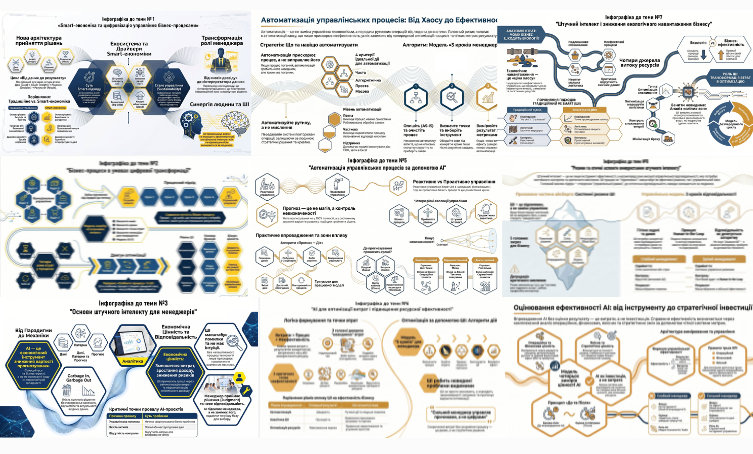
Концептуальною основою курсу стало усвідомлення штучного інтелекту не лише як технологічного інструменту, а як важливого чинника трансформації сучасного менеджменту. Учасники опанували модель «5 кроків» для ефективного впровадження AI в управлінську діяльність – від ідентифікації конкретного бізнес-процесу до оцінювання результативності застосованих рішень.
Отримані знання, сучасні підходи до цифровізації управління та методики оцінювання ефективності (KPI) планується інтегрувати в освітній процес університету, зокрема в межах освітньо-професійних програм «Менеджмент», «Менеджмент організацій», «Менеджмент готельного, курортного та туристичного сервісу», «Фінанси, банківська справа та страхування» та «Економіка бізнесу». Це сприятиме підготовці здобувачів вищої освіти до професійної діяльності в умовах розвитку smart-економіки, цифрової трансформації та поширення інтелектуальних систем управління.
За матеріалами кафедри економіки, менеджменту та фінансів
Intelligent Management Systems: Faculty Members of the Department of Economics, Management and Finance Enhance Their Qualifications in Accordance with European Standards
Faculty members of the Department of Economics, Management and Finance of Berdyansk State Pedagogical University actively participated in the specialized professional development program – the micro-credential course “Smart Economy: Digitalization and Artificial Intelligence in Sustainable Business Process Management.”
The training was conducted from April 14 to May 20, 2026, within the framework of the international EURIDICE project with the financial support of the European Union. The course lecturer was Roman Piskunov, PhD in Economics, Head of the Department of Management, Accounting and Business Communications at the Karazin Banking Institute Educational and Scientific Institute.
The course program covered a wide range of contemporary managerial and technological issues relevant to training a new generation of specialists in the digital economy. Participants examined the transformation of the management paradigm – the transition from functional management to a process-oriented approach, in which managerial activity focuses on the integrated management of business processes.
Particular attention was paid to the practical application of artificial intelligence technologies in management and business process automation. Faculty members explored modern AI tools for optimizing routine operations, data analysis, and managerial decision support. A separate module of the course focused on predictive analytics as a tool for forecasting trends and minimizing potential organizational risks.
The training also addressed the possibilities of using artificial intelligence to optimize costs, identify hidden resource losses, and improve the efficiency of management processes. Significant attention was devoted to the ethical application of AI technologies and their potential to support environmentally responsible business practices.
The conceptual foundation of the course was the understanding of artificial intelligence not only as a technological tool but also as an important driver of modern management transformation. Participants mastered the “5-step” model for the effective implementation of AI in managerial activities – from identifying a specific business process to evaluating the effectiveness of implemented solutions.
The acquired knowledge, modern approaches to management digitalization, and methods for evaluating performance indicators (KPI) are planned to be integrated into the university’s educational process, particularly within the educational and professional programs “Management,” “Organization Management,” “Management of Hotel, Resort and Tourism Services,” “Finance, Banking and Insurance,” and “Business Economics.” This will contribute to preparing higher education students for professional activity in the context of the development of the smart economy, digital transformation, and the spread of intelligent management systems.
Based on materials provided by the Department of Economics, Management and Finance
