
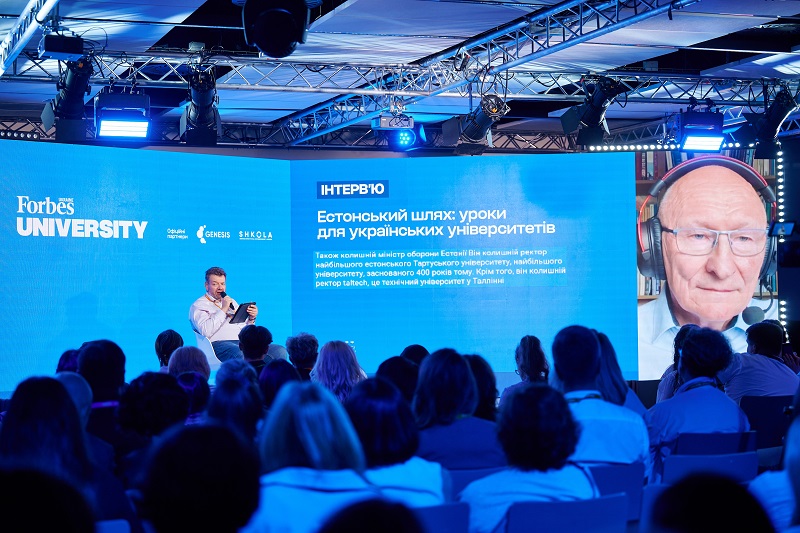
20 серпня 2026 року в Києві відбулася конференція Forbes University, присвячена майбутньому української вищої освіти в умовах стрімкого розвитку штучного інтелекту та когнітивної революції. Подія об’єднала керівників провідних українських університетів, представників бізнесу, інвесторів і державних діячів. До заходу долучилася доцентка кафедри прикладної психології та логопедії Наталя Цибуляк.
Основним питанням конференції стала трансформація ролі університету у світі, де алгоритми здатні миттєво надавати інформацію, а доступ до знань стає майже необмеженим. Учасники обговорювали, що за таких умов університет вже не може залишатися лише місцем передавання знань. Його завданням стає формування середовища, у якому людина вчиться критично мислити, ставити змістовні запитання, перевіряти інформацію, співпрацювати, відповідально ухвалювати рішення та постійно перебудовувати власну освітню і професійну траєкторію.
Окрему увагу приділили інтеграції штучного інтелекту в освітній процес. Йшлося не лише про опанування окремих цифрових інструментів, а про перехід до моделі, у якій ШІ стає частиною навчального середовища. Водночас учасники наголошували на необхідності зберігати те, що не може бути замінене технологіями: людську взаємодію, довіру, академічну відповідальність, інтелектуальну допитливість і здатність створювати нові знання.
Важливим напрямом дискусій стало партнерство університетів із бізнесом. Учасники говорили про спільні освітні програми, підтримку досліджень, розвиток лабораторій, залучення студентів до реальних проєктів, а також про нові підходи до управління університетами, їхньої фінансової стійкості та ролі в розвитку громад і регіонів.
«Для мене участь у Forbes University стала простором професійного й інтелектуального перезавантаження. Особливо надихає, що розмова про майбутнє освіти сьогодні не зводиться лише до технологій. У її центрі залишаються людина, критичне мислення, довіра, відповідальність і здатність навчатися протягом життя. Я повернулася із заходу з новими ідеями та ще сильнішим переконанням, що університет має не наздоганяти зміни, а створювати середовище, у якому ці зміни набувають людського сенсу», – зазначила Наталя Цибуляк.
Forbes University 2026 засвідчив: майбутнє вищої освіти визначатиметься не конкуренцією університету зі штучним інтелектом, а здатністю використовувати технології для посилення людського потенціалу. Саме поєднання інновацій, сильного лідерства, партнерства та уваги до людини може стати основою розвитку сучасного українського університету.



За матеріалами кафедри прикладної психології та логопедії
AI, Critical Thinking, and Partnership: The Future of Universities at Forbes University 2026
On 20 August 2026, Kyiv hosted Forbes University, a conference dedicated to the future of Ukrainian higher education amid the rapid development of artificial intelligence and the cognitive revolution. The event brought together leaders of Ukraine’s leading universities, business representatives, investors, and government officials. Natalia Tsybuliak, Associate Professor at the Department of Applied Psychology and Speech Therapy, also attended the conference.
The central question of the conference concerned the changing role of universities in a world where algorithms can provide information almost instantaneously and access to knowledge is becoming virtually unlimited. Participants discussed how, under these conditions, a university can no longer remain merely a place for transmitting knowledge. Its role is to create an environment in which people learn to think critically, ask meaningful questions, verify information, collaborate, make responsible decisions, and continuously reshape their educational and professional pathways.
Particular attention was given to integrating artificial intelligence into the educational process. The discussion focused not simply on mastering individual digital tools, but on moving towards a model in which AI becomes part of the learning environment. At the same time, participants emphasised the importance of preserving what technology cannot replace: human interaction, trust, academic responsibility, intellectual curiosity, and the capacity to create new knowledge.
Partnership between universities and businesses was another important area of discussion. Participants considered joint educational programmes, research support, the development of laboratories, and student involvement in real-world projects. They also discussed new approaches to university governance, financial resilience, and the role of universities in the development of communities and regions.
“For me, participating in Forbes University was an opportunity for professional and intellectual renewal. What I found particularly inspiring was that today’s conversation about the future of education is not limited to technology. At its heart remain people, critical thinking, trust, responsibility, and the capacity for lifelong learning. I left the event with new ideas and an even stronger belief that universities should not merely respond to change, but create environments in which change acquires human meaning,” Natalia Tsybuliak noted.
Forbes University 2026 demonstrated that the future of higher education will be shaped not by competition between universities and artificial intelligence, but by universities’ ability to use technology to enhance human potential. The combination of innovation, strong leadership, partnership, and a human-centred approach can provide a foundation for the development of the contemporary Ukrainian university.
Based on materials provided by the Department of Applied Psychology and Speech Therapy
