
Після літніх канікул читацький клуб знову зібрав викладачів, студентів і гостей. Останні дні літа та перший день другого місяця осені стали нагодою повернутися до спільного читання й поговорити про твори, які по-різному осмислюють людський досвід, пам’ять і випробування. 27 серпня учасники обговорювали роман Катерини Зарембо «Євшан», а 1 жовтня – «Гойдалку дихання» Герти Мюллер.
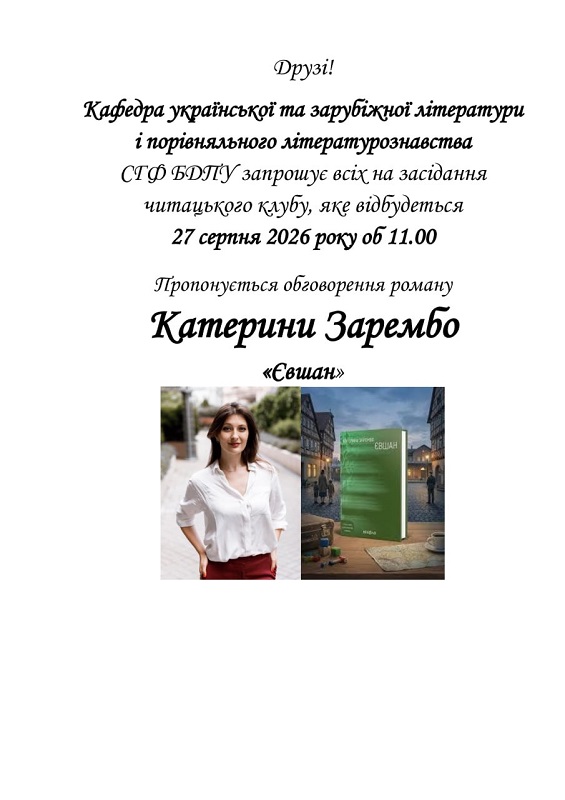
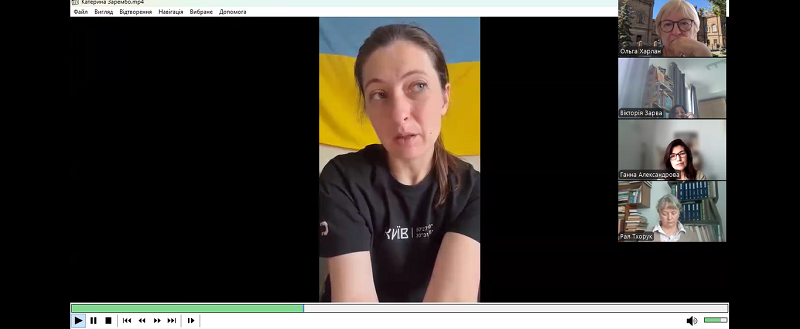
Серпневе засідання було особливим ще й тому, що клуб відновив роботу після літньої перерви. Для обговорення обрали роман «Євшан» – твір, близький за змістом багатьом учасникам події, які змушені були покинути рідні домівки, та який став приводом поговорити про авторський задум і шлях від першої ідеї до її втілення в художньому тексті. Письменниця Катерина Зарембо не змогла приєднатися до зустрічі через військову службу, проте надіслала відеовиступ. У ньому вона привітала учасників клубу й розповіла про виникнення задуму роману та роботу над ним.
Відеозвернення стало важливою частиною зустрічі: читачі почули авторський погляд на історію створення книжки й отримали змогу подивитися на твір крізь призму творчого процесу. Розмова про задум допомагає побачити, як початковий імпульс перетворюється на цілісний текст, як авторка шукає форму для своєї історії та вибудовує її художній світ. Водночас зустріч із книжкою не обмежується поясненням автора: кожен читач приносить до неї власний досвід, запитання й асоціації. Саме тому обговорення в клубі продовжує розмову, розпочату романом.
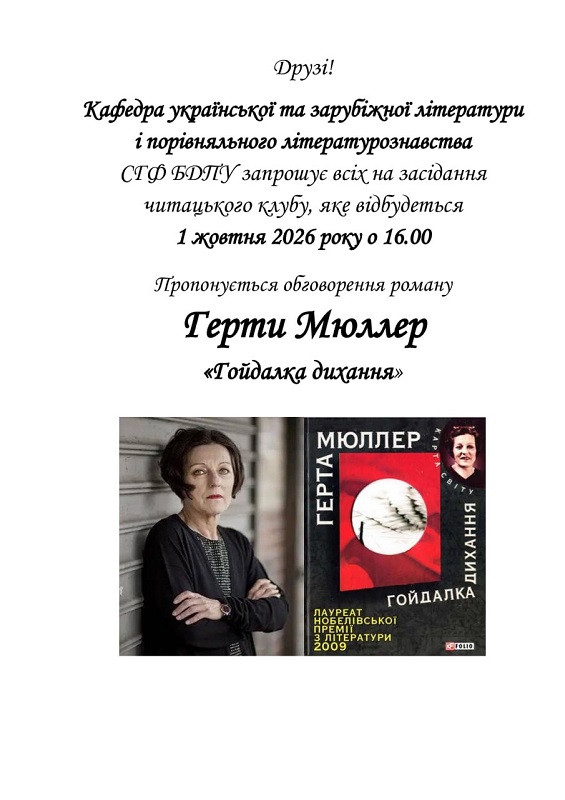
На другому засіданні, 1 жовтня, учасники звернулися до роману Герти Мюллер «Гойдалка дихання» – твору про трагедію людини. Це читання має іншу тональність: воно зосереджує увагу на крихкості людського життя, переживанні болю та спробі вистояти в обставинах, що випробовують людину. Уже сама назва роману налаштовує на роздуми про дихання як знак життя, про його ритм, який може змінюватися під тиском страху, виснаження і втрати. У такому творі важливими стають не лише події, а й внутрішній досвід людини – те, як вона переживає трагедію і що допомагає їй зберегти себе.
Обговорення роману Герти Мюллер нагадує, що література здатна говорити про складний досвід уважно й без спрощення. Читання стає зустріччю з історією, яка вимагає співпереживання, але водночас спонукає до осмислення. Що означає залишатися людиною в нелюдських обставинах? Як пам’ять утримує пережите? Якою мірою слово може передати біль, а де починаються межі його вираження? Такі питання природно виникають у розмові про твір і залишаються з читачем після завершення зустрічі.
Два засідання об’єднала зацікавленість книжкою як простором для діалогу. Роман Катерини Зарембо відкрив можливість почути історію вимушеного переїзду в іншу країну через повномасштабне вторгнення російської армії; книжка Герти Мюллер спрямувала увагу до трагедії людини та досвіду витривалості. Різні за тематикою й настроєм, ці читання показали, наскільки неоднаковими можуть бути шляхи літератури до читача – через розповідь про творчу працю, сильне емоційне переживання та запитання, на які немає простих відповідей.
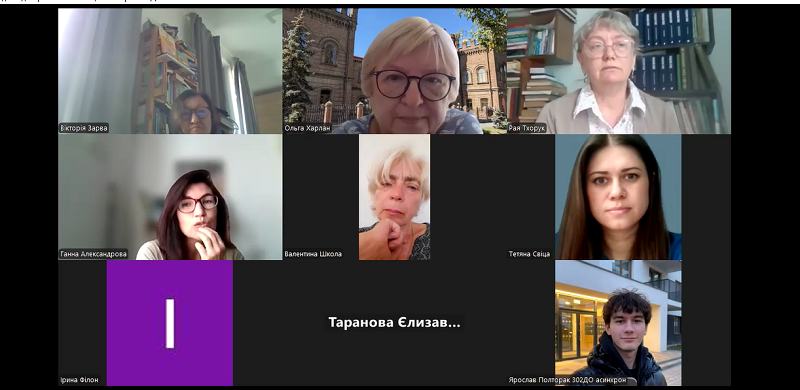
Участь викладачів, студентів і гостей надала зустрічам відкритого характеру. Читацький клуб об’єднує людей довкола уважного читання, дає змогу поділитися враженнями й почути інші погляди. Тут книжка стає спільною темою, а розмова про неї – нагодою краще зрозуміти і текст, і власну реакцію на нього. Осінні засідання засвідчили: спільне читання не завершується останньою сторінкою. Воно продовжується в запитаннях, роздумах і діалозі, що виникають між читачами. Попереду – нові книжки, теми й зустрічі читацького клубу.
Тетяна Свіца, заступник декана соціально-гуманітарного факультету
Books that open up space for conversation

After the summer break, the reading club brought together faculty members, students, and guests once again. The final days of summer and the first day of autumn’s second month offered an opportunity to return to reading together and discuss works that explore human experience, memory, and hardship in different ways. On August 27, participants discussed Kateryna Zarembo’s novel Yevshan; on October 1, they turned to Herta Müller’s The Hunger Angel (Atemschaukel).
The August meeting was special because it marked the club’s return after the summer break. The group chose Yevshan for discussion – a novel that resonated with many attendees who had been forced to leave their homes. It also provided an opportunity to talk about the author’s original idea and the journey from that first idea to its realization in a work of fiction. Kateryna Zarembo was unable to join the meeting because of her military service, but she sent a video address. In it, she greeted the club members and spoke about how the idea for the novel came about and how she worked on it.
The video address became an important part of the meeting: readers heard the author’s perspective on the book’s creation and gained a glimpse into her creative process. A discussion of the novel’s origins helps readers see how an initial impulse grows into a complete text, how the author finds a form for her story, and how she builds its fictional world. At the same time, engaging with a book goes beyond hearing the author’s explanation: every reader brings their own experience, questions, and associations to it. In this way, the club’s discussion continues the conversation begun by the novel.
At the second meeting, on October 1, participants discussed Herta Müller’s The Hunger Angel – a novel about human tragedy. The reading had a different tone, drawing attention to the fragility of human life, the experience of pain, and the effort to endure circumstances that put a person to the test. The title itself invites reflection on breath as a sign of life, and on how its rhythm can change under the pressure of fear, exhaustion, and loss. In a work like this, what matters is not only what happens, but also a person’s inner experience: how they live through tragedy and what helps them hold on to themselves.
The discussion of Müller’s novel reminds us that literature can address difficult experiences with care and without oversimplification. Reading becomes an encounter with a story that calls for empathy while also prompting reflection. What does it mean to remain human in inhumane circumstances? How does memory hold on to what has been endured? To what extent can words convey pain, and where are the limits of expression? Such questions naturally arise in a discussion of the novel and stay with readers after the meeting ends.
The two meetings were united by a shared interest in books as spaces for dialogue. Zarembo’s novel offered an opportunity to hear the story of forced relocation to another country following the full-scale Russian invasion; Müller’s book turned attention to human tragedy and the experience of endurance. Different in subject and mood, these readings showed how varied literature’s paths to its readers can be: through an account of the creative process, an intense emotional experience, or questions that have no simple answers.
The participation of faculty members, students, and guests gave the meetings an open and welcoming character. The reading club brings people together through attentive reading, giving them a chance to share their impressions and hear other perspectives. Here, a book becomes common ground, and talking about it offers an opportunity to better understand both the text and one’s own response to it. The autumn meetings showed that reading together does not end with the final page. It continues through the questions, reflections, and dialogue that arise among readers. More books, topics, and reading club meetings lie ahead.
Tetiana Svitsa, Deputy Dean of the Faculty of Social Sciences and Humanities
