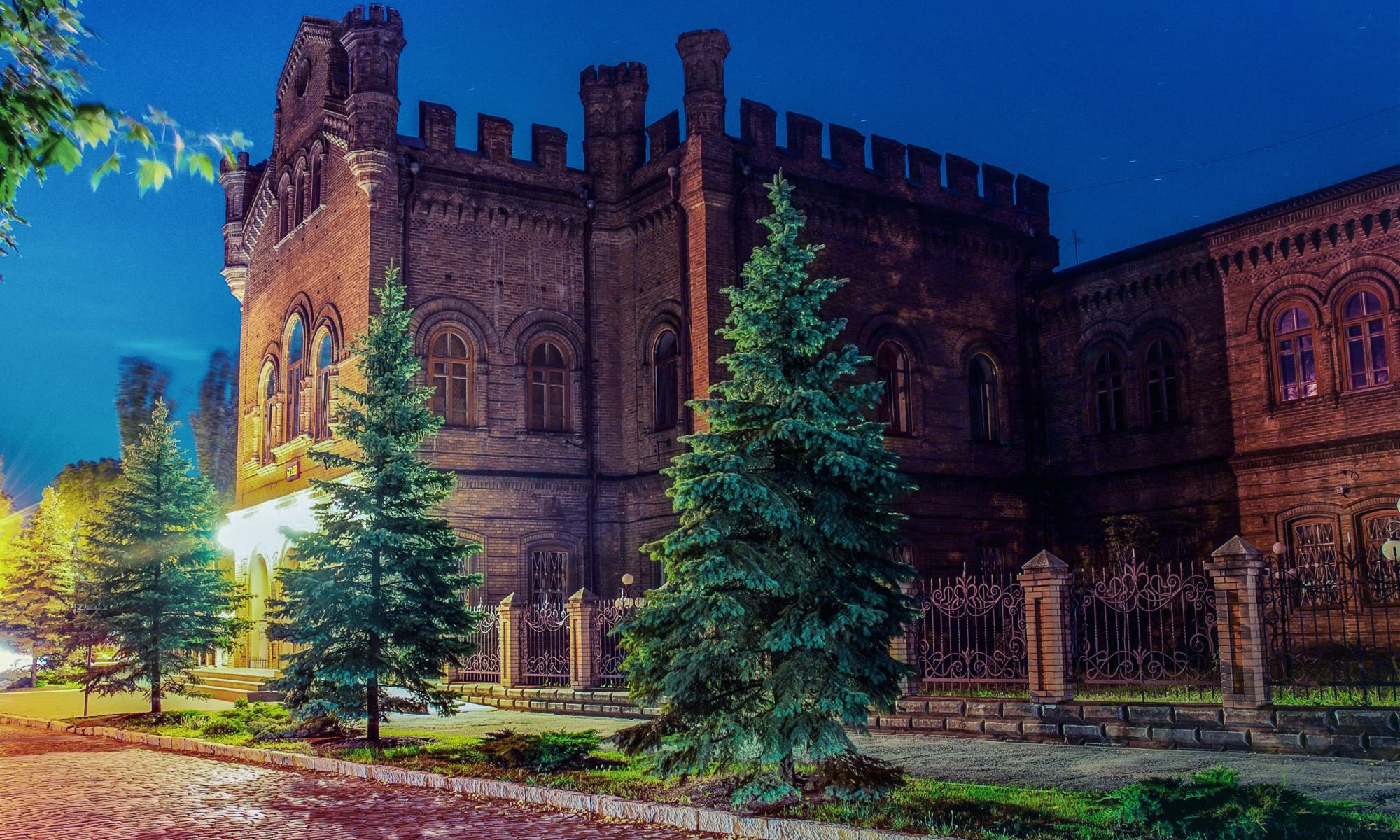
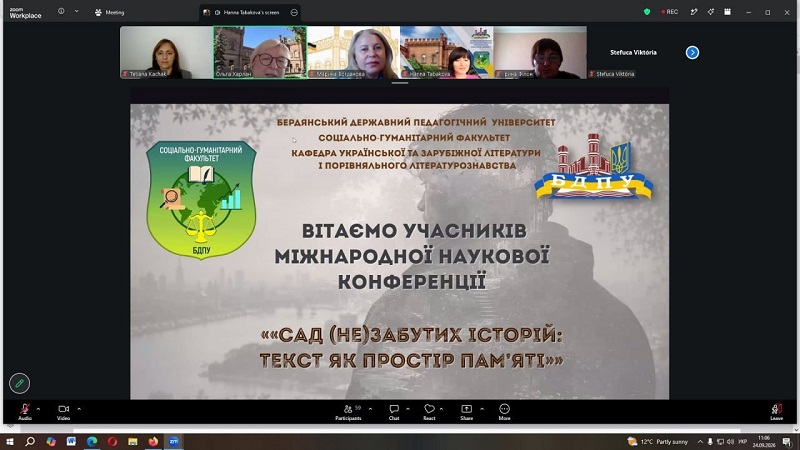
24–25 вересня 2026 року Бердянський державний педагогічний університет став місцем міжнародної наукової зустрічі, присвяченої тому, як література зберігає людський досвід. Конференція «Сад (не)забутих історій: текст як простір пам’яті» відбулася онлайн на базі кафедри української та зарубіжної літератури і порівняльного літературознавства соціально-гуманітарного факультету.
Що залишається від минулого в родинних розповідях, щоденниках і художніх творах? Як говорити про втрату й почути тих, чиї історії тривалий час замовчували? Ці питання сьогодні виходять далеко за межі філологічних аудиторій. Для університетської спільноти, яка переживає війну та вимушене переміщення, розмова про пам’ять має і цілком особистий вимір: вона стосується дому, близьких людей, зв’язку з рідним містом.
Міжнародний масштаб зустрічі засвідчує коло її співорганізаторів. Поряд із БДПУ – Інститут літератури імені Т. Г. Шевченка НАН України, Інститут україністики Варшавського університету, Школа англійської мови Трініті-коледжу в Дубліні, Ніредьгазький університет, Грузино-український інститут мови та культури Грузинського міжнародного університету GIU. Така співпраця створює можливості для розмови про український досвід у ширшому європейському та світовому контексті.
Пленарна програма поєднала кілька поглядів на взаємозв’язок тексту й пам’яті. Зоя Адамія (Тбілісі, Грузія) присвятила доповідь дитячим наративам вимушеної міграції та досвіду українських дітей у Грузії. Олена Бондарєва (Київ) звернулася до пам’яті про виживання в українській драматургії війни, а Тетяна Качак (Івано-Франківськ) – до воєнних травм у сучасній літературі для дітей та підлітків. Ці теми спонукають замислитися, як розповідати про складне людям різного віку та як уважно читати свідчення про пережите.
Родинна історія стала ще одним важливим напрямом конференції. У програмі пленарного засідання – дослідження Тетяни Гребенюк (Тюбінген) про родинну пам’ять у прозі Оксани Забужко та доповідь Ольги Харлан (Бердянськ–Запоріжжя) про постпам’ять як спосіб реконструкції родинного минулого в сучасній українській прозі. За науковим поняттям «постпам’ять» стоїть близьке багатьом питання: як досвід попередніх поколінь впливає на нас через успадковані розповіді, фотографії, речі й навіть мовчання?
Світлана Лущій (Київ) зосередила увагу на рецепції Другої світової війни у прозі Ігоря Костецького. Оксана Левицька (Львів) обрала темою художні біографії митців як простір пам’яті. Разом ці дослідницькі ракурси показують, наскільки різними можуть бути шляхи повернення до минулого – через сімейну оповідь, письменницьку уяву або осмислення долі конкретної людини.
Роботу конференції організували у восьми секціях. Їхня тематика охопила індивідуальну й колективну пам’ять, травму, війну, образи міст і ландшафтів, культурні коди та питання ідентичності. Поряд із дослідженнями класичних і сучасних творів у програмі з’явилися теми інтернет-мемів як засобу медіатизації колективної пам’яті, електронних колекцій і критичного прочитання «Фауста» за допомогою штучного інтелекту. Це дає змогу побачити, як літературознавство взаємодіє із цифровою культурою, знайомою кожному студентові.
Для молодих дослідників така програма пропонує чимало початків власного наукового пошуку. Чому герой пам’ятає одну подію, але уникає іншої? Як змінюється родинна історія в переказах різних поколінь? Що додає екранізація до нашого розуміння книжки? З подібних запитань можуть виростати семінарські дискусії, курсові роботи й перші конференційні виступи.
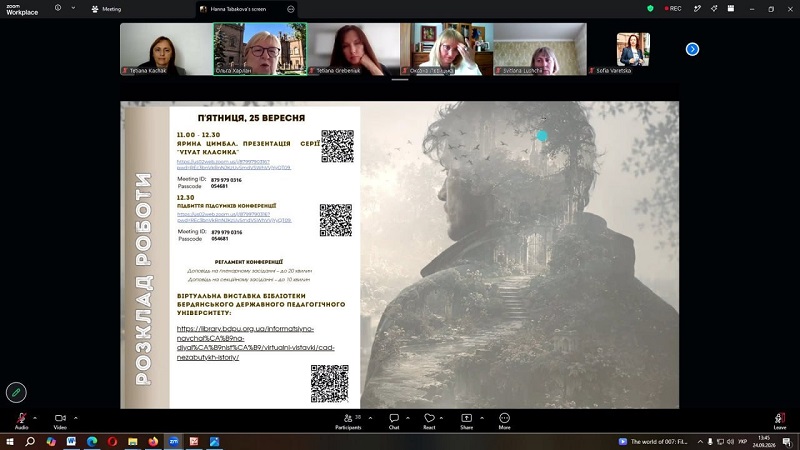
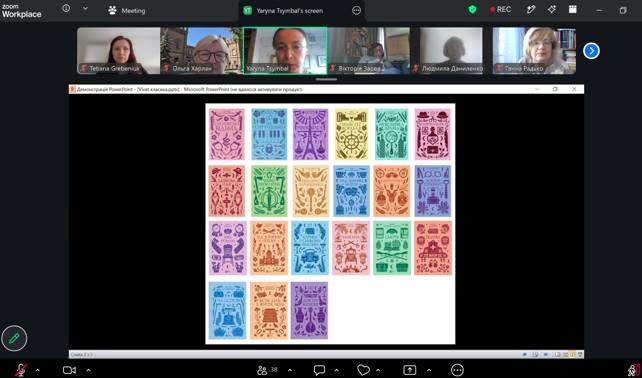
Окремою подією другого дня стала презентація серії «Vivat Класика» Яриною Цимбал (Київ). У контексті конференції звернення до перевидань української літератури нагадує: пам’ять живе завдяки читанню, а нова зустріч із класикою може змінити звичне уявлення про неї. Програму також доповнила віртуальна виставка бібліотеки БДПУ.
«Сад (не)забутих історій» запрошує продовжити цю розмову й після завершення засідань: розгорнути незнайому книжку, розпитати близьких про родинну світлину, уважніше поставитися до чужого спогаду. Для університету, який зберігає зв’язок із Бердянськом, кожна така дія наповнює пам’ять конкретним змістом. Історії залишаються з нами, коли ми знаходимо час їх почути й передати далі.
Завідувач кафедри УЗЛПЛ Ольга Харлан
Stories That Hold Us Together
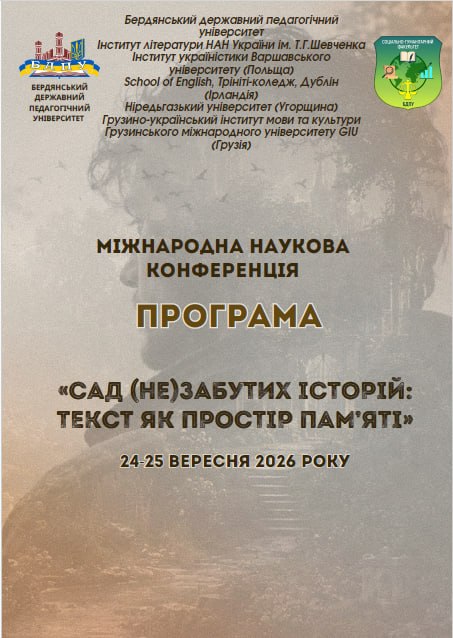
On 24–25 September 2026, Berdyansk State Pedagogical University hosted an international academic gathering exploring how literature preserves human experience. The conference, “The Garden of (Un)forgotten Stories: Text as a Space of Memory,” was held online by the Department of Ukrainian and World Literature and Comparative Literary Studies at the Faculty of Social Sciences and Humanities.
What survives of the past in family stories, diaries and literary works? How can we speak about loss and hear those whose stories have long been silenced? Today, these questions reach far beyond literature classrooms. For a university community living through war and forced displacement, discussing memory also has a deeply personal dimension: it concerns home, loved ones and connections to one’s hometown.
The range of co-organising institutions reflects the gathering’s international scope. Alongside BSPU were the Taras Shevchenko Institute of Literature of the National Academy of Sciences of Ukraine, the Institute of Ukrainian Studies at the University of Warsaw, the School of English at Trinity College Dublin, the University of Nyíregyháza, and the Georgian-Ukrainian Institute of Language and Culture at Georgian International University GIU. Such collaboration creates opportunities to discuss Ukrainian experiences within broader European and global contexts.
The plenary programme brought together several perspectives on the relationship between text and memory. Zoya Adamiya (Tbilisi, Georgia) devoted her presentation to children’s narratives of forced migration and the experiences of Ukrainian children in Georgia. Olena Bondarieva (Kyiv) examined memories of survival in Ukrainian war drama, while Tetiana Kachak (Ivano-Frankivsk) addressed war trauma in contemporary literature for children and young adults. These topics encourage reflection on how to discuss difficult experiences with different age groups and how to read accounts of lived experience attentively.
Family history was another important focus of the conference. The plenary programme included Tetiana Hrebeniuk’s (Tübingen) research on family memory in Oksana Zabuzhko’s prose and Olha Kharlan’s (Berdyansk–Zaporizhzhia) presentation on postmemory as a means of reconstructing the family past in contemporary Ukrainian prose. Behind the scholarly concept of “postmemory” lies a question familiar to many: how do the experiences of earlier generations shape us through inherited stories, photographs, objects and even silence?
Svitlana Lushchii (Kyiv) focused on the reception of the Second World War in Ihor Kostetskyi’s prose. Oksana Levytska (Lviv) explored fictionalised biographies of artists as a space of memory. Together, these research perspectives reveal the many paths through which we return to the past: through family narratives, literary imagination or reflection on an individual’s life.
The conference was organised into eight thematic sections. Their topics encompassed individual and collective memory, trauma, war, representations of cities and landscapes, cultural codes and questions of identity. Alongside studies of classic and contemporary works, the programme featured internet memes as a means of mediating collective memory, digital collections, and the use of artificial intelligence in a critical reading of Faust. These topics demonstrate how literary studies engage with the digital culture familiar to students.
For emerging researchers, such a programme offers numerous starting points for their own academic enquiries. Why does a character remember one event but avoid another? How does a family story change when retold by different generations? What does a screen adaptation add to our understanding of a book? Questions like these can lead to seminar discussions, term papers and first conference presentations.
A special event on the second day was Yaryna Tsymbal’s (Kyiv) presentation of the “Vivat Classics” series. Within the context of the conference, this focus on new editions of Ukrainian literature serves as a reminder that reading keeps memory alive, while a fresh encounter with the classics can reshape our understanding of them. The programme also featured a virtual exhibition prepared by the BSPU Library.
“The Garden of (Un)forgotten Stories” invites us to continue this conversation beyond the conference sessions: to open an unfamiliar book, ask loved ones about a family photograph, or listen more attentively to someone else’s recollections. For a university that maintains its connection to Berdyansk, each such act gives memory tangible meaning. Stories stay with us when we take the time to hear them and pass them on.
Olga Kharlan Head of the Department
of Ukrainian and World Literature and Comparative Literary Studies
