
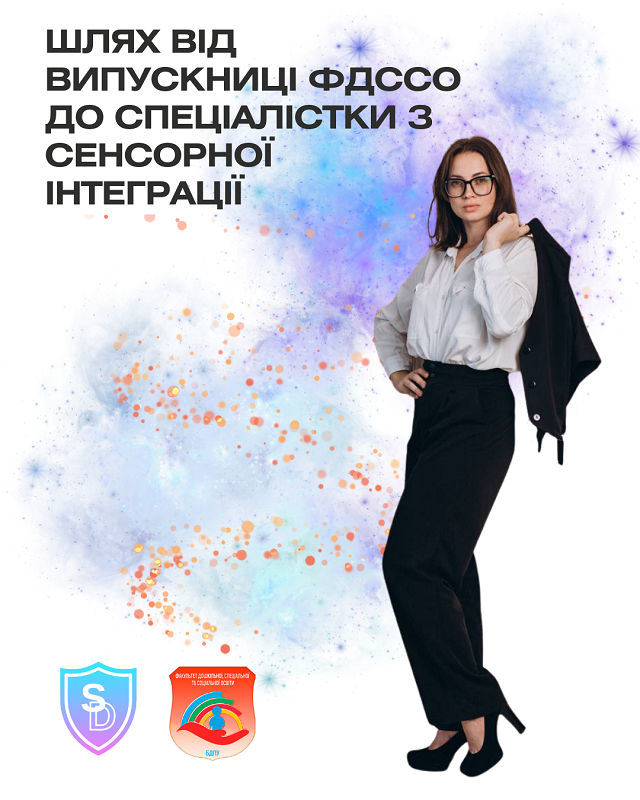
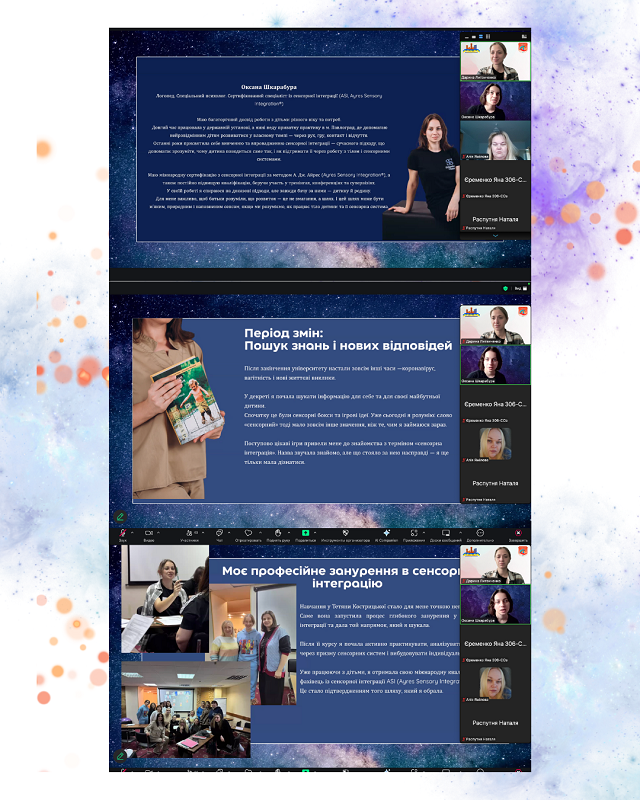
У межах рубрики «ППЛ-поради практикуючих логопедів» команда «Студентського десанту S016» підготувала особливу зустріч, яка стала справжнім містком між навчанням та майбутньою професією. Цього разу здобувачі мали нагоду поспілкуватися з людиною, яка не лише володіє глибокими знаннями, а й щодня втілює їх на практиці — Оксаною Шкарабурою фахівчинею з сенсорної інтеграції ASI та власницею дитячого простору «Sensory Space».
Під час розмови Оксана поділилася своїм шляхом: від студентських років на ФДССО до створення власного дитячого простору. Вона розповіла про те, як змінило її професійне мислення знайомство з концепцією сенсорної інтеграції, як важливо бути відкритою до навчання й нових методик, і чому кожен логопед має розуміти сенсорні процеси так само добре, як і мовленнєві.
Особливе враження справили історії з практики: щирі, інколи зворушливі, інколи непрості — але завжди живі та справжні.Здобувачі почули про те, як виглядає робота спеціального педагога в реальному просторі, як будуються стосунки з батьками, чому сенсорна інтеграція — це не мода, а необхідний інструмент у роботі з дітьми з ООП.
За матеріалами старшої викладачки кафедри прикладної психології та логопедії Литвиченко Д.С.
A From FDSSO Graduate to Sensory Integration Specialist
As part of the rubric “PPL — Advice from Practicing Speech Therapists,” the team of “Student Desant S016” organized a special meeting that became a true bridge between academic learning and future professional activity. This time, students had the opportunity to speak with a person who not only possesses deep theoretical knowledge but also applies it daily in her practice — Oksana Shkarabura, a certified ASI sensory integration specialist and the founder of the children’s developmental space “Sensory Space.”
During the discussion, Oksana shared her journey: from her student years at FDSSO to the establishment of her own children’s center. She explained how discovering the concept of sensory integration transformed her professional mindset, why it is essential to remain open to learning and new methods, and why every speech therapist should understand sensory processes just as well as linguistic ones.
Particularly impactful were her real-life stories from practice — sincere, at times touching, at times challenging, yet always honest and authentic. Students learned what the work of a special educator looks like in a real setting, how relationships with parents are built, and why sensory integration is not a trend, but a necessary tool in working with children with special educational needs.
Based on materials by Daryna Lytvychenko, Senior Lecturer of the Department of Applied Psychology and Speech Therapy.
