
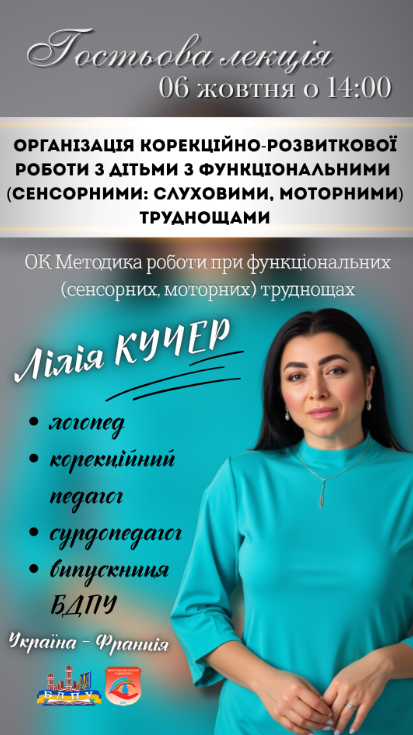
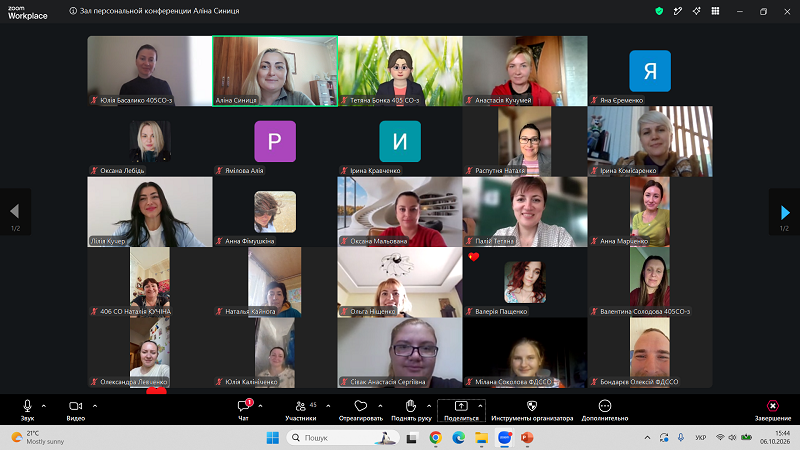
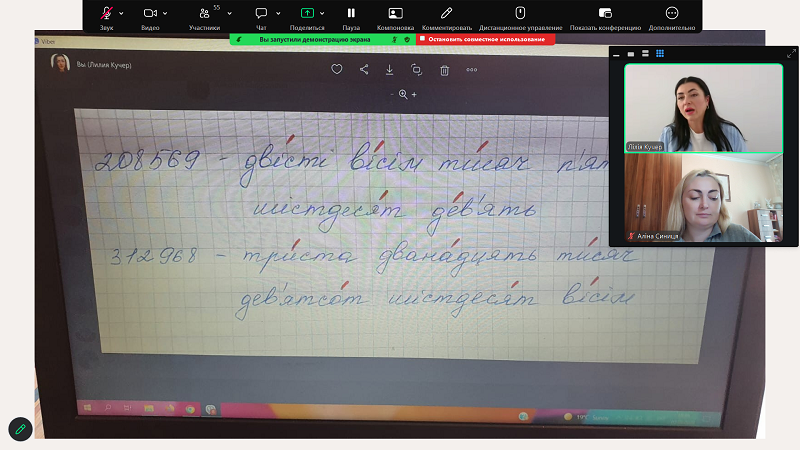
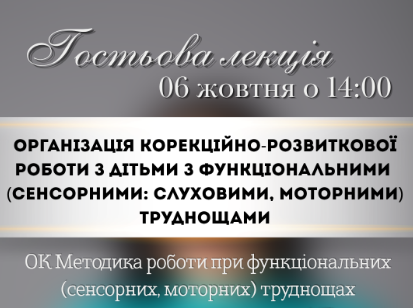
6 жовтня 2026 року в межах вивчення ОК «Методика роботи при функціональних (сенсорних, моторних) труднощах», що викладає доцент кафедри прикладної психології та логопедії Аліна Синиця, відбулася гостьова лекція для здобувачів першого (бакалаврського) рівня вищої освіти спеціальності А6 «Спеціальна освіта».
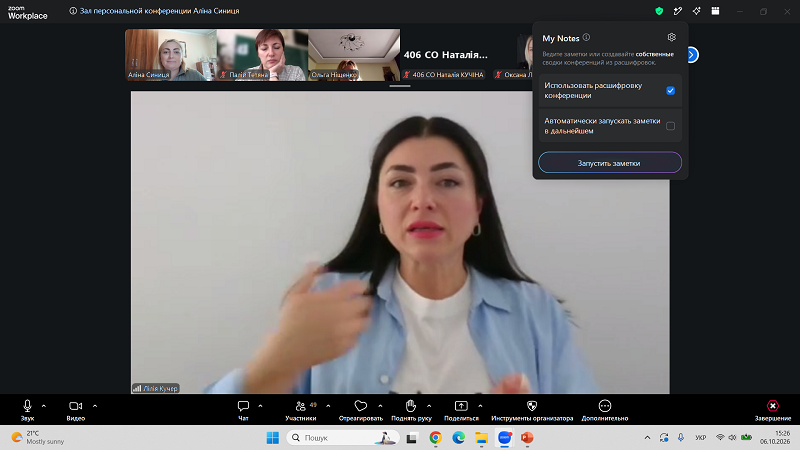
Запрошеною спікеркою стала Лілія Кучер – логопед, корекційний педагог, сурдопедагог, випускниця Бердянського державного педагогічного університету, яка нині проживає та працює у Франції. Професійний досвід фахівчині поєднує український та французький освітні контексти, що стало особливо цінним для майбутніх фахівців зі спеціальної освіти.
Тема гостьової лекції – «Організація корекційно-розвиткової роботи з дітьми з функціональними (сенсорними: слуховими, моторними) труднощами».
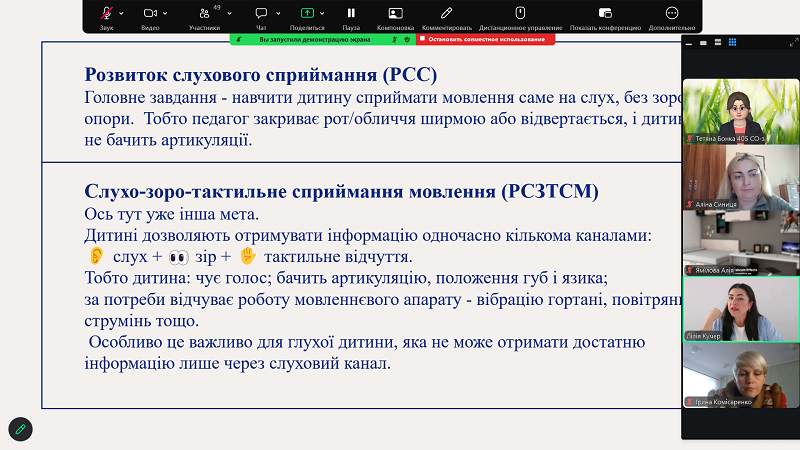
Під час зустрічі здобувачі освіти поглибили знання щодо індивідуалізації та диференціації корекційного впливу, розвитку слухо-зоро-тактильного сприймання мовлення, формування правильної вимови, а також особливостей організації занять залежно від ступеня та характеру прояву функціональних, зокрема слухових, освітніх труднощів.
Головний акцент зустрічі було зроблено на практичному застосуванні професійних знань. Як організувати корекційно-розвиткову роботу так, щоб вона відповідала реальним потребам конкретної дитини? Як враховувати особливості слухового та моторного розвитку? Які професійні рішення необхідно приймати у конкретних ситуаціях? Як вибудовувати ефективну взаємодію з дитиною, її родиною та іншими фахівцями?
Саме ці питання стали основою професійного діалогу між спікеркою та здобувачами освіти.
Особливу цінність зустрічі становило поєднання теоретичного матеріалу з практичними прикладами, професійними спостереженнями та алгоритмами роботи, які майбутні фахівці зможуть використовувати у своїй подальшій професійній діяльності.
Гостьова лекція дала можливість здобувачам не лише поглибити теоретичні знання, а й побачити, як вони трансформуються у конкретні професійні дії. Практичний досвід Лілії Кучер дозволив ознайомитися з особливостями роботи фахівця в різних освітніх середовищах – українському та французькому, а також звернути увагу на важливість гнучкості, індивідуалізації та командної взаємодії у роботі з дітьми з функціональними труднощами.
Навчання стає по-справжньому професійним тоді, коли теорія допомагає діяти на практиці.
Щиро дякуємо Лілії Кучер за змістовну та практично орієнтовану зустріч, відкритість, щирість і готовність ділитися професійним досвідом із майбутніми фахівцями.
Дякуємо здобувачам освіти за активність, змістовні запитання та зацікавленість у сучасних підходах до підтримки дітей із функціональними труднощами.
Поєднуємо знання, практику та професійний досвід – формуємо фахівця, готового працювати з реальними потребами дитини.
За матеріалами доцента кафедри прикладної
психології та логопедії Аліни Синиці
From Theory to Practice: Professional Experience That Inspires
On October 6, 2026, as part of the educational component «Methods of Working with Functional (Sensory and Motor) Difficulties», taught by Alina Synytsia, Associate Professor of the Department of Applied Psychology and Speech Therapy, a guest lecture was held for first-cycle (Bachelor’s) students majoring in Special Education.
The guest speaker was Liliia Kucher, a speech therapist, special education teacher and teacher of the deaf, and a graduate of Berdyansk State Pedagogical University, who currently lives and works in France. Her professional experience combines the Ukrainian and French educational contexts, making the meeting particularly valuable for future special education professionals.
The topic of the guest lecture was «Organization of Corrective and Developmental Work with Children with Functional Difficulties (Sensory: Hearing and Motor)».
During the lecture, students deepened their knowledge of individualization and differentiation of corrective and developmental support, the development of auditory, visual and tactile perception of speech, speech sound production, as well as the specific features of organizing sessions depending on the degree and nature of functional, particularly hearing-related, educational difficulties.
Practice as the Basis of Professional Training
The main focus of the meeting was on the practical application of professional knowledge.
How can corrective and developmental support be organized so that it responds to the real needs of an individual child? How should specialists take into account the specific features of auditory and motor development? What professional decisions need to be made in real-life situations? How can effective cooperation with the child, their family and other professionals be established?
These questions became the basis for a professional dialogue between the guest speaker and the students.
A particularly valuable aspect of the meeting was the combination of theoretical material with practical examples, professional observations and specific work algorithms that future specialists can apply in their professional practice.
The guest lecture enabled students not only to deepen their theoretical knowledge but also to see how theoretical concepts are transformed into concrete professional actions. Liliia Kucher’s practical experience provided an opportunity to explore the work of a specialist in different educational environments – Ukrainian and French – and to reflect on the importance of flexibility, individualization and teamwork when supporting children with functional difficulties.
Learning becomes truly professional when theory helps us act effectively in practice.
We sincerely thank Liliia Kucher for the meaningful and practice-oriented meeting, her openness, sincerity and willingness to share her professional experience with future specialists.
We also thank the students for their active participation, thoughtful questions and interest in contemporary approaches to supporting children with functional difficulties.
By combining knowledge, practice and professional experience, we prepare specialists who are ready to respond to the real needs of every child.
Based on materials provided by Alina Synytsia, Associate Professor
of the Department of Applied Psychology and Speech Therapy
