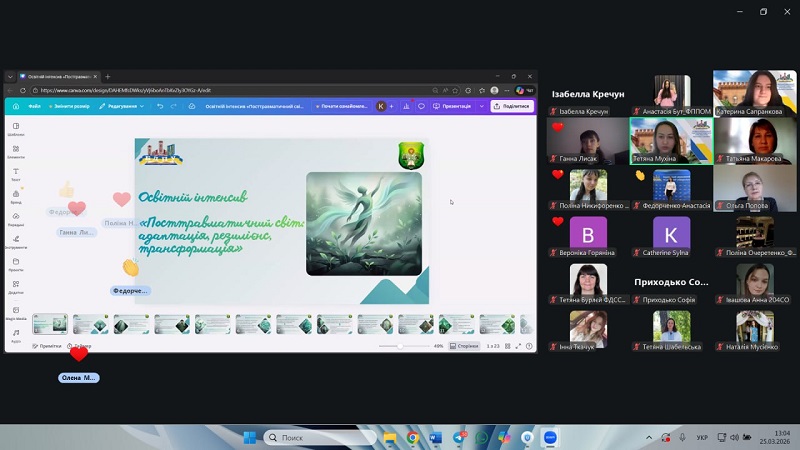
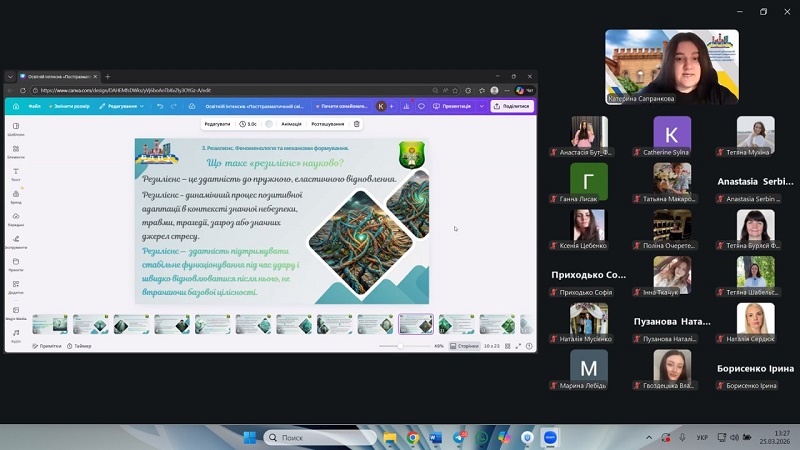
Як жити після травми? Чи можливо не просто вижити, а стати сильнішим? Ці питання стали ключовими на освітньому інтенсиві «Посттравматичний світ: адаптація, резилієнс, трансформація», організованому Радою молодих учених факультету психолого-педагогічної освіти та мистецтв БДПУ. Спікеркою виступила Катерина Сапранкова, асистентка кафедри психології, членкиня РМУ ФППОМ.
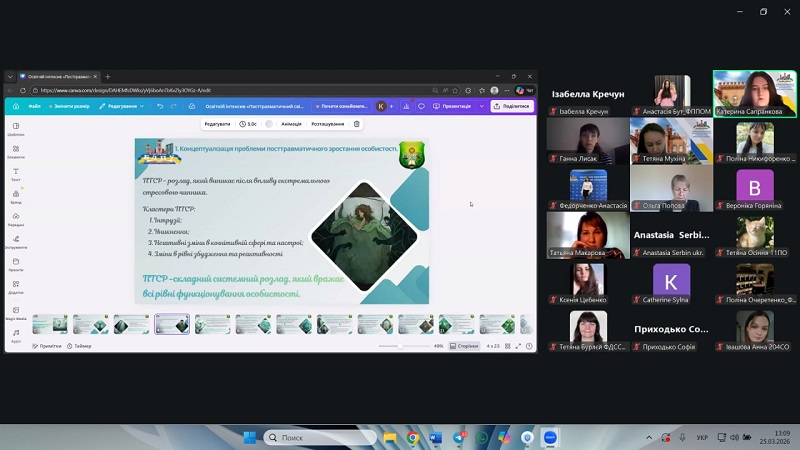
Під час зустрічі учасники занурилися в глибинні психологічні процеси, які відбуваються з людиною після зіткнення з травматичним досвідом. Спікерка розкрила три ключові траєкторії посттравматичного буття: адаптацію як гомеостатичний механізм, резилієнс як здатність зберігати цілісність під тиском і трансформацію як якісне перетворення особистості.
Найбільшу зацікавленість викликала дискусія про п’ять сфер посттравматичного зростання. Учасники розмірковували про парадокси травми: як вразливість стає джерелом справжньої сили, як біль може привести до нового сенсу й чому надія має бути не ілюзорною, а реалістичною.
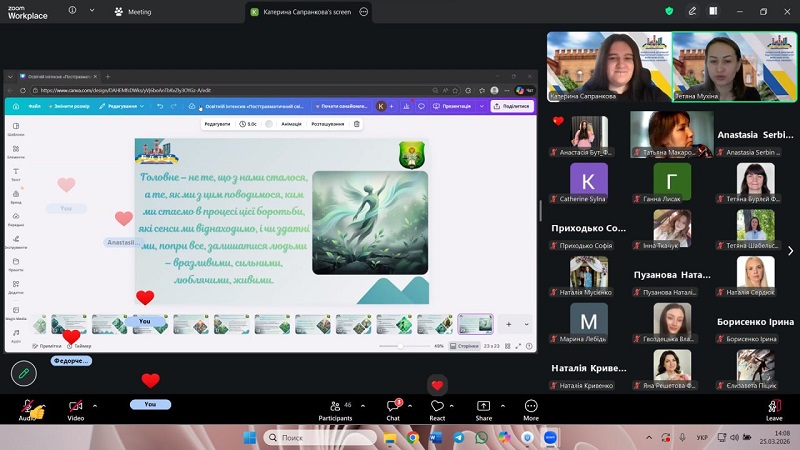
У результаті дійшли висновку, що психологічна допомога в посттравматичний період має ґрунтуватися на створенні безпечного простору, повазі до часу відновлення та підтримці соціальних зв’язків. Адже головне не те, що з нами сталося, а те, ким ми стаємо в процесі подолання, і чи зберігаємо здатність залишатися живими, вразливими й сильними водночас.
За матеріалами Ради молодих учених ФППОМ БДПУ
The post-traumatic world: adaptation, resilience, transformation
How do we live after trauma? Is it possible not only to survive, but to become stronger? These questions became central to the educational intensive “The Post-Traumatic World: Adaptation, Resilience, Transformation”, organized by the Council of Young Scientists of the Faculty of Psychological and Pedagogical Education and Arts at BSPU. The speaker was Kateryna Saprankova, Assistant Lecturer at the Department of Psychology and a member of the Council of Young Scientists of the Faculty.
During the session, participants immersed themselves in the deep psychological processes that occur after experiencing trauma. The speaker outlined three key trajectories of post-traumatic existence: adaptation as a homeostatic mechanism, resilience as the ability to maintain integrity under pressure, and transformation as a qualitative change of personality.
Particular interest was sparked by the discussion on the five domains of post-traumatic growth. Participants reflected on the paradoxes of trauma: how vulnerability can become a source of true strength, how pain may lead to new meaning, and why hope should be realistic rather than illusory.
As a result, it was concluded that psychological support in the post-traumatic period should be based on creating a safe environment, respecting the time needed for recovery, and maintaining social connections. After all, what matters most is not what has happened to us, but who we become in the process of overcoming – and whether we preserve the ability to remain alive, vulnerable, and strong at the same time.
Based on materials from the Council of Young Scientists of the Faculty of Psychological and Pedagogical Education and Arts, BSPU
