
2 квітня в межах діяльності Школи лідерства БДПУ спільно з кафедрою соціальної роботи та інклюзивної освіти відбувся важливий і натхненний захід на тему «Самоадвокатування, захист прав людей з інвалідністю».
Спікеркою зустрічі стала Анна Соловей – самоадвокатка та лідерка групи самоадвокатів у громадській організації Джерела.
Учасники та учасниці заходу мали можливість глибше ознайомитися з поняттям самоадвокації – процесу, в якому люди з інвалідністю самостійно відстоюють свої права, інтереси та потреби. Особливу увагу було приділено тому, як розвивається рух самоадвокації в Україні та які виклики постають перед самоадвокатами сьогодні, зокрема у сфері захисту прав людей з інтелектуальними та ментальними порушеннями.
Анна Соловей поділилася власним досвідом представлення української практики самоадвокації на міжнародному рівні – під час заходів у Брюсселі та Данії. Вона розповіла про труднощі, які виникають у процесі комунікації з представниками влади, а також про важливість чіткого й доступного донесення потреб людей з інвалідністю.
Окремий акцент під час зустрічі було зроблено на використанні простої мови – інструменту, що робить інформацію доступною для ширшого кола людей. Спікерка наголосила на необхідності впровадження простої мови у діяльність державних органів, зокрема в офіційному листуванні, як важливого кроку до інклюзивного суспільства.
Важливою темою стала і турбота про ментальне здоров’я. У сучасних умовах, коли українці щодня стикаються зі стресом, уміння підтримувати власний психологічний стан стає ключовою навичкою. Анна розповіла, як організована взаємопідтримка у спільноті самоадвокатів, і чому це є критично важливим ресурсом.
Особливий інтерес викликала тема використання театральних практик у самоадвокації. Спікерка поділилася досвідом участі у створенні форум-вистав, які висвітлюють проблеми людей з інвалідністю та демонструють можливі шляхи їх вирішення. Такі вистави показують у різних містах для різних аудиторій, залучаючи суспільство до діалогу. Крім того, участь у театральній студії, що працює за методикою плейбек-театру, допомагає розвивати навички імпровізації, долати страх публічних виступів і впевненіше висловлювати власну позицію.
Під час заходу також відбулося обговорення проблематики інституційного догляду, зокрема функціонування інтернатів для людей з інвалідністю. Учасниці дізналися про альтернативні підходи – зокрема модель будинків підтриманого проживання, які сприяють розвитку навичок самостійного життя, соціалізації та інтеграції у громаду.
Захід став не лише джерелом нових знань, а й простором для відкритого діалогу, переосмислення ролі людини з інвалідністю у суспільстві та усвідомлення важливості підтримки самоадвокатського руху в Україні.
Заходи Школи лідерства реалізуються в межах залучення фахівців-практиків до освітнього процесу підготовки здобувачів спеціальності І10 Соціальна робота та консультування, які навчаються на освітньо-професійних програмах «Соціальна робота та соціальна педагогіка», «Соціальна робота та практична психологія», «Соціально-психологічна підтримка життєстійкості», «Поствоєнна соціально-психологічна реабілітація». Така діяльність спрямована на поєднання теоретичної підготовки з практичним досвідом і відповідає реалізації Цілей сталого розвитку, зокрема ЦСР 4 «Якісна освіта», ЦСР 10 «Скорочення нерівності» та ЦСР 16 «Мир, справедливість та сильні інституції».
За матеріалами Алли Мельничук,
асистентки кафедри соціальної роботи та інклюзивної освіти,
кураторки Школи лідерства
Self-advocacy as a voice for change: how the rights of persons with disabilities are protected
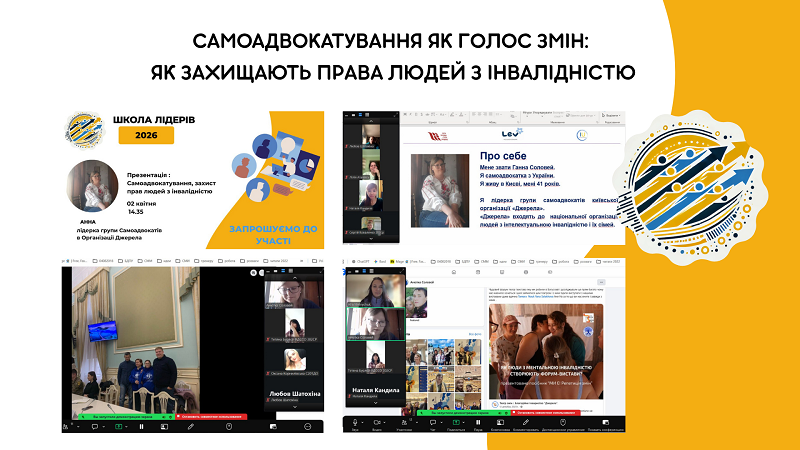
On April 2, within the framework of the BSPU Leadership School and in cooperation with the Department of Social Work and Inclusive Education, an important and inspiring event titled “Self-Advocacy and the Protection of the Rights of Persons with Disabilities” was held.
The speaker of the event was Anna Solovey, a self-advocate and leader of the self-advocates group at the NGO.
Participants had the opportunity to gain a deeper understanding of self-advocacy – a process through which persons with disabilities independently defend their rights, interests, and needs. Special attention was paid to the development of the self-advocacy movement in Ukraine and the challenges currently faced by self-advocates, particularly in the field of protecting the rights of people with intellectual and mental disabilities.
Anna Solovei shared her experience of presenting Ukrainian self-advocacy practices at the international level during events in Brussels and Denmark. She spoke about the challenges encountered in communication with public officials, as well as the importance of clearly and accessibly communicating the needs of persons with disabilities.
A particular emphasis during the meeting was placed on the use of plain language – a tool that makes information accessible to a wider audience. The speaker highlighted the necessity of implementing plain language in the work of public institutions, especially in official correspondence, as an important step toward building an inclusive society.
Mental health care was also an important topic of discussion. In today’s context, where Ukrainians face daily stress, the ability to maintain psychological well-being has become a key skill. Anna explained how peer support is organized within the self-advocates’ community and why it is a critically important resource.
The topic of using theatrical practices in self-advocacy sparked particular interest. The speaker shared her experience of participating in the creation of forum theatre performances that highlight the needs of persons with disabilities and demonstrate ways in which society can contribute to protecting their rights. These performances are presented to diverse audiences in different cities, fostering dialogue and engagement. Additionally, participation in a theatre studio that applies playback theatre techniques helps develop improvisation skills, overcome the fear of public speaking, and build confidence in expressing one’s views.
The event also included a discussion on institutional care, particularly the functioning of residential institutions for persons with disabilities. Participants learned about alternative approaches, including supported living models that promote independent living skills, socialization, and community integration.
The event became not only a source of new knowledge but also a space for open dialogue, rethinking the role of persons with disabilities in society, and recognizing the importance of supporting the self-advocacy movement in Ukraine.
The Leadership School events are implemented within the framework of engaging practitioners in the educational process of training students enrolled in the educational and professional programs “Social Work and Social Pedagogy,” “Social Work and Practical Psychology,” “Socio-Psychological Support of Resilience,” and “Post-War Socio-Psychological Rehabilitation.” This activity aims to combine theoretical training with practical experience and contributes to the implementation of the Sustainable Development Goals, in particular SDG 4 “Quality Education,” SDG 10 “Reduced Inequalities,” and SDG 16 “Peace, Justice and Strong Institutions.”
Based on materials prepared by: Alla Melnychuk,
Assistant of the Department of Social Work and Inclusive Education,
Coordinator of the Leadership School
