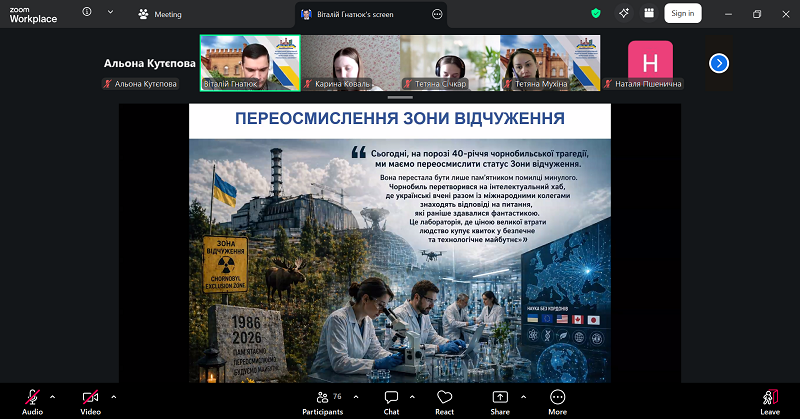
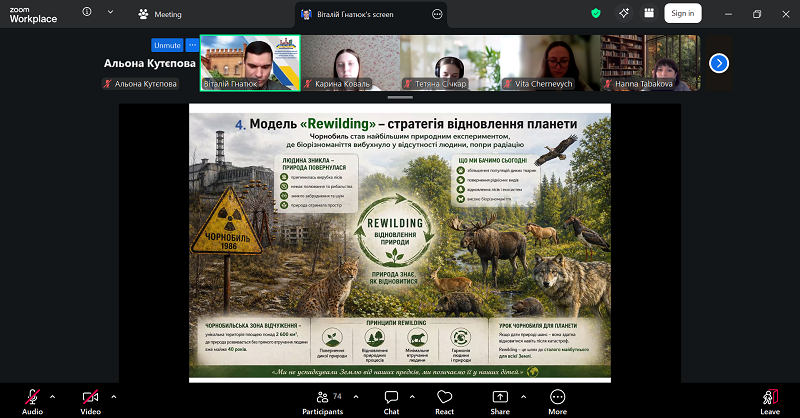
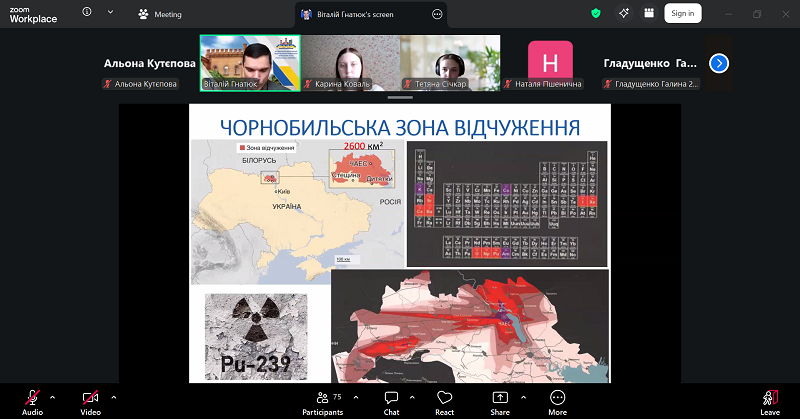
27 квітня о 14:35 відбулася загальноуніверситетська лекція на тему «Чорнобиль 40: від трагедії до лабораторії майбутнього». Захід був присвячений осмисленню наслідків Чорнобильської катастрофи та сучасним підходам до вивчення зони відчуження.
Модератором лекції виступив Віталій Гнатюк. У своєму виступі він акцентував увагу на трансформації Чорнобиля з місця глобальної трагедії на унікальний науковий полігон, де досліджуються процеси відновлення природи, радіаційного впливу та адаптації живих організмів.
Під час лекції було розглянуто, як зона відчуження сьогодні стає своєрідною «лабораторією майбутнього», що відкриває нові можливості для екологічних, біологічних та технологічних досліджень. Особливу увагу приділили питанню балансу між пам’яттю про трагедію та науковим прогресом.
Захід викликав значний інтерес серед студентів і викладачів, адже дозволив по-новому поглянути на Чорнобиль — не лише як на символ катастрофи, а й як на простір для наукового переосмислення та розвитку.
Альона Кутєпова, здобувачка спеціальності 061 Журналістика
University-wide lecture: “Chernobyl 40: from tragedy to laboratory of the future”
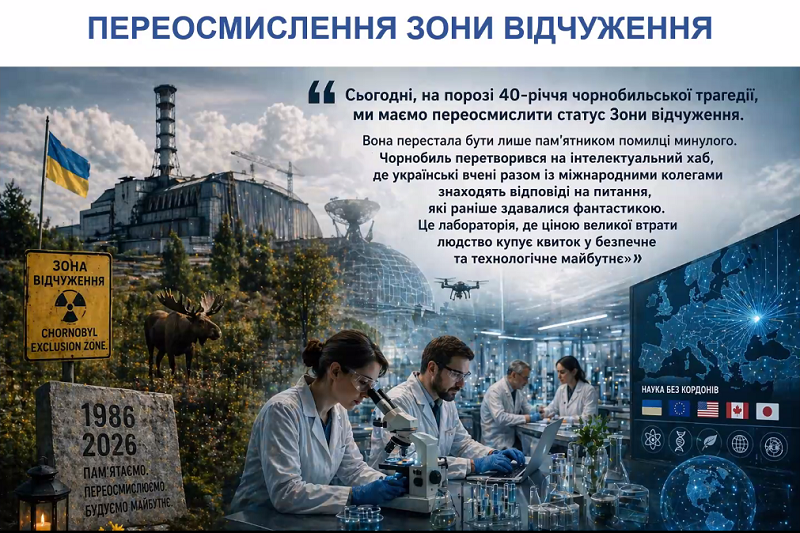
On April 27 at 14:35, a university-wide lecture on the topic “Chernobyl 40: from tragedy to laboratory of the future” was held. The event was dedicated to understanding the consequences of the Chernobyl disaster and modern approaches to studying the exclusion zone.
The moderator of the lecture was Vitaliy Hnatyuk. In his speech, he focused on the transformation of Chernobyl from a place of global tragedy to a unique scientific testing ground, where the processes of nature restoration, radiation exposure, and adaptation of living organisms are studied.
The lecture examined how the exclusion zone is becoming a kind of “laboratory of the future” today, which opens up new opportunities for ecological, biological, and technological research. Particular attention was paid to the issue of the balance between the memory of the tragedy and scientific progress.
The event aroused considerable interest among students and teachers, as it allowed them to take a new look at Chernobyl — not only as a symbol of the disaster, but also as a space for scientific rethinking and development.
Alyona Kutepova, student of specialty 061 Journalism
