
Штучний інтелект стрімко змінює освітній простір, пропонуючи нові інструменти для навчання, викладання, наукових досліджень та професійної комунікації. Використання інструментів штучного інтелекту поступово стає частиною повсякденної роботи викладача від підготовки навчальних матеріалів до організації наукових досліджень.
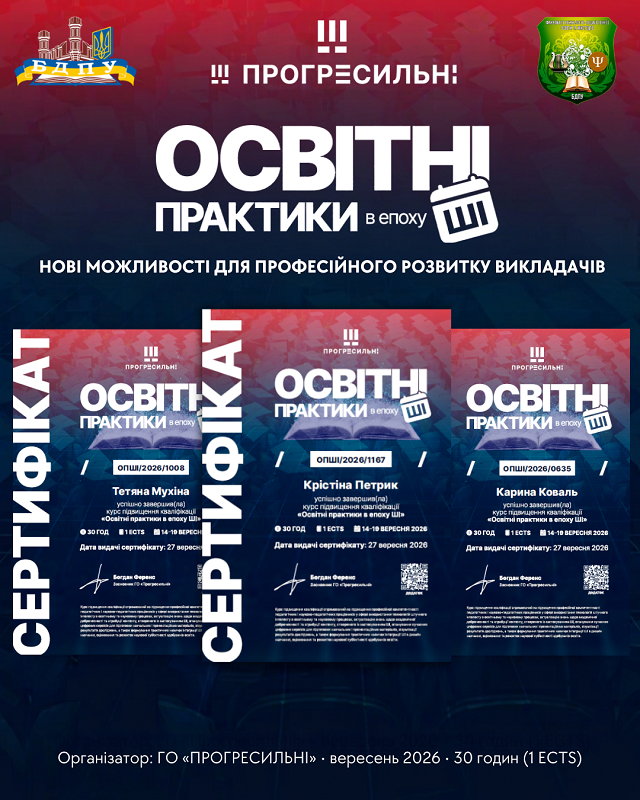
Прагнучи бути в авангарді сучасних освітніх змін, викладачки факультету психолого-педагогічної освіти та мистецтв Бердянського державного педагогічного університету (кандидатка педагогічних наук, доцентка кафедри педагогіки Крістіна Петрик, старша викладачка кафедри початкової освіти Тетяна Мухіна та асистентка кафедри педагогіки Карина Коваль) успішно пройшли підвищення кваліфікації «Освітні практики в епоху ШІ» від ГО «Прогресильні», яке відбулося 14–19 вересня 2026 року.
Першочергово робота була спрямована на підвищення професійної компетентності педагогічних і науково-педагогічних працівників у сфері використання технологій штучного інтелекту в освітньому та науковому процесах. Особливу увагу було приділено питанням академічної доброчесності та атрибуції контенту, створеного із застосуванням ШІ, використанню сучасних цифрових сервісів для підготовки навчальних і презентаційних матеріалів, візуалізації результатів досліджень та інтеграції інструментів штучного інтелекту в освітню діяльність.
Викладачки ознайомилися з актуальними підходами до використання ШІ в освіті, опанували практичні інструменти для розроблення навчального контенту, оцінювання результатів навчання та організації освітнього процесу в умовах цифрової трансформації, що підтверджено відповідними сертифікатами.
Успішне завершення навчання стало ще одним кроком на шляху до впровадження сучасних освітніх технологій у професійну діяльність викладачів факультету та підтвердило готовність науково-педагогічних працівників до роботи в умовах динамічних змін сучасного освітнього простору.
Висловлюємо вдячність ГО «Прогресильні» за цінний досвід, нові знання та можливість професійного розвитку в умовах цифрової трансформації освіти!
За матеріалами
факультету психолого-педагогічної освіти та мистецтв
Educational practices in the era of artificial intelligence: new opportunities for teachers’ professional development
Artificial intelligence is rapidly changing the educational space, offering new tools for learning, teaching, scientific research, and professional communication. The use of artificial intelligence tools is gradually becoming part of a teacher’s daily work, from preparing educational materials to organizing scientific research.
Striving to be at the forefront of modern educational changes, teachers from the Faculty of Psychological and Pedagogical Education and Arts at Berdyansk State Pedagogical University (Candidate of Pedagogical Sciences and Associate Professor of the Pedagogy Department Kristina Petryk, Senior Lecturer of the Primary Education Department Tetiana Mukhina, and Assistant of the Pedagogy Department Karyna Koval) successfully completed the professional development course “Educational Practices in the Era of AI” by the NGO “Progressylni”, which took place on September 14–19, 2026.
Primarily, the work was aimed at improving the professional competence of pedagogical and academic staff in the use of artificial intelligence technologies in educational and scientific processes. Special attention was paid to the issues of academic integrity and the attribution of content created using AI, the use of modern digital services for preparing educational and presentation materials, visualizing research results, and integrating artificial intelligence tools into educational activities.
The teachers familiarized themselves with current approaches to using AI in education and mastered practical tools for developing educational content, assessing learning outcomes, and organizing the educational process in the context of digital transformation, which is confirmed by the respective certificates.
The successful completion of the training became another step towards implementing modern educational technologies into the professional activities of the faculty’s teachers and confirmed the readiness of the academic staff to work in the dynamically changing modern educational space.
We express our gratitude to the NGO “Progressylni” for the valuable experience, new knowledge, and the opportunity for professional development in the context of the digital transformation of education!
Based on materials from
the Faculty of Psychological and Pedagogical Education and Arts
