
Створення доступного, безбар’єрного та комфортного освітнього середовища – це не лише питання дотримання нормативних вимог, а насамперед увага до потреб кожного учасника освітнього процесу. Важливо не просто декларувати рівні можливості, а чути здобувачів освіти, враховувати їхній досвід і спільно знаходити рішення, які допомагають кожному реалізувати свій освітній потенціал.
Саме з цією метою Компетентнісним центром інклюзивної освіти Бердянського державного педагогічного університету було проведено опитування здобувачів вищої освіти щодо визначення особливих освітніх потреб та необхідних умов підтримки під час навчання. Важливо зазначити, що участь в опитуванні була добровільною.
До опитування долучився 121 здобувач вищої освіти. Серед учасників – 65 бакалаврів (53,7%) та 56 здобувачів другого і третього рівнів вищої освіти (46,3%). Відповіді надійшли від представників усіх факультетів університету, що дало змогу отримати ширше уявлення про потреби студентської спільноти.
За результатами опитування, 9 респондентів (7,4%) повідомили про встановлену інвалідність, 5 осіб (4,1%) зазначили про наявність особливих освітніх потреб, які необхідно враховувати під час навчання, ще 5 учасникам (4,1%) було складно визначитися з відповіддю. Водночас 111 респондентів (91,7%) не повідомили про наявність особливих освітніх потреб.
Важливо наголосити: інклюзивне освітнє середовище потрібне не лише тим, хто має встановлену інвалідність або визначені особливі освітні потреби. Воно передбачає гнучкість, доступність і готовність університету враховувати різні життєві обставини, можливості та освітні потреби здобувачів.
Більшість учасників опитування зазначили, що не потребують додаткових умов навчання. Водночас відповіді тих, хто вказав на потребу в підтримці, засвідчили важливість кількох напрямів:
- гнучкість освітнього процесу – можливість адаптації термінів, способів виконання навчальних завдань та форм оцінювання;
- доступність навчальних матеріалів – використання зручного формату, достатнього розміру шрифту, можливості збільшення тексту та належної візуальної доступності;
- урахування індивідуального темпу роботи – зокрема надання додаткового часу для виконання електронних тестів і завдань;
- організаційна підтримка – своєчасне інформування, доступність розкладу, покликань на заняття та навчальних матеріалів;
- психологічна й соціальна підтримка, а також можливість отримати індивідуальну консультацію щодо необхідних умов навчання.
Особливо цінними стали відкриті відповіді респондентів, адже за кожною з них – реальний досвід навчання. Здобувачі освіти звернули увагу на необхідність гнучкіше підходити до термінів виконання завдань, враховувати поєднання навчання з роботою та сімейними обов’язками, забезпечувати доступність електронних матеріалів і тестів для людей із порушеннями зору. Також висловлено побажання щодо розширення можливостей дистанційного навчання, гнучкого графіка занять, доступу до матеріалів у зручний час та запровадження тьюторського супроводу для здобувачів з особливими освітніми потребами.
Водночас у відповідях прозвучали й позитивні оцінки організації освітнього процесу, зокрема зручності розкладу з прикріпленими покликаннями та загальної атмосфери взаємодії в університеті. Це свідчить про важливість уже напрацьованих практик і необхідність їх подальшого розвитку.
Отримані результати не залишаться лише статистичними даними. Вони стануть основою для подальшої роботи Компетентнісного центру інклюзивної освіти та взаємодії з факультетами й структурними підрозділами університету.
Серед пріоритетних напрямів роботи на 2026–2027 навчальний рік:
- використання рекомендацій, розроблених у рамках проєкту «Інклюзивне освітнє середовище ЗВО» для науково-педагогічних працівників щодо створення доступних навчальних матеріалів і використання гнучких підходів до організації освітнього процесу;
- сприяння врахуванню індивідуальних потреб здобувачів під час виконання завдань, проходження тестування та оцінювання результатів навчання;
- проведення консультацій для здобувачів освіти і викладачів з питань інклюзивної освіти та розумного пристосування;
- посилення інформаційної доступності освітнього процесу;
- розвиток взаємодії між Компетентнісним центром, факультетами та іншими університетськими підрозділами для своєчасного реагування на індивідуальні запити;
- подальший моніторинг потреб здобувачів освіти та оцінювання ефективності запроваджених заходів.
Принципово важливо, що робота з індивідуальними запитами передбачатиме дотримання конфіденційності та повагу до особистої інформації кожного здобувача.
Проведене опитування ще раз підтвердило: безбар’єрність – це не однакові умови для всіх, а можливість кожного отримати необхідну підтримку для повноцінної участі в освітньому процесі.
Компетентнісний центр інклюзивної освіти БДПУ висловлює щиру вдячність усім здобувачам, які долучилися до опитування, поділилися власним досвідом і пропозиціями. Саме відкритий діалог, небайдужість та спільна відповідальність допомагають формувати університетський простір, у якому цінують різноманітність, поважають гідність і створюють можливості для кожного.
Чуємо. Враховуємо. Діємо. Разом формуємо безбар’єрне освітнє середовище!
За матеріалами Компетентнісного центру інклюзивної освіти
Бердянського державного педагогічного університету
An inclusive and barrier-free educational environment begins with dialogue: results of a survey of students at berdiansk state pedagogical university
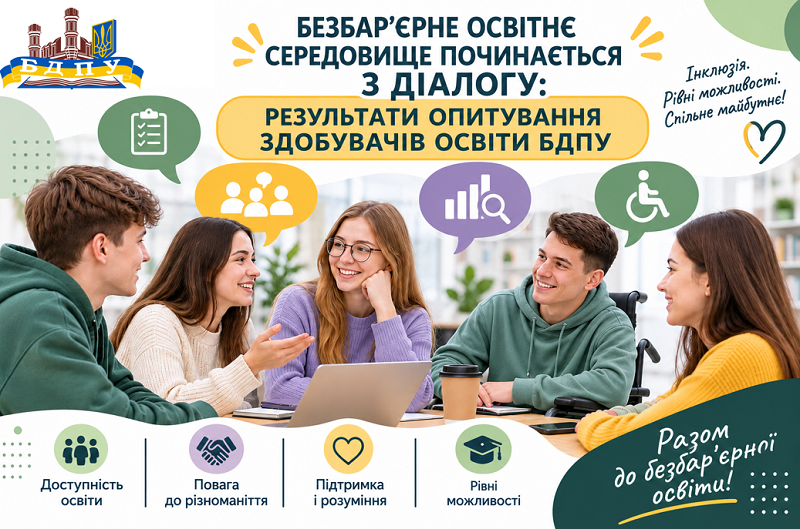
Creating an accessible, barrier-free, and comfortable educational environment is not merely a matter of complying with regulatory requirements. Above all, it means being attentive to the needs of every participant in the educational process. It is important not simply to declare equal opportunities, but to listen to students, take their experiences into account, and work together to find solutions that enable everyone to realise their educational potential.
With this aim in mind, the Competence Centre for Inclusive Education of Berdiansk State Pedagogical University (BSPU) conducted a survey of higher education students to identify special educational needs and the support conditions required during their studies. It is important to note that participation in the survey was voluntary.
A total of 121 higher education students took part in the survey. Among the respondents, 65 were Bachelor’s degree students (53.7%), while 56 were students pursuing second- and third-cycle higher education degrees (46.3%). Responses were received from representatives of all university faculties, providing a broader understanding of the needs of the student community.
According to the survey results, 9 respondents (7.4%) reported having an officially recognised disability, 5 respondents (4.1%) indicated that they had special educational needs that should be taken into account during their studies, and another 5 participants (4.1%) found it difficult to provide a definite answer. At the same time, 111 respondents (91.7%) did not report having special educational needs.
It is important to emphasise that an inclusive educational environment is essential not only for people with officially recognised disabilities or identified special educational needs. It also requires flexibility, accessibility, and the university’s willingness to take into account students’ diverse life circumstances, abilities, and educational needs.
Most survey participants indicated that they did not require additional study arrangements. However, the responses of those who identified a need for support highlighted the importance of several key areas:
- Flexibility in the educational process – opportunities to adjust deadlines, methods of completing academic assignments, and assessment formats;
- Accessible learning materials – providing materials in convenient formats, using an adequate font size, allowing text enlargement, and ensuring appropriate visual accessibility;
- Consideration of individual working pace – including providing additional time to complete online tests and assignments;
- Organisational support – timely communication and accessible timetables, links to classes, and learning materials;
- Psychological and social support, as well as the opportunity to receive individual consultations regarding the learning conditions required.
The open-ended responses were particularly valuable, as each one reflected a real learning experience. Students highlighted the need for greater flexibility in assignment deadlines, consideration of the challenges of combining studies with employment and family responsibilities, and improved accessibility of electronic learning materials and tests for people with visual impairments. They also expressed a desire for expanded opportunities for distance learning, flexible class schedules, access to learning materials at convenient times, and the introduction of tutoring support for students with special educational needs.
At the same time, respondents also shared positive assessments of the organisation of the educational process, particularly the convenience of timetables with embedded links and the overall atmosphere of interaction within the university. This demonstrates the importance of existing good practices and the need to further develop them.
The results obtained will not remain merely statistical data. They will serve as a foundation for the further work of the Competence Centre for Inclusive Education and its cooperation with the university’s faculties and structural units.
The priority areas of work for the 2026–2027 academic year include:
- Applying recommendations developed within the framework of the Inclusive Educational Environment in Higher Education Institutions project for academic and teaching staff on creating accessible learning materials and adopting flexible approaches to organising the educational process;
- Promoting the consideration of students’ individual needs when completing assignments, taking tests, and assessing learning outcomes;
- Providing consultations for students and academic staff on inclusive education and reasonable accommodation;
- Enhancing the information accessibility of the educational process;
- Strengthening cooperation between the Competence Centre, faculties, and other university units to ensure timely responses to individual requests;
- Continuing to monitor students’ needs and evaluate the effectiveness of the measures implemented.
It is particularly important that work with individual requests will ensure confidentiality and respect for each student’s personal information.
The survey has once again confirmed that barrier-free access does not mean providing identical conditions for everyone. It means ensuring that each person receives the support they need to participate fully in the educational process.
The Competence Centre for Inclusive Education of BSPU expresses its sincere gratitude to all students who took part in the survey and shared their experiences and suggestions. It is through open dialogue, active engagement, and shared responsibility that we can create a university environment where diversity is valued, dignity is respected, and opportunities are available to everyone.
We listen. We take needs into account. We take action. Together, we are building a barrier-free educational environment!
Prepared by the Competence Centre for Inclusive Education,
Berdiansk State Pedagogical University
