
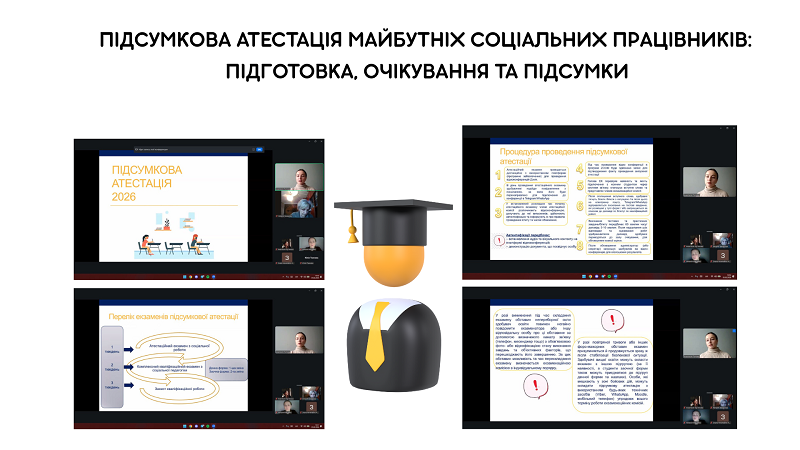
На початку останнього навчального семестру підготовки бакалаврів відбулася традиційна інформаційна зустріч викладачів кафедри соціальної роботи та інклюзивної освіти зі здобувачами першого (бакалаврського) рівня спеціальності 231 «Соціальна робота» денної та заочної форм навчання, присвячена підготовці до підсумкової атестації. Захід був спрямований на ознайомлення студентів із процедурою проведення підсумкової атестації, її структурою та вимогами.
Для здобувачів спеціальності 231 «Соціальна робота» підсумкова атестація є завершальним етапом освітньої підготовки на першому (бакалаврському) рівні вищої освіти та включає три складові: атестаційний екзамен з соціальної роботи, комплексний кваліфікаційний екзамен з соціальної педагогіки (або практичної психології для студентів освітньо-професійної програми «Соціальна робота та практична психологія») та захист кваліфікаційної роботи. Кожен з етапів спрямований на комплексну оцінку сформованих компетентностей і результатів навчання.
Під час зустрічі детально проговорено процедуру проведення підсумкової атестації в дистанційному форматі з використанням платформи Zoom, порядок автентифікації здобувачів, часові межі виконання завдань та алгоритм оголошення результатів. Окрему увагу було приділено формату екзаменів, системі оцінювання, структурі завдань і вимогам до їх виконання.
У ході обговорення студентам надано рекомендації щодо підготовки до атестаційних екзаменів і захисту кваліфікаційної роботи. Зокрема, йшлося про структуру доповіді, підготовку презентації, логіку представлення результатів дослідження та особливості роботи із запитаннями екзаменаційної комісії. Наголошено, що підсумкова атестація є не лише формою підсумкового контролю, а й можливістю продемонструвати професійну зрілість, самостійність мислення та готовність до практичної діяльності.
Окремим блоком було розглянуто питання безпеки та дій у разі виникнення форс-мажорних обставин. Студентам роз’яснено алгоритм поведінки під час повітряної тривоги, технічних збоїв або інших обставин, що можуть вплинути на перебіг атестації. Такі роз’яснення спрямовані на забезпечення рівних умов складання та зниження зайвої тривожності в завершальний період навчання.
Загалом, інформаційна зустріч дозволила систематизувати ключові аспекти проведення підсумкової атестації, окреслити вимоги та надати студентам необхідні орієнтири для підготовки. Чітке розуміння структури атестації, критеріїв оцінювання та організаційних умов сприяє більш впевненому входженню в завершальний семестр навчання та відповідальному підходу до підсумкового етапу освітньої підготовки.
За матеріалам кафедри соціальної роботи та інклюзивної освіти
Final attestation of future social workers: preparation, expectations, and outcomes
At the beginning of the final semester of the Bachelor’s training program, a traditional informational meeting was held between the faculty members of the Department of Social Work and Inclusive Education and first-cycle (Bachelor’s level) students of Specialty 231 “Social Work,” both full-time and part-time, dedicated to preparation for the final attestation. The meeting aimed to familiarize students with the procedure of final attestation, its structure, and its requirements.
For students of Specialty 231 “Social Work,” the final attestation represents the concluding stage of academic training at the first (Bachelor’s) level of higher education. It consists of three components: the attestation examination in Social Work, the comprehensive qualification examination in Social Pedagogy (or Practical Psychology for students enrolled in the educational and professional program “Social Work and Practical Psychology”), and the defense of the qualification thesis. Each component is designed to provide a comprehensive assessment of the competencies formed and the learning outcomes achieved.
During the meeting, the procedure for conducting the final attestation in a дистанційний формат using the Zoom platform was explained in detail, including the authentication process, time limits for completing assignments, and the procedure for announcing results. Particular attention was paid to the format of examinations, the grading system, the structure of tasks, and the requirements for their completion.
Students were also provided with recommendations on preparing for the attestation examinations and the defense of the qualification thesis. In particular, guidance was given on structuring the presentation, preparing slides, logically presenting research findings, and effectively responding to questions from the examination board. It was emphasized that final attestation is not only a form of final assessment but also an opportunity to demonstrate professional maturity, independent thinking, and readiness for practical professional activity.
A separate section of the meeting addressed safety issues and actions to be taken in case of force majeure circumstances. Students were informed about the procedures to follow during an air raid alert, technical disruptions, or other circumstances that might affect the examination process. These clarifications aim to ensure equal conditions for all students and to reduce unnecessary anxiety during the final stage of their studies.
Overall, the informational meeting helped systematize the key aspects of the final attestation process, clarify requirements, and provide students with clear guidelines for preparation. A thorough understanding of the attestation structure, assessment criteria, and organizational procedures contributes to a more confident transition into the final semester and to a responsible approach to the concluding stage of academic training.
Based on materials provided by
the Department of Social Work and Inclusive Education
