
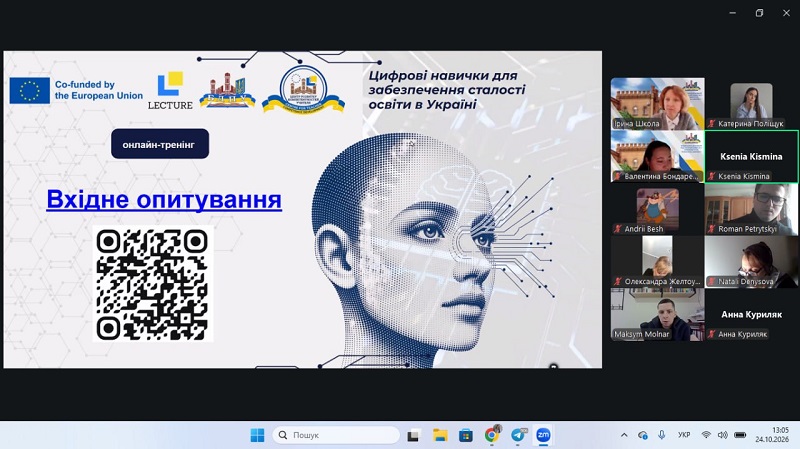
24 жовтня 2026 року Бердянський державний педагогічний університет провів онлайн-тренінг «Цифрові навички для забезпечення сталості освіти в Україні» для педагогічних і науково-педагогічних працівників. Захід відбувся в межах міжнародного проєкту Erasmus+ КА2 LECTURE, координаторкою якого є перша проректорка, докторка педагогічних наук, професорка Ольга Гуренко. Тренінг проходив на платформі Zoom і зібрав понад 30 учасників.
Спікерками тренінгу стали Ірина Школа, кандидатка філологічних наук, доцентка, завідувачка кафедри іноземних мов і методики викладання, та Валентина Бондаренко, старша викладачка кафедри комп’ютерних технологій та інформатики, заступниця начальника навчального відділу.
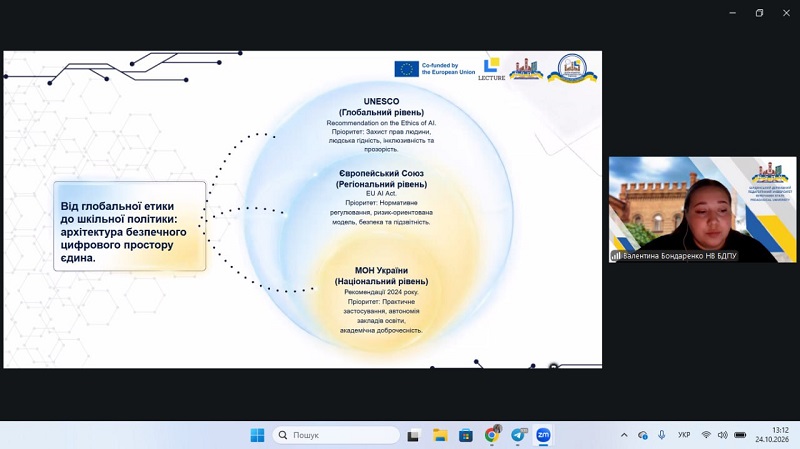
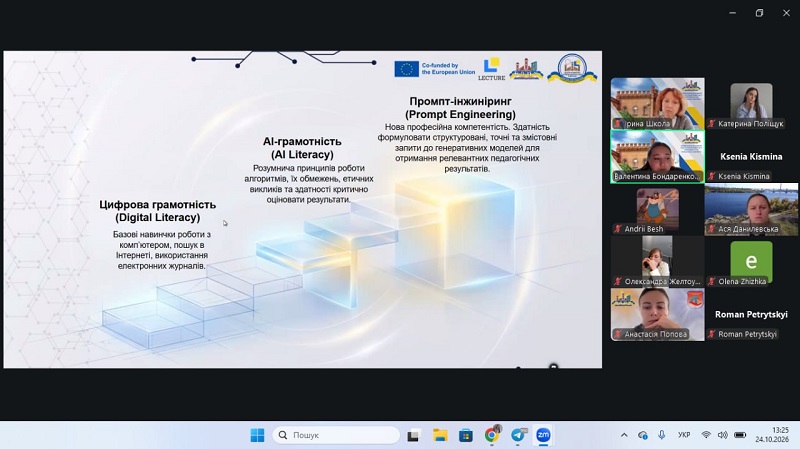
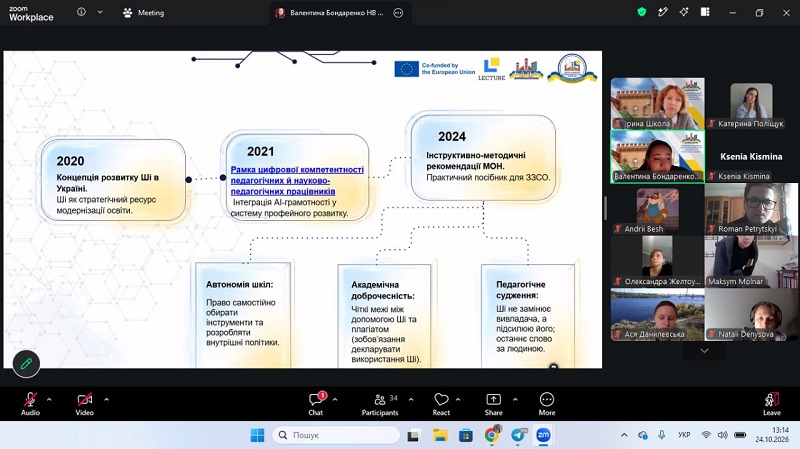
Валентина Бондаренко розповіла про перехід від епохи цифровізації до епохи штучного інтелекту, у якій технологія стає інтелектуальним партнером, а ключовими викликами є критичне осмислення, прозорість алгоритмів і відповідальність за рішення. Спікерка представила рівні регулювання ШІ: Рекомендацію ЮНЕСКО щодо етики штучного інтелекту, Акт ЄС про штучний інтелект та інструктивно-методичні рекомендації МОН України 2024 року. Окрему увагу вона приділила академічній доброчесності, автономії закладів освіти та принципу, за яким ШІ підсилює викладача, а не замінює його. Учасники також обговорили шлях від цифрової грамотності до AI-грамотності та промпт-інжинірингу, складники компетентності викладача у сфері ШІ та основні напрями його застосування в освіті.
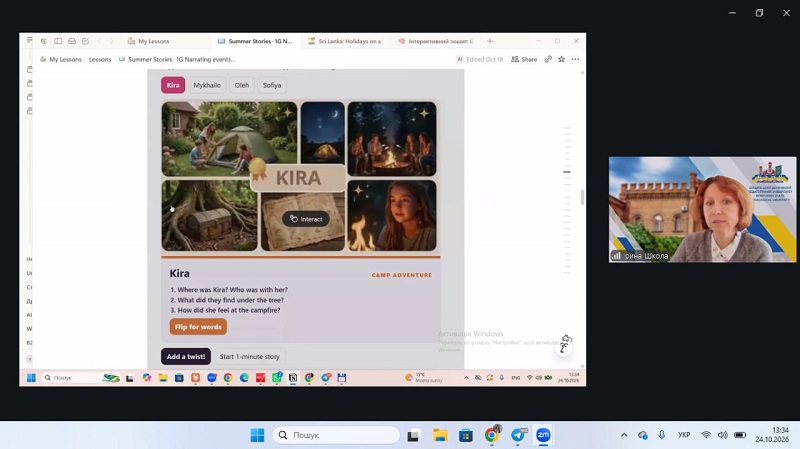
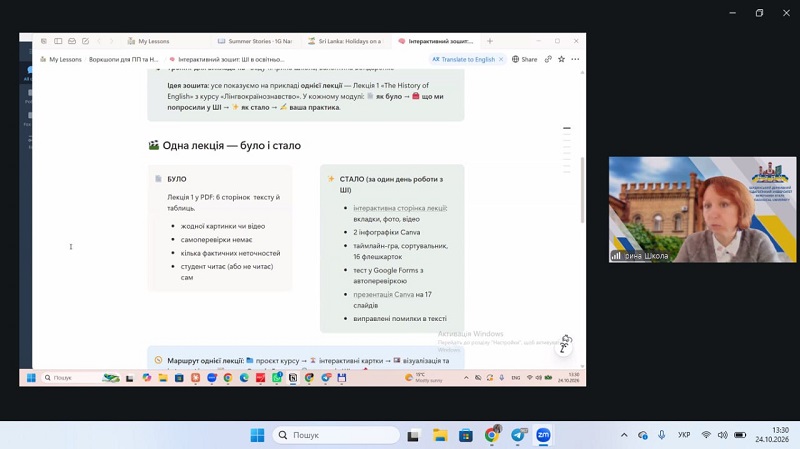
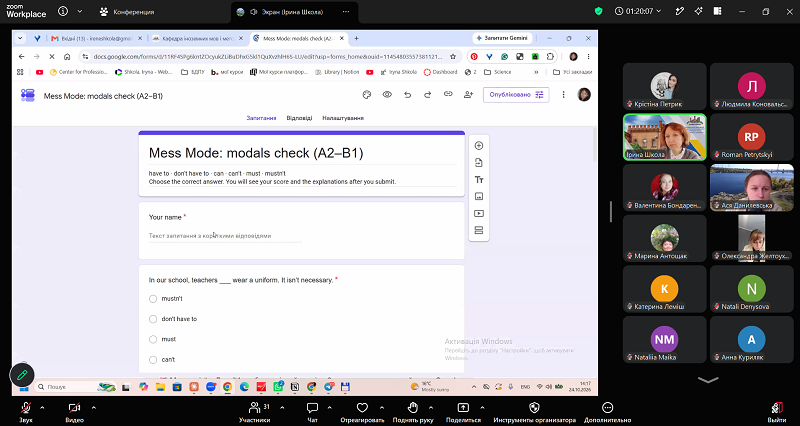
Ірина Школа провела практичну частину за інтерактивним зошитом «ШІ в освітньому процесі — від лекції до інтерактивного курсу». Усі можливості вона показала на прикладі однієї лекції «The History of English» з курсу «Лінгвокраїнознавство»: шестисторінковий PDF за один день роботи з ШІ перетворився на інтерактивну сторінку з фото й відео, інфографіку, флешкартки, таймлайн-гру, тест у Google Forms з автоперевіркою та презентацію. Учасники дізналися, як створювати проєкти курсу в ШІ, формулювати сильні промпти, робити інтерактивні картки та ігри без програмування, візуалізувати текст лекції та генерувати якісні тести. Окремо йшлося про ШІ як рецензента, що допомагає знайти фактичні неточності в навчальних матеріалах, тоді як остаточне рішення завжди залишається за викладачем.
Кожен модуль тренінгу завершувався практичним завданням, а наприкінці учасники склали власний план застосування ШІ у своїх дисциплінах. Захід сприяв розвитку цифрових компетентностей викладачів і відповідальному впровадженню штучного інтелекту в освітній процес університету.

За матеріалами Центру розвитку компетентностей учителя
Digital Educational Resilience with BSPU: Artificial Intelligence in Teaching
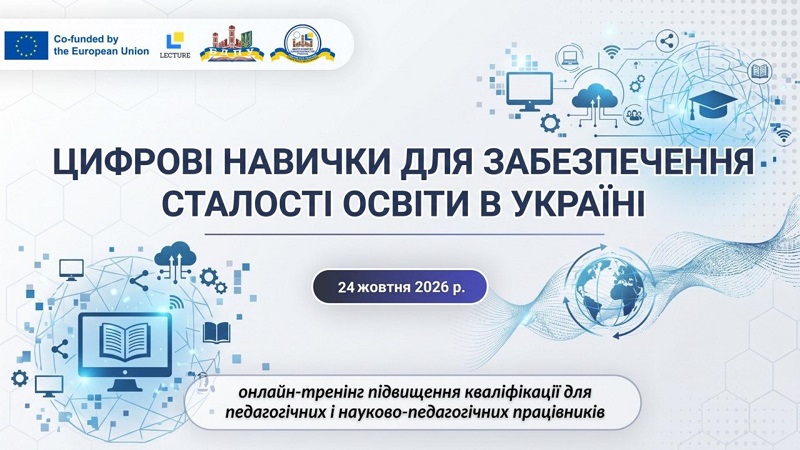
On 24 October 2026, Berdyansk State Pedagogical University held the online training “Digital Skills for the Sustainability of Education in Ukraine” for teaching and academic staff. The event took place within the international Erasmus+ KA2 project LECTURE, coordinated by First Vice-Rector, Doctor of Pedagogical Sciences, Professor Olha Hurenko. The training was held on Zoom and brought together more than 30 participants.
The speakers were Iryna Shkola, PhD in Philology, Associate Professor and Head of the Department of Foreign Languages and Teaching Methods, and Valentyna Bondarenko, Senior Lecturer at the Department of Computer Technologies and Informatics and Deputy Head of the Academic Affairs Office. At the start of the event, participants completed an entry survey.
Valentyna Bondarenko spoke about the shift from the era of digitalisation to the era of artificial intelligence, in which technology becomes an intellectual partner and the key challenges are critical thinking, algorithmic transparency and accountability for decisions. She presented the levels of AI regulation: the UNESCO Recommendation on the Ethics of Artificial Intelligence, the EU AI Act and the 2024 guidelines of the Ministry of Education and Science of Ukraine. She paid special attention to academic integrity, the autonomy of educational institutions and the principle that AI strengthens the teacher rather than replacing them. Participants also discussed the path from digital literacy to AI literacy and prompt engineering, the components of teachers’ AI competence and the main areas of AI use in education.
Iryna Shkola led the practical part using the interactive workbook “AI in the Educational Process: From a Lecture to an Interactive Course”. She demonstrated every tool on a single lecture, “The History of English”, from the course “Cultural Studies of English-Speaking Countries”: in one day of work with AI, a six-page PDF became an interactive page with photos and videos, infographics, flashcards, a timeline game, a self-grading Google Forms quiz and a presentation. Participants learned how to set up course projects in AI, write strong prompts, create interactive cards and games without coding, visualise lecture texts and generate high-quality tests. A separate module showed AI as a reviewer that helps detect factual inaccuracies in teaching materials, while the final decision always remains with the teacher.
Each module ended with a hands-on task, and at the end participants drew up their own plans for using AI in their courses. The training helped develop teachers’ digital competencies and promoted the responsible use of artificial intelligence in the university’s educational process.
Based on materials from the Center for the Development of Teacher Competencies
