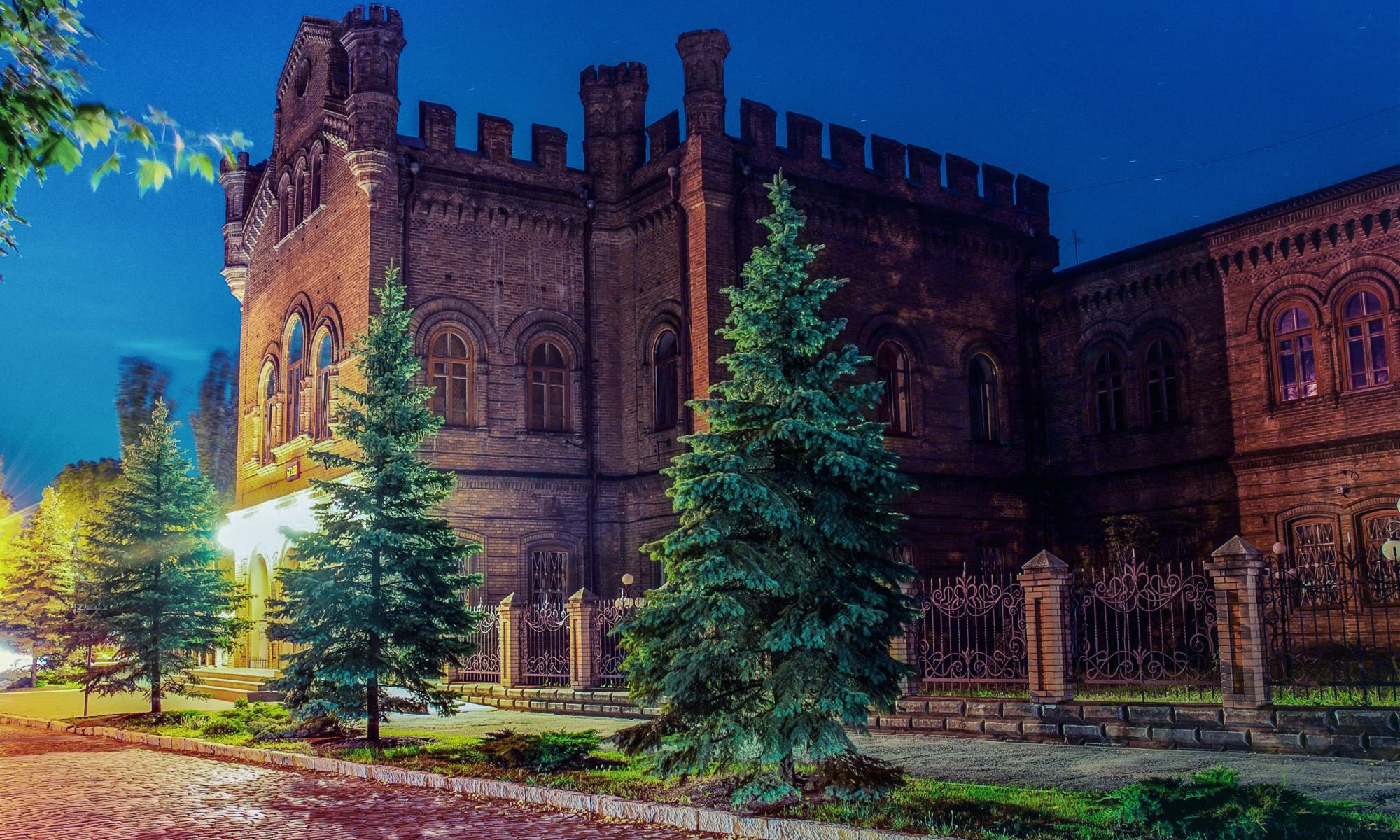
21 квітня 2026 року кафедра соціальної роботи та інклюзивної освіти БДПУ провела серію фокус-групових обговорень чинної освітньо-професійної програми «Поствоєнна соціально-психологічна реінтеграція» та проєкту її оновленої редакції зі здобувачами другого (магістерського) рівня вищої освіти.
Щоб кожен учасник мав можливість вільно висловитися та поділитися власним досвідом навчання, зустрічі проводили окремо з кожною академічною групою денної та заочної форм навчання. Модерувала обговорення гарант освітньої програми Анастасія Попова.
Розмови відбулися у відкритій і доброзичливій атмосфері. Здобувачі поділилися враженнями від навчання, висловили свої побажання та разом із гарантом обговорили, як зробити програму ще більш послідовною, практично спрямованою і корисною для майбутньої професійної діяльності.
Учасники позитивно оцінили актуальність і зміст програми, а також можливість опановувати знання та навички, необхідні для роботи в умовах війни й поствоєнного відновлення. Водночас під час зустрічей спільно визначили напрями, які варто посилити в процесі подальшого вдосконалення ОПП.
Особливу увагу приділили послідовності вивчення професійних освітніх компонентів. Здобувачі запропонували опановувати кейс-менеджмент до початку практичної підготовки, щоб уже під час практики впевненіше працювати з професійними ситуаціями. Також учасники наголосили на доцільності ширшого використання реальних і наскрізних кейсів, які допомагають побачити весь шлях роботи з людиною, сім’єю або громадою — від оцінювання потреб до організації та координації підтримки.
Не менш важливою стала розмова про професійне благополуччя майбутніх фахівців. Здобувачі звернули увагу на необхідність посилити підготовку до профілактики професійного вигорання і вторинної травматизації, дотримання професійних меж, використання супервізії та підтримки команди.
Окремо обговорили форму підсумкової атестації. Здобувачі підтримали пропозицію залишити єдиною формою атестації публічний захист кваліфікаційної роботи, який дає змогу продемонструвати здатність самостійно досліджувати актуальні проблеми соціальної роботи, обґрунтовувати професійні рішення та презентувати результати власного дослідження.
Зустрічі стали не лише обговоренням освітньої програми, а й можливістю безпосередньо поспілкуватися з її гарантом, поставити запитання та отримати відповіді щодо організації навчання, практичної підготовки й атестації.
Усі висловлені пропозиції були почуті, узагальнені та передані для подальшого опрацювання. Саме такий відкритий діалог допомагає вдосконалювати освітню програму з урахуванням реального досвіду, професійних очікувань і потреб тих, для кого вона створена.
За матеріалами кафедри соціальної роботи та інклюзивної освіти
Learning, Discussing, Improving: A Dialogue with Students
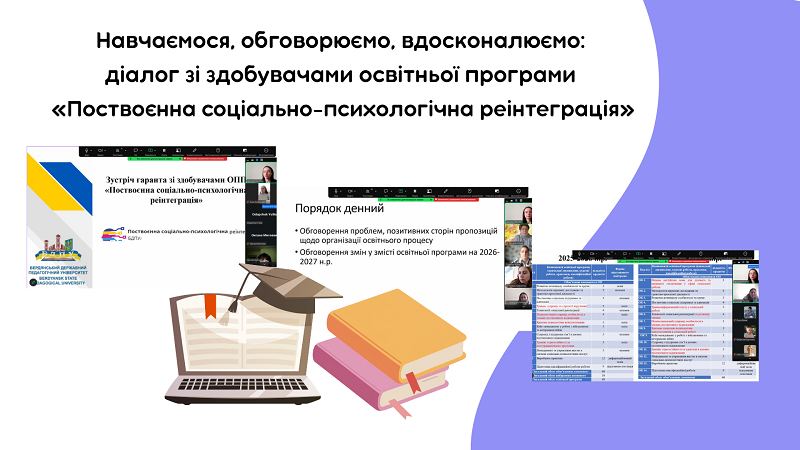
On 21 April 2026, the Department of Social Work and Inclusive Education at Berdyansk State Pedagogical University held a series of focus group discussions with second-cycle (master’s) students on the current educational and professional programme “Post-War Psychosocial Reintegration” and the draft of its updated version.
To ensure that every participant had an opportunity to speak freely and share their learning experiences, separate meetings were held with each academic group of full-time and part-time students. The discussions were moderated by Anastasiia Popova, Academic Programme Coordinator.
The conversations took place in an open and welcoming atmosphere. Students shared their impressions of the programme, expressed their wishes, and discussed with the Academic Programme Coordinator how to make the programme even more coherent, practice-oriented, and valuable for their future professional careers.
The participants positively assessed the relevance and content of the programme, as well as the opportunity to acquire the knowledge and skills required to work during wartime and post-war recovery. At the same time, they jointly identified areas that should be strengthened as part of the programme’s further improvement.
Particular attention was paid to the sequencing of professionally oriented educational components. The students suggested that case management should be studied before the start of practical training, enabling them to work more confidently with professional situations during their placements. The participants also emphasised the value of using more real-life and longitudinal case studies, which help students understand the entire process of working with an individual, family, or community—from needs assessment to the organisation and coordination of support.
The professional well-being of future practitioners was another important topic of discussion. Students highlighted the need for stronger preparation in preventing professional burnout and secondary traumatisation, maintaining professional boundaries, and making effective use of supervision and team support.
The form of final assessment was also discussed separately. The students supported the proposal to retain the public defence of the master’s thesis as the sole form of final assessment. This format enables students to demonstrate their ability to independently investigate current issues in social work, justify professional decisions, and present the findings of their own research.
The meetings provided not only an opportunity to discuss the educational programme but also a space for students to communicate directly with the Academic Programme Coordinator, ask questions, and receive answers concerning the organisation of learning, practical training, and final assessment.
All suggestions were heard, summarised, and submitted for further consideration. This kind of open dialogue helps improve the educational programme by taking into account the real experiences, professional expectations, and needs of the people for whom it was designed.
Based on materials provided by
the Department of Social Work and Inclusive Education
