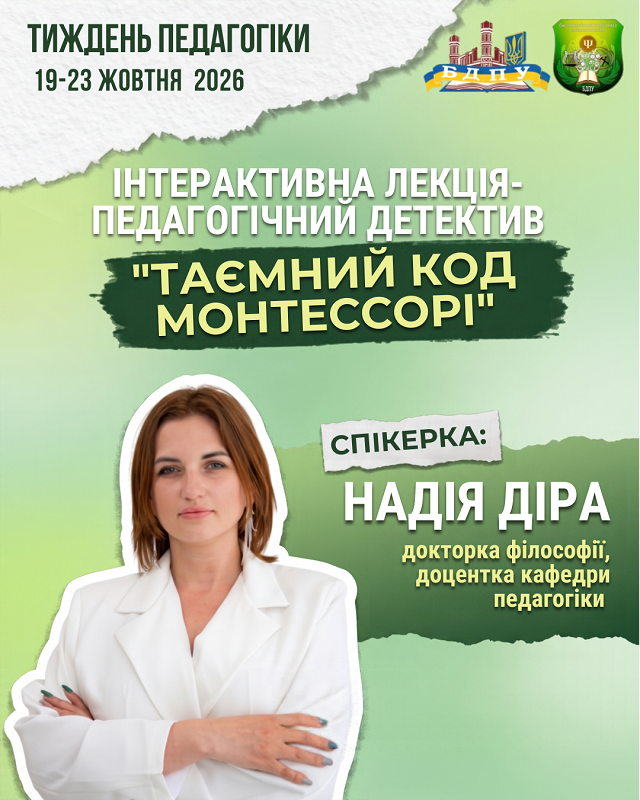
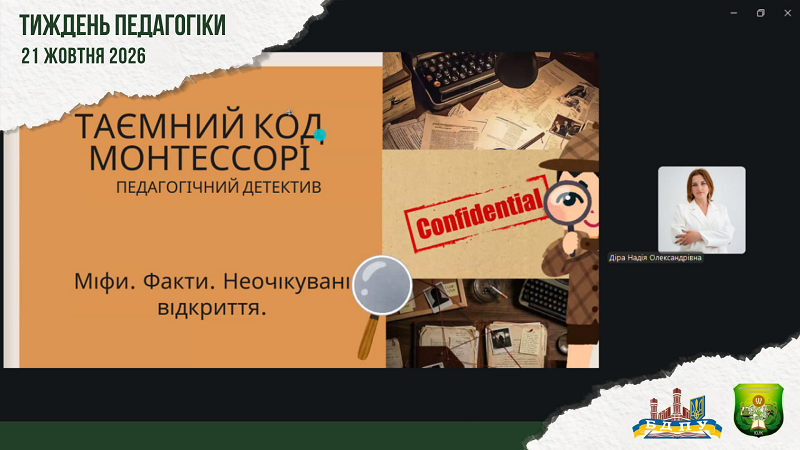
Чи можна поєднати серйозну науку із захопливим розслідуванням? Легко! 21 жовтня на кафедрі педагогіки факультету психолого-педагогічної освіти та мистецтв пройшла надзвичайно цікава інтерактивна лекція у форматі справжнього детективу – «Таємний код Монтессорі». Спікерка заходу докторка філософії, доцентка кафедри педагогіки Надія Діра, запропонувала студентам і викладачам відійти від традиційних лекцій та перевтілитися у слідчих, щоб спільно розібратися у світових освітніх міфах і фактах.
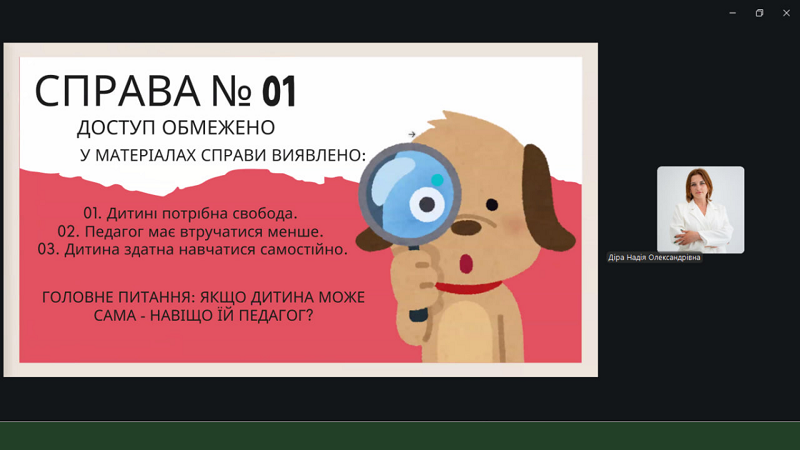
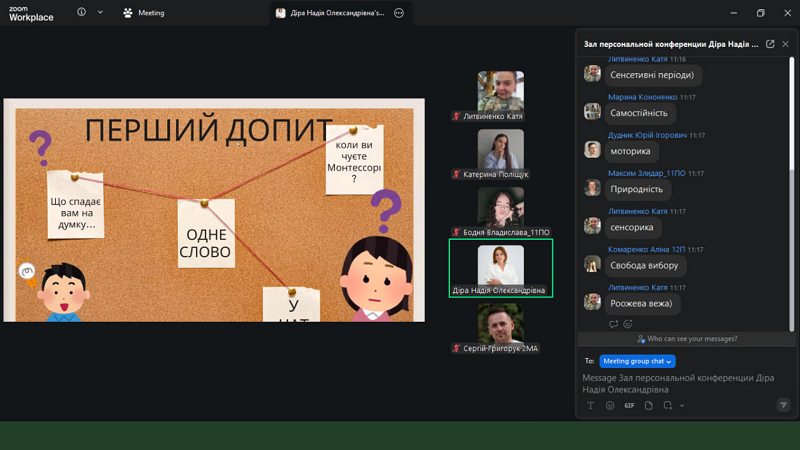
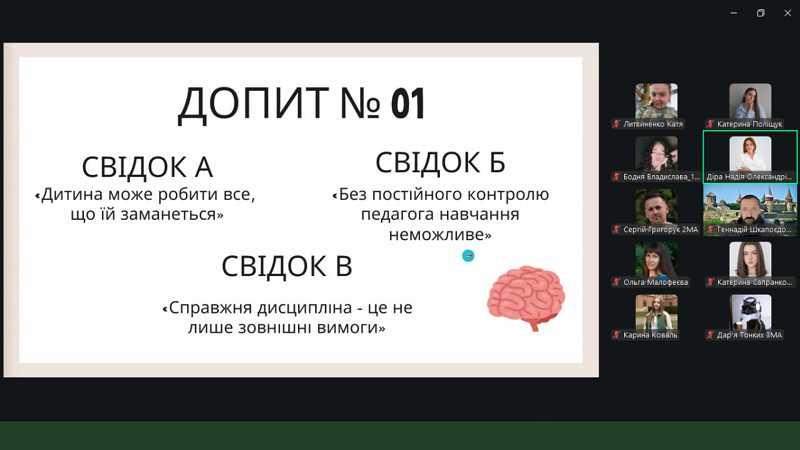
Розслідування розпочалося з обговорення ключової дилеми: якщо дитина від природи прагне свободи та здатна навчатися самостійно, то якою є справжня роль педагога в цьому процесі? Учасники заходу пройшли через серію віртуальних «допитів» і логічних експериментів, маючи обмежений час, на обміркування та перевірку власних гіпотез. Присутні активно ділилися фаховими асоціаціями в чаті та дискутували про те, чим справжня свідома дисципліна відрізняється від формального виконання вимог.
Під час зустрічі окрему увагу приділили професійному шляху Марії Монтессорі – видатній лікарці та дослідниці, яка суттєво трансформувала класичні підходи до освіти. Аналізуючи її методику, учасники заходу дійшли важливого висновку: сучасний вчитель – це не авторитарний керівник і не байдужий спостерігач, який дозволяє дитині нічого не робити. Насамперед це професіонал, який здатен глибоко проаналізувати першопричини поведінки вихованця і замість примусу майстерно запропонувати йому конструктивний, змістовний вибір.
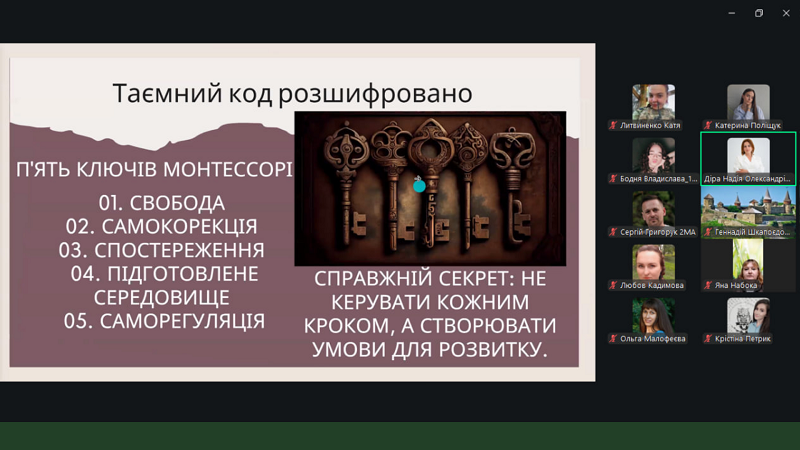
У фіналі цього динамічного заняття таємний код було успішно розшифровано. Учасники виокремили п’ять ключових принципів системи: свобода, самокорекція, спостереження, підготовлене середовище та саморегуляція. Головний підсумок, який здобувачі освіти та педагоги винесли з лекції, підкреслює гуманістичну суть методики: справжня майстерність виховання полягає не в керуванні кожним кроком дитини, а у створенні сприятливих умов для її гармонійного розвитку.
Світ змінюється стрімко, а ми генеруємо нові сенси разом із ним. Попереду ще більше інновацій, дискусій та креативних рішень — до зустрічі на нових івентах кафедри педагогіки!
Кафедра педагогіки ФППОМ
A Pedagogical Mystery at the Department of Pedagogy: How Students and Lecturers at BSPU Deciphered the Secret Montessori Code
Can serious science be combined with a thrilling investigation? Absolutely! On October 21, the Department of Pedagogy at the Faculty of Psychological and Pedagogical Education and Arts hosted a fascinating interactive lecture in the format of a true detective story — “The Secret Code of Montessori”. The event’s speaker, PhD and Associate Professor of the Department of Pedagogy Nadiya Dira, invited students and lecturers to step away from traditional formats and step into the shoes of investigators to collectively untangle global educational myths and facts.
The investigation kicked off with a discussion of a core dilemma: if a child naturally seeks freedom and is capable of independent learning, what is the teacher’s true role in this process? Event participants went through a series of virtual “interrogations” and logical experiments, working under time limits to brainstorm and test their own hypotheses. The attendees actively shared their professional associations in the chat and debated the difference between true conscious discipline and mere formal compliance.
During the meeting, special focus was placed on the professional journey of Maria Montessori — an outstanding physician and researcher who fundamentally transformed classical approaches to education. By analyzing her methodology, the participants reached a crucial conclusion: a modern teacher is neither an authoritarian manager nor a passive observer who lets a child do whatever they please. First and foremost, they are professionals capable of deeply analyzing the root causes of a child’s behavior and, instead of resorting to coercion, skillfully offering them a constructive, meaningful choice.
In the finale of this dynamic session, the secret code was successfully deciphered. Participants highlighted the system’s five key principles: freedom, self-correction, observation, a prepared environment, and self-regulation. The main takeaway for the students and educators underscores the humanistic essence of the methodology: true mastery in education lies not in micromanaging every step a child takes, but in creating favorable conditions for their harmonious development.
The world is changing rapidly, and we are generating new meanings alongside it. More innovations, discussions, and creative solutions are still ahead — see you at the upcoming events of the Department of Pedagogy!
Department of Pedagogy, FPPOM
