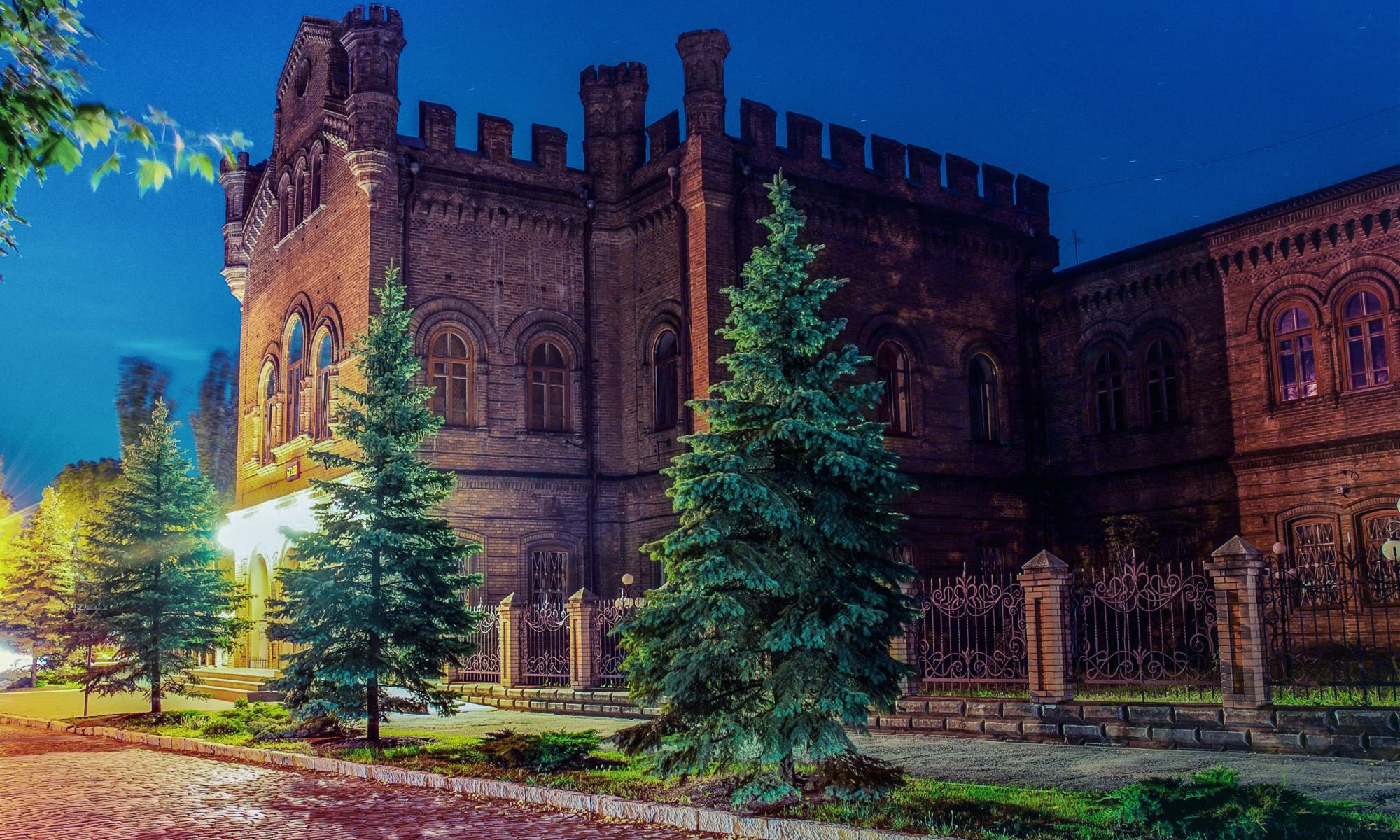
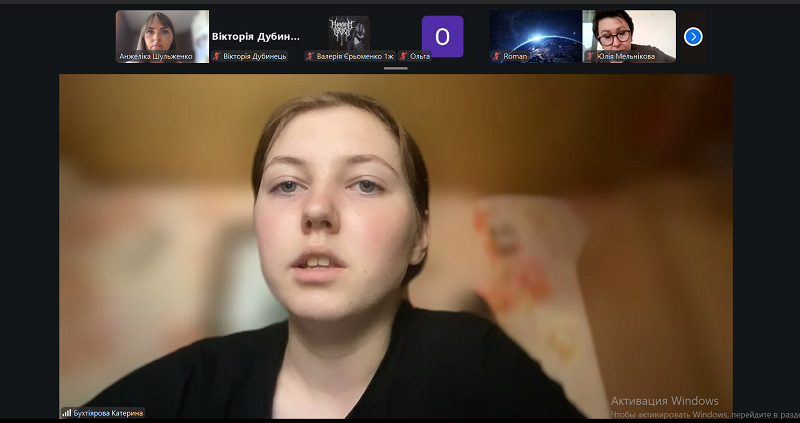
12 травня 2026 року кафедра української мови та журналістики соціально-гуманітарного факультету долучилася до загальноуніверситетських Днів науки, що стартували напередодні. Урочисте засідання студентської секції стало майданчиком для дискусій майбутніх фахівців, які шукали інтелектуальні шляхи розв’язання найскладніших запитів сучасності.
Модераторкою кафедрального заходу виступила кандидатка філологічних наук, доцентка Анжеліка Шульженко. Звертаючись до молодих дослідників, вона наголосила на особливій місії гуманітаріїв у часи війни: «Сьогодні ми відкриваємо простір для інтелектуального маневру. В часи, коли слово стало потужною зброєю, наука для вас – це спосіб дешифрувати світ, який намагається нас заплутати. Ваші дослідження – це фундамент для інтелектуальної деокупації та культурного відродження завтра».
Робота секції охопила широке коло актуальних тем, розділених за двома ключовими векторами:
Журналістика та медіакомунікації
Під керівництвом викладачів кафедри (Романа Костромицького, Юлії Мельнікової, Кристини Пирогової, Наталії Рули та Анжеліки Шульженко) студенти представили аналіз сучасного інформаційного поля.
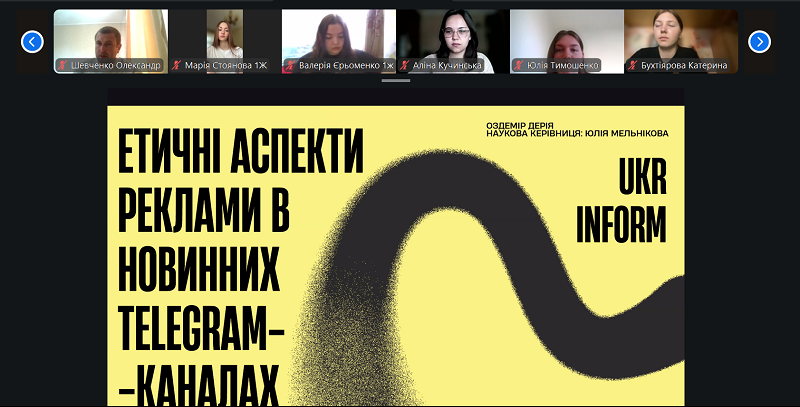
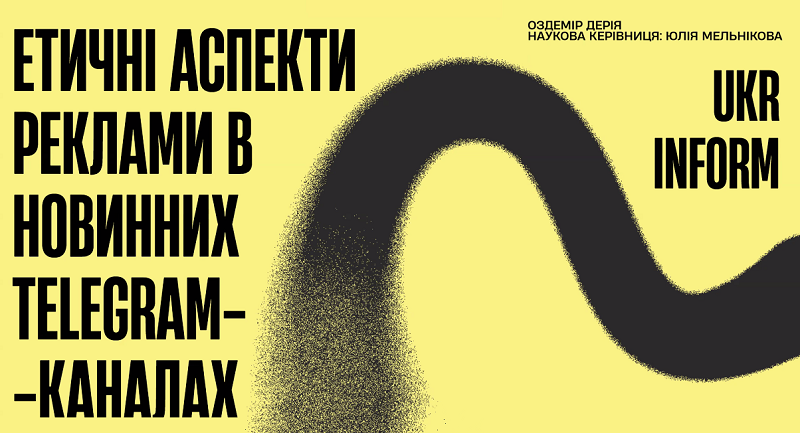
Особливу увагу учасники приділили питанням інформаційної безпеки, що є критично важливою в сучасних умовах. Зокрема, Олександр Камінський презентував аналіз маніпулятивних заголовків, а Марія Стоянова окреслила тонку межу між об’єктивним інформуванням та клікбейтом в онлайн-медіа. Етичні аспекти рекламного контенту в популярних Telegram-каналах стали об’єктом дослідження Дерії Оздемір.
Важливою частиною дискусії стали медіатрансформації, зумовлені повномасштабною війною. Данило Пейчев простежив еволюцію розважального телебачення після 24 лютого 2022 року, а Валерія Єрьоменко проаналізувала, як світові агенції, зокрема Reuters, транслюють офіційну позицію України на міжнародну аудиторію. Поряд із цим молоді науковці розглянули роль TikTok як майданчика для неформальної освіти (Єлизавета Пугач).
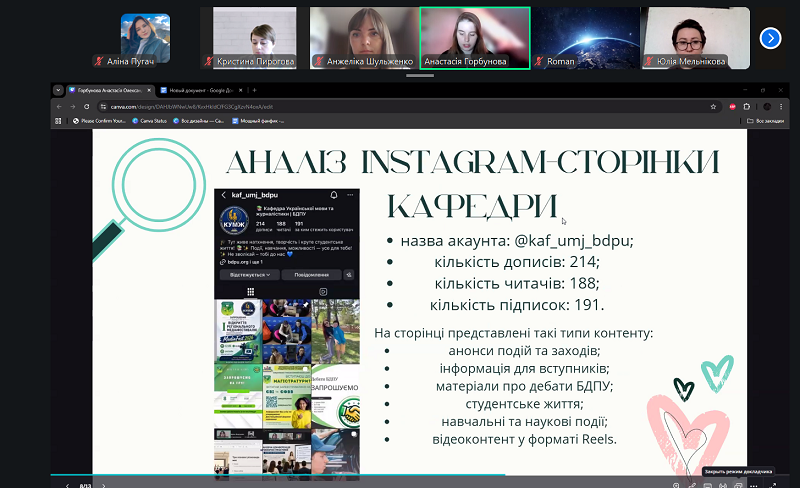
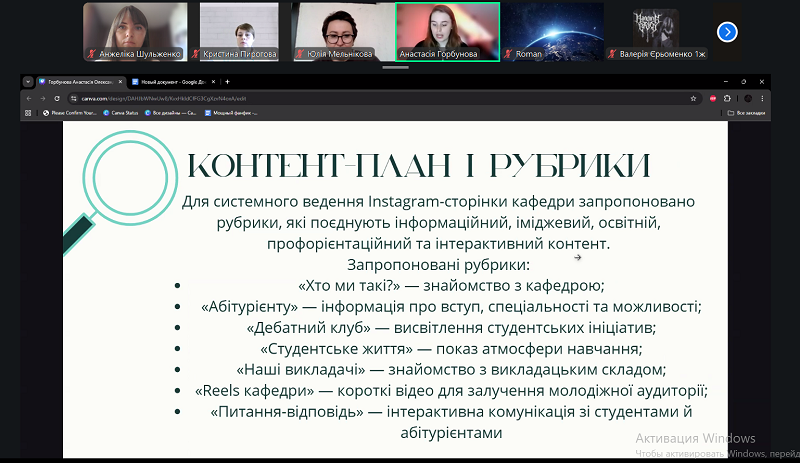
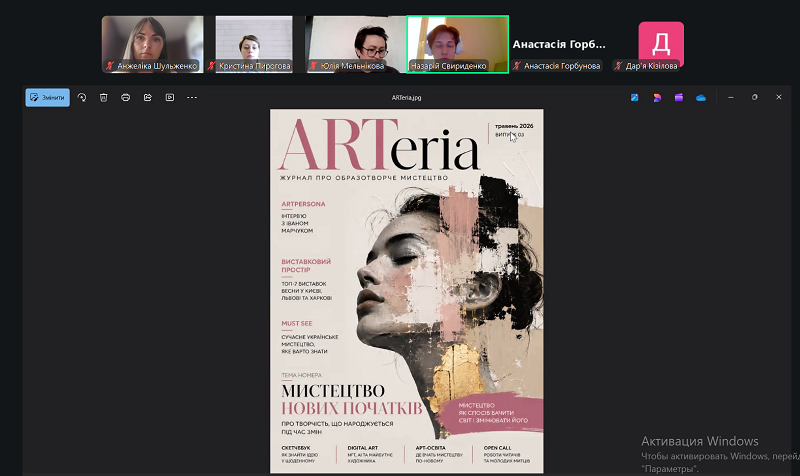
Секція також охопила сучасні комунікаційні стратегії та інструменти впливу. Анастасія Горбунова запропонувала ефективні методи просування закладів вищої освіти в соціальних мережах, а Альона Кутєпова розкрила потенціал мем-культури як дієвого засобу PR-комунікації з молодіжною аудиторією.
Філологія та лінгвістичний аналіз
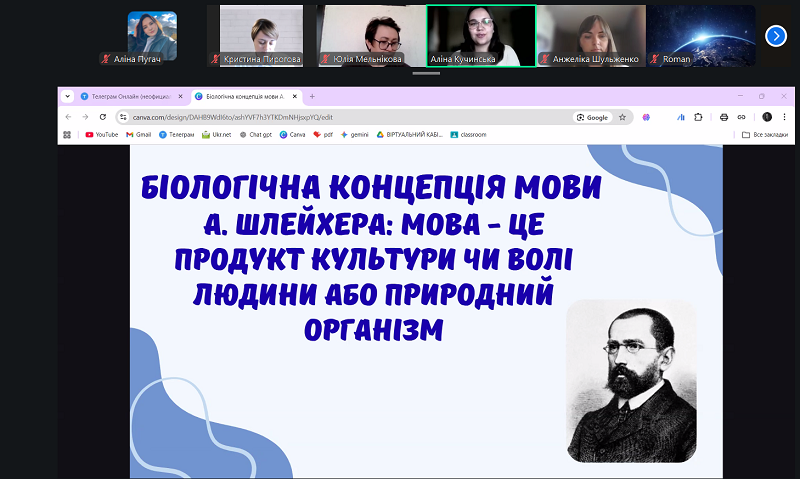
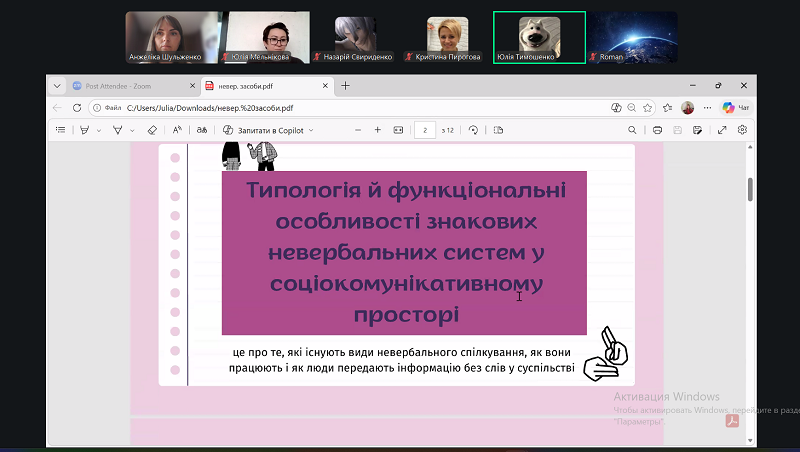
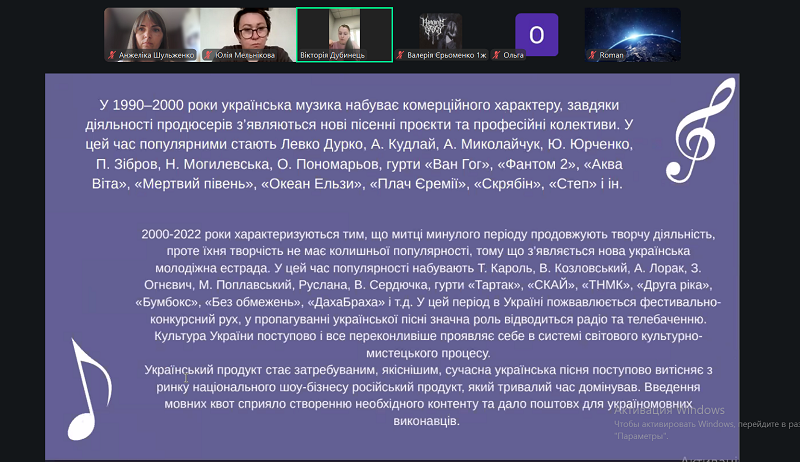
Науковий пошук філологів (під кураторством кандидатів філологічних наук, доцентів Ольги Сопіної та Валентини Юносової) зосередився на мовній картині світу: досліджувалися емоційні стани в романі І. Павлюка (Оксана Білопольська) та сучасній українській пісні (Вікторія Дубінець). Окрему увагу приділили невербальній комунікації (Дар’я Кізілова, Юлія Тимошенко) та демінутивам у фольклорі (Анастасія Харченко).
Західпродемонстрував не лише високий рівень підготовки студентів, а й став живою платформою для дискусій. Здобувачі вищої освіти довели, що здатні не лише споживати інформацію, а й критично її осмислювати, вибудовуючи стратегії просування брендів, етичного використання ШІ та протидії пропаганді.
Вітаємо учасників із вдалим стартом наукового марафону! Нехай ваші слова завжди знаходять свою аудиторію, а думка залишається вільною.
Кутєпова Альона, Пугач Аліна,
здобувачки вищої освіти спеціальності 061 Журналістика
Intellectual de-occupation and the word as a weapon: Science Days launched at the Department of Ukrainian Language and Journalism
On May 12, 2026, the Department of Ukrainian Language and Journalism of the Faculty of Social and Humanities joined the university-wide Science Days, which started the day before. The solemn meeting of the student section became a platform for discussions of future specialists who were looking for intellectual ways to solve the most complex questions of our time.
The moderator of the departmental event was the candidate of philological sciences, associate professor Anzhelika Shulzhenko. Addressing the young researchers, she emphasized the special mission of the humanities in times of war: “Today we are opening up space for intellectual maneuver. In times when the word has become a powerful weapon, science for you is a way to decipher the world that is trying to confuse us. Your research is the foundation for intellectual de-occupation and cultural revival tomorrow”.
The work of the section covered a wide range of topical topics, divided into two key vectors:
Journalism and media communications
Under the guidance of the department’s lecturers (Roman Kostromytskiy, Yulia Melnikova, Krystina Pyrogovova, Natalia RULA and Anzhelika Shulzhenko), students presented an analysis of the modern information field.
The participants paid special attention to the issues of information security, which is critically important in modern conditions. In particular, Oleksandr Kaminskiy presented an analysis of manipulative headlines, and Maria Stoyanova outlined the fine line between objective information and clickbait in online media. The ethical aspects of advertising content in popular Telegram channels became the object of research by Deriya Ozdemir.
An important part of the discussion was media transformations caused by a full-scale war. Danylo Peychev traced the evolution of entertainment television after February 24, 2022, and Valeria Yereomenko analyzed how world agencies, in particular Reuters, broadcast the official position of Ukraine to an international audience. Along with this, young scientists considered the role of TikTok as a platform for informal education (Elizaveta Pugach).
The section also covered modern communication strategies and tools of influence. Anastasia Gorbunova proposed effective methods for promoting higher education institutions on social networks, and Alyona Kutyepova revealed the potential of meme culture as an effective means of PR communication with a youth audience.
Philology and linguistic analysis
The scientific search of philologists (under the supervision of candidates of philological sciences, associate professors Olga Sopina and Valentyna Yunosova) focused on the linguistic picture of the world: emotional states in the novel by I. Pavlyuk (Oksana Bilopolska) and modern Ukrainian song (Viktoria Dubinets) were studied. Special attention was paid to non-verbal communication (Daria Kizilova, Yulia Tymoshenko) and diminutives in folklore (Anastasia Kharchenko).
The event demonstrated not only the high level of students’ preparation, but also became a lively platform for discussions. Higher education students proved that they are able not only to consume information, but also to critically interpret it, building strategies for promoting brands, ethical use of AI, and countering propaganda.
Congratulations to the participants on a successful start of the scientific marathon! May your words always find their audience, and your thoughts remain free.
Kutyepova Alyona, Pugach Alina,
graduate students of the specialty 061 Journalism
