
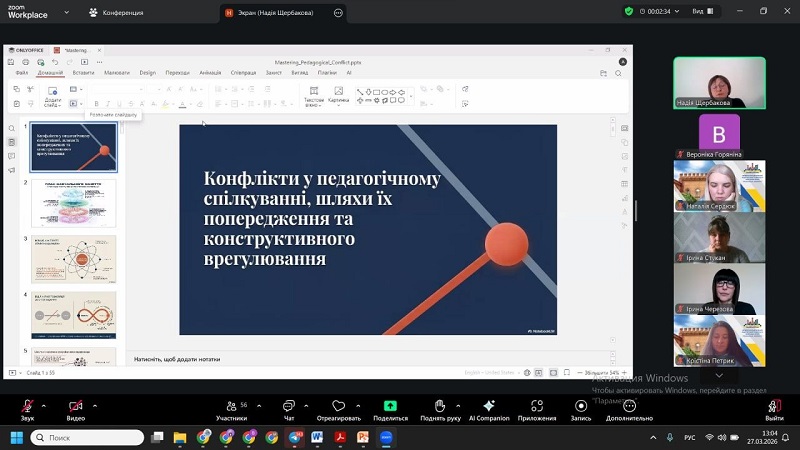
27 березня відбулася загальноуніверситетська відкрита лекція кандидатки педагогічних наук, доцентки кафедри педагогіки факультету психолого-педагогічної освіти та мистецтв Бердянського державного педагогічного університету Надії Щербакової на тему «Конфлікти у педагогічному спілкуванні, шляхи їх попередження та конструктивного врегулювання».
Захід став професійним майданчиком для переосмислення ролі вчителя – від традиційного контролю до сучасного партнерства та медіації. Лекторка наголосила, що в сучасній освіті змінюється підхід до педагогічної взаємодії – від моделі, де вчитель контролює і транслює, до моделі, де і вчитель, і учень є рівноцінними учасниками освітнього процесу. Спілкування в такому розумінні стає зустріччю двох суб’єктів із власними потребами та емоційним досвідом.
Центральна думка лекції: конфлікт у класі закономірна частина живого освітнього середовища. Викладачка розкрила природу педагогічного конфлікту, його структуру й динаміку, а також провела важливе розмежування між конфліктом і булінгом – явищами, які потребують принципово різних стратегій реагування.
Особливий інтерес аудиторії викликав розбір структури конфлікту через метафору айсберга. Лекторка пояснила, що те, що ми бачимо на уроці (агресія, ігнорування, порушення дисципліни) – це лише 10 % проблеми. Решта 90 % заховані «під водою»: це незадоволені потреби дитини у безпеці, самоствердженні або повазі до її гідності.
Лекція мала чітке прикладне спрямування. Надія Щербакова розглянула конкретні стратегії роботи зі складними ситуаціями: від створення спільних правил класу і зчитування емоційного стану учнів на початку уроку до техніки «я-повідомлень», яка дозволяє говорити про власні почуття, не провокуючи захисну реакцію, і ролі вчителя як медіатора – людини, яка не виносить вердикт, а створює простір для діалогу.
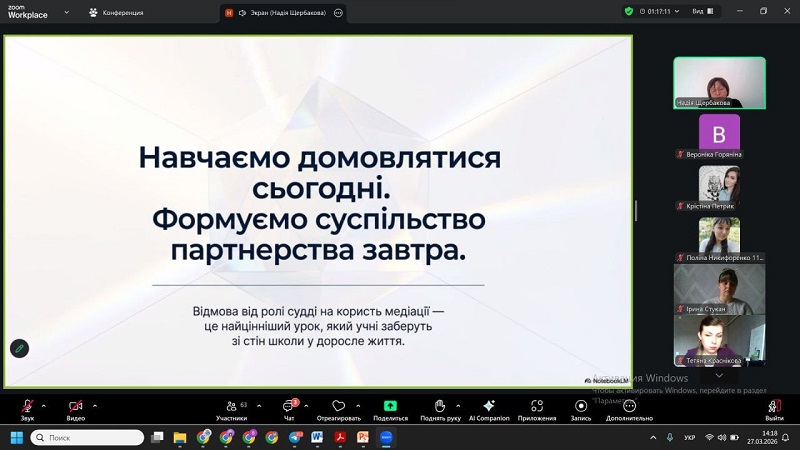
Завершуючи лекцію, викладачка нагадала, що здобувачі освіти можуть забути формули чи дати, але вони назавжди запам’ятають, як вчитель повів себе у момент кризи. Саме вмінню почути й знайти спільну мову навіть у напружених ситуаціях і вчить сучасна педагогіка.
За матеріалами кафедри педагогіки
Conflict as a Resource: A University-Wide Lecture on Pedagogical Interaction
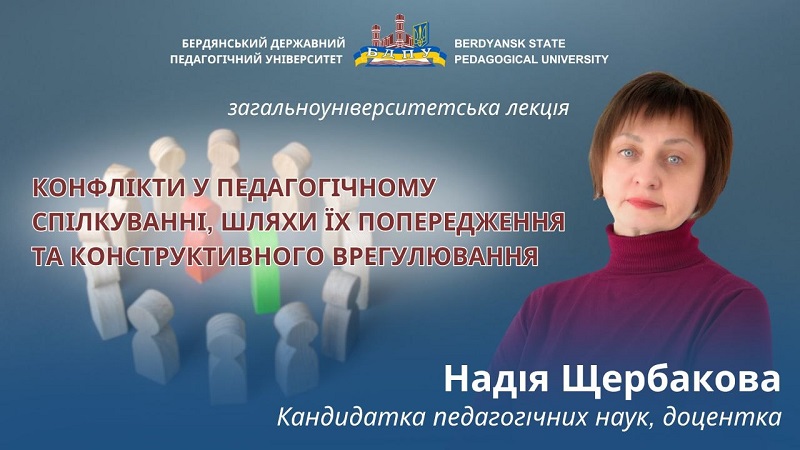
On March 27, an open university-wide lecture was held by Candidate of Pedagogical Sciences, Associate Professor of the Department of Pedagogy at the Faculty of Psychological and Pedagogical Education and Arts of Berdyansk State Pedagogical University, Nadiia Shcherbakova. The lecture was titled “Conflicts in Pedagogical Communication: Ways of Prevention and Constructive Resolution.”
The event became a professional platform for rethinking the role of the teacher – from traditional control to modern partnership and mediation. The lecturer emphasized that contemporary education is undergoing a shift in approaches to pedagogical interaction: from a model in which the teacher controls and transmits knowledge to one in which both teacher and student are equal participants in the educational process. In this perspective, communication becomes a meeting of two individuals, each with their own needs and emotional experiences.
The central idea of the lecture was that conflict in the classroom is a natural part of a dynamic educational environment. The speaker explored the nature of pedagogical conflict, its structure and dynamics, and also made an important distinction between conflict and bullying – phenomena that require fundamentally different response strategies.
Particular interest among the audience was sparked by the explanation of conflict structure through the iceberg metaphor. The lecturer explained that what we observe during a lesson (aggression, ignoring, disciplinary violations) constitutes only 10 % of the problem. The remaining 90 % lies “beneath the surface”: these are unmet needs of the child, such as the need for safety, self-affirmation, or respect for their dignity.
The lecture had a strong practical focus. Nadiia Shcherbakova examined specific strategies for dealing with challenging situations: from establishing shared classroom rules and assessing students’ emotional states at the beginning of a lesson, to the use of “I-messages,” which allow individuals to express their feelings without provoking a defensive reaction, and the role of the teacher as a mediator – a person who does not deliver a verdict but creates space for dialogue.
In concluding the lecture, the speaker reminded the audience that students may forget formulas or dates, but they will always remember how a teacher behaved in moments of crisis. It is precisely the ability to listen and find common ground even in tense situations that modern pedagogy seeks to cultivate.
Based on materials from the Department of Pedagogy
