
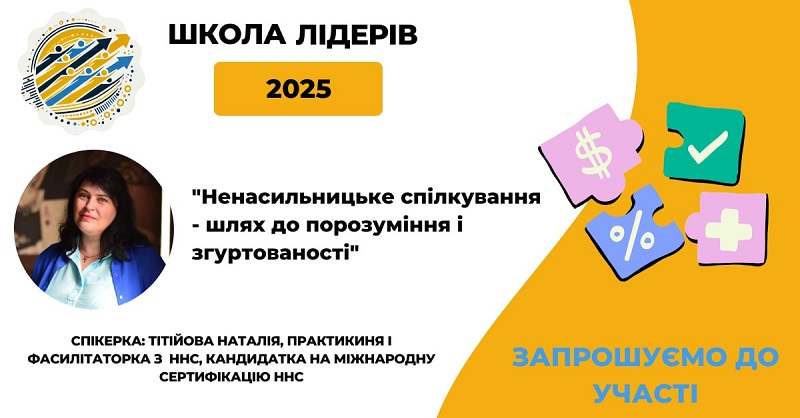
Навчальний семестр добігає завершення, а отже саме час згадати події, які залишили помітний слід в університетському житті. Однією з таких ініціатив став захід «Ненасильницьке спілкування – шлях до порозуміння і згуртованості», організований Школою лідерства БДПУ спільно з кафедрою соціальної роботи та інклюзивної освіти в межах Всеукраїнської акції «16 днів проти насильства».
Спікеркою заходу виступила Наталія Тітійова – практикиня і фасилітаторка з ненасильницького спілкування (ННС), кандидатка на міжнародну сертифікацію з ННС, членкиня ради роботодавців кафедри соціальної роботи та інклюзивної освіти.
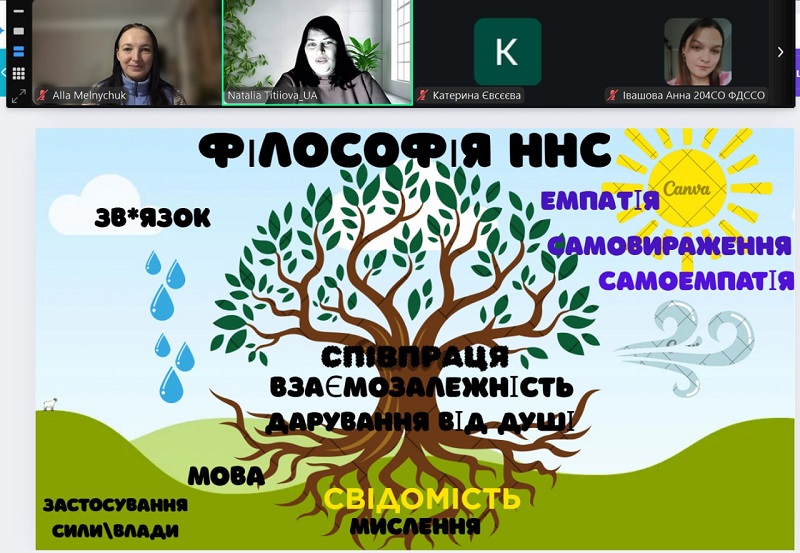
Під час зустрічі учасники та учасниці ознайомилися з історією виникнення методики ненасильницького спілкування та її значенням у сучасному суспільстві. Особливу увагу було приділено поняттям емпатії та співпереживання як ключовим складовим ефективної та безпечної комунікації.
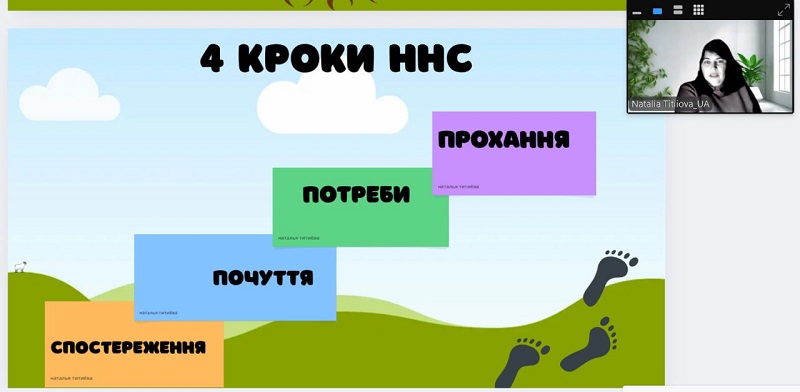
У форматі живого обговорення було розглянуто основні кроки впровадження ННС у повсякденне життя й професійну діяльність. Учасники говорили про важливість усвідомлення власних почуттів і потреб, уміння висловлювати їх без звинувачень та слухати інших із повагою до їхнього досвіду.
Помітним результатом заходу стала зацікавленість студентів у подальшому розвитку навичок ненасильницького спілкування, а також у можливостях навчання для тих, хто прагне працювати тренерами з ННС у майбутньому.
Захід відбувся в рамках освітньої компоненти «Інноваційні моделі надання соціальних послуг», Освітньо-професійна програма: Поствоєнна соціально-психологічна реабілітація та на виконання Цілей сталого розвитку. ЦСР 4: Якісна освіта, ЦСР 10: Скорочення нерівності, ЦСР 16: Мир, справедливість та сильні інституції.
Такі події не лише підсумовують семестр, а й нагадують: саме через діалог, емпатію та взаєморозуміння формується сильна й згуртована університетська спільнота.
За матеріалами Алли Мельничук
асистентки кафедри соціальної роботи та інклюзивної освіти,
кураторки Школи лідерства
Nonviolent communication – a path to understanding and cohesion
As the academic semester comes to an end, it is a good moment to reflect on events that have left a meaningful mark on university life. One such initiative was the event “Nonviolent Communication – A Path to Understanding and Cohesion,” organized by the BSPU Leadership School in cooperation with the Department of Social Work and Inclusive Education within the framework of the nationwide campaign “16 Days Against Violence.”
The speaker of the event was Nataliia Titiova, a practitioner and facilitator of Nonviolent Communication (NVC), a candidate for international NVC certification, and a member of the Employers’ Council of the Department of Social Work and Inclusive Education.
During the meeting, participants became familiar with the history of the Nonviolent Communication methodology and its significance in contemporary society. Special attention was given to the concepts of empathy and compassion as key components of effective and safe communication.
Through open discussion, the main steps for implementing NVC in everyday life and professional practice were explored. Participants emphasized the importance of awareness of one’s own feelings and needs, the ability to express them without blame, and the skill of listening to others with respect for their experiences.
A notable outcome of the event was students’ growing interest in further developing nonviolent communication skills, as well as in learning opportunities for those who aspire to become NVC trainers in the future.
The event was held as part of the educational component “Innovative Models of Social Service Delivery” within the educational and professional program “Post-War Social and Psychological Rehabilitation,” and contributed to the implementation of the Sustainable Development Goals: SDG 4 – Quality Education, SDG 10 – Reduced Inequalities, SDG 16 – Peace, Justice and Strong Institutions.
Such events not only summarize the semester but also remind us that it is through dialogue, empathy, and mutual understanding that a strong and cohesive university community is formed.
Based on materials by Alla Melnychuk,
Assistant at the Department of Social Work and Inclusive Education,
Coordinator of the Leadership School
