
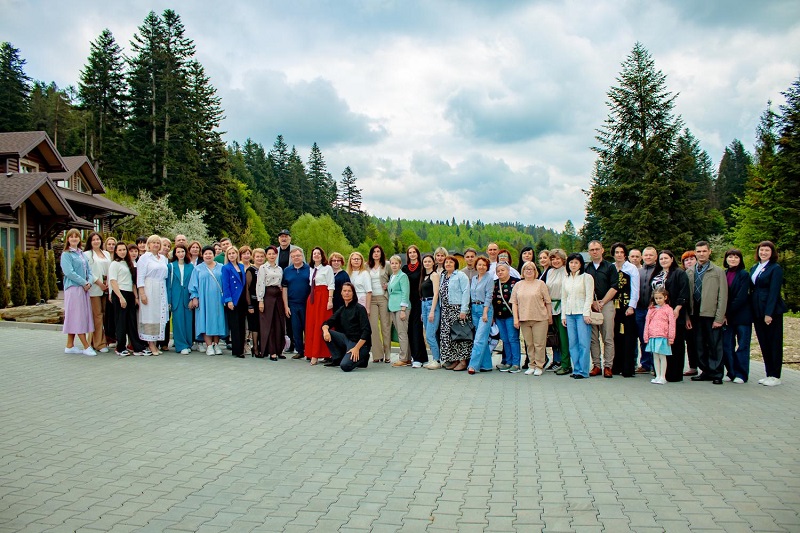
19 травня 2026 року в Східниці під час «Академічної резиденції 2026» у межах Фестивалю науки БДПУ, відбувся День міжнародної діяльності, у програмі якого було представлено доповідь про міжнародний проєкт ReACTпроєкт ReACT – Researchers’ Act: Training for Psychological Flexibility and Work-Related Stress Management.
Проєкт ReACT реалізується в межах програми Erasmus+ і спрямований на розробку веборієнтованої психоосвітньої програми для дослідників. Її мета – підтримати психологічну гнучкість, добробут і здатність дослідників ефективно справлятися з робочим стресом в умовах високої академічної конкуренції, невизначеності, дедлайнів і постійних професійних викликів.
Під час презентації було наголошено, що психічне здоров’я дослідників тривалий час залишалося недостатньо видимою темою в академічному середовищі. Університети часто говорять про наукову продуктивність, публікації, гранти, міжнародні партнерства та індекси цитування, однак значно рідше – про те, якою ціною ця продуктивність досягається.
Для української академічної спільноти ця проблема має особливий вимір. Війна, релокація університетів, вимушене переміщення викладачів і студентів, дистанційна робота, хронічна напруга та невизначеність роблять питання психічного здоров’я не абстрактною темою, а умовою збереження людей, університетів і наукового потенціалу країни.
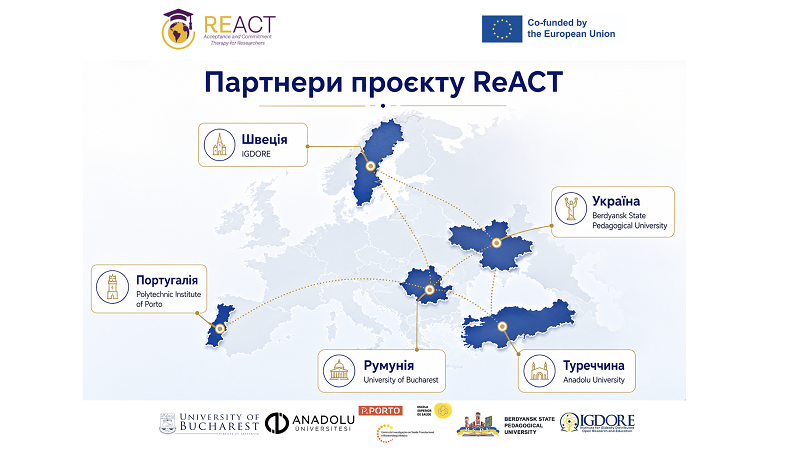
Окрему увагу було приділено партнерській логіці проєкту ReACT. Кожна організація-учасниця робить внесок відповідно до власної експертизи. Бухарестський університет (University of Bucharest) координує проєкт і забезпечує його психологічну та методологічну основу. Університет Анадолу (Anadolu University) відповідає за створення цифрової платформи. Політехнічний інститут Порту (Polytechnic Institute of Porto) посилює доказову й політичну складову проєкту, зокрема через аналіз наявних вебпрограм і розробку рекомендацій для університетів. Шведська організація IGDORE привносить перспективу відкритої науки, глобально розподіленої дослідницької спільноти та наукової комунікації.
Бeрдянський державний педагогічний університет у межах проєкту представляє український досвід академічної стійкості в умовах війни, релокації та роботи без фізичного кампусу. Участь БДПУ в ReACT є важливою не лише з погляду дослідження чи поширення результатів, а й як можливість представити українську перспективу того, як цифрові інструменти підтримки можуть бути життєво необхідними для академічної спільноти в кризових умовах.
Проєкт ReACT порушує питання не лише стрес-менеджменту, а й ширшої зміни академічної культури. Його ключова ідея полягає в тому, що турбота про себе не є приватною справою чи ознакою слабкості. Це частина відповідальної науки, адже сильна наука можлива лише там, де дослідники мають ресурс мислити, працювати, навчати, створювати нові знання й залишатися в професії.
Участь у проєкті ReACT демонструє, що міжнародна співпраця – це не лише мобільність, гранти та публікації. Це також можливість об’єднувати різні країни, досвіди й експертизи для створення більш людяного, підтримувального та стійкого академічного середовища.
За матеріалами
Наталі Цибуляк та Анастасії Попової
Цей матеріал підготовлено в межах проєкту ReACT (Researchers’ act: training for psychological flexibility and work–related stress management), що співфінансується Європейським Союзом за програмою Erasmus+ (KA220-HED). Висловлені думки та погляди є виключно відповідальністю авторів і не обов’язково відображають позицію Європейського Союзу чи Національного агентства.
ReACT: When Self-Care Becomes Part of Responsible Science
On May 19, 2026, in Skhidnytsia, during the “Academic Residence 2026” held as part of the BSPU Science Festival, the Day of International Activities took place, featuring a presentation on the international project ReACT – Researchers’ Act: Training for Psychological Flexibility and Work-Related Stress Management.
The ReACT project is implemented within the Erasmus+ programme and aims to develop a web-based psychoeducational programme for researchers. Its goal is to support psychological flexibility, well-being and researchers’ ability to cope effectively with work-related stress in conditions of high academic competition, uncertainty, deadlines and constant professional challenges.
During the presentation, it was emphasised that researchers’ mental health has long remained an insufficiently visible issue in the academic environment. Universities often speak about research productivity, publications, grants, international partnerships and citation indicators, but much less often about the cost at which this productivity is achieved.
For the Ukrainian academic community, this issue has a particular dimension. The war, university relocation, forced displacement of academic staff and students, remote work, chronic tension and uncertainty make mental health not an abstract topic, but a condition for preserving people, universities and the country’s scientific potential.
Special attention was paid to the partnership logic of the ReACT project. Each participating organisation contributes according to its own expertise. The University of Bucharest coordinates the project and provides its psychological and methodological foundation. Anadolu University is responsible for developing the digital platform. The Polytechnic Institute of Porto strengthens the evidence-based and policy-oriented components of the project, particularly through the analysis of existing web-based programmes and the development of recommendations for universities. IGDORE from Sweden brings the perspective of open science, a globally distributed research community and science communication.
Within the project, Berdyansk State Pedagogical University represents the Ukrainian experience of academic resilience in conditions of war, relocation and work without a physical campus. BSPU’s participation in ReACT is important not only in terms of research or dissemination of results, but also as an opportunity to present the Ukrainian perspective on how digital support tools can become vital for academic communities in crisis contexts.
The ReACT project addresses not only stress management, but also a broader transformation of academic culture. Its key idea is that self-care is not merely a private matter or a sign of weakness. It is part of responsible science, because strong science is possible only where researchers have the resources to think, work, teach, create new knowledge and remain in the profession.
Participation in the ReACT project demonstrates that international cooperation is not only about mobility, grants and publications. It is also an opportunity to bring together different countries, experiences and areas of expertise to create a more humane, supportive and resilient academic environment.
Based on materials
by Natalia Tsybuliak and Anastasiia Popova
This material was prepared within the framework of the ReACT project (Researchers’ act: training for psychological flexibility and work-related stress management), co-funded by the European Union under the Erasmus+ programme (KA220-HED). The views and opinions expressed are solely those of the authors and do not necessarily reflect the position of the European Union or the National Agency.
