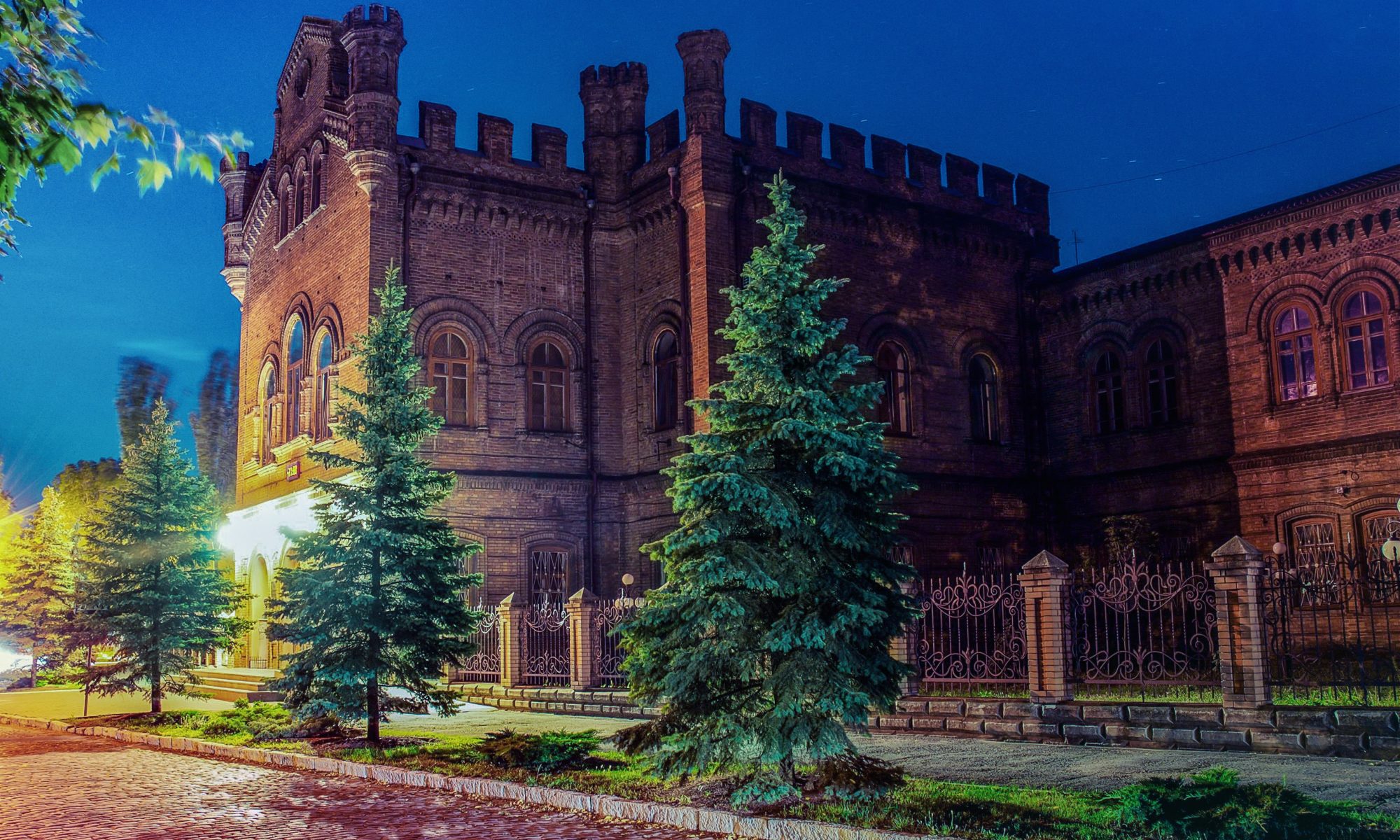
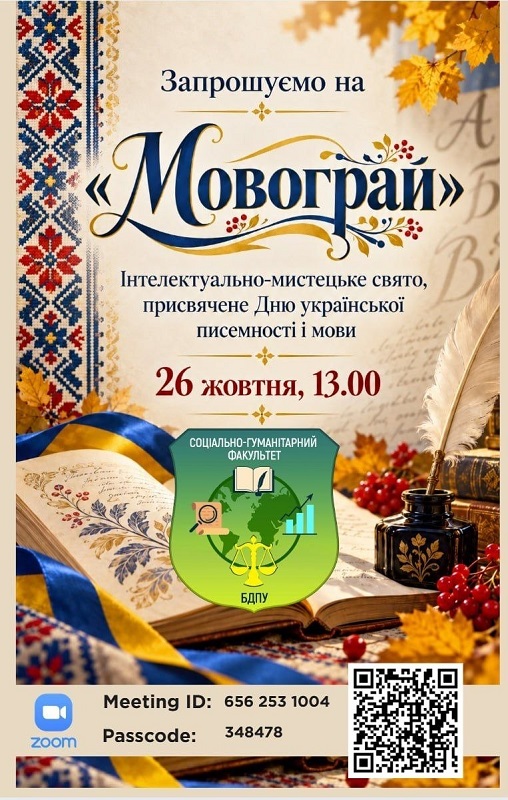
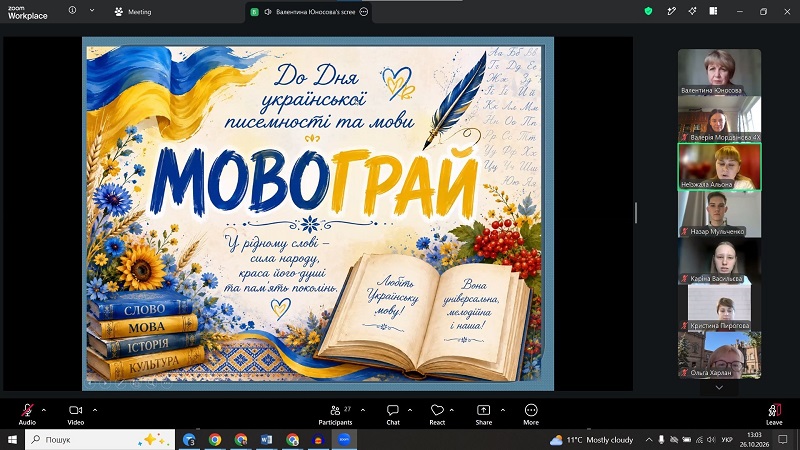
Цього понеділка кафедра української мови та журналістики провела інтелектуально-мистецьке свято «Мовограй», присвячене Дню української писемності та мови, який Україна відзначає щороку 27 жовтня.
Студенти-філологи 1-4 курсів: Бухтіярова Катерина, Васильєва Каріна, Мульченко Назар, Неїзжала Альона, Попкова Вікторія, Таранова Єлизавета, Тимошенко Юлія разом із Валентиною Юносовою кандидаткою філологічних наук, доценткою кафедри української мови та журналістики організували та провели захід.
Цей день нагадує нам про важливість рідного слова, про тих, хто зберігав його крізь століття, і про нашу відповідальність перед майбутніми поколіннями. Мова – найвірніший посланець з минулого в сьогодення, і з сьогодення в майбуття. Мова формує національний менталітет, національну культуру і духовність нації. І як доречно зазначила під час вступного слова завідувачка кафедри Пирогова Кристина: «…словом можна і вразити, словом можна і полікувати, але словом можна і засмутити…».
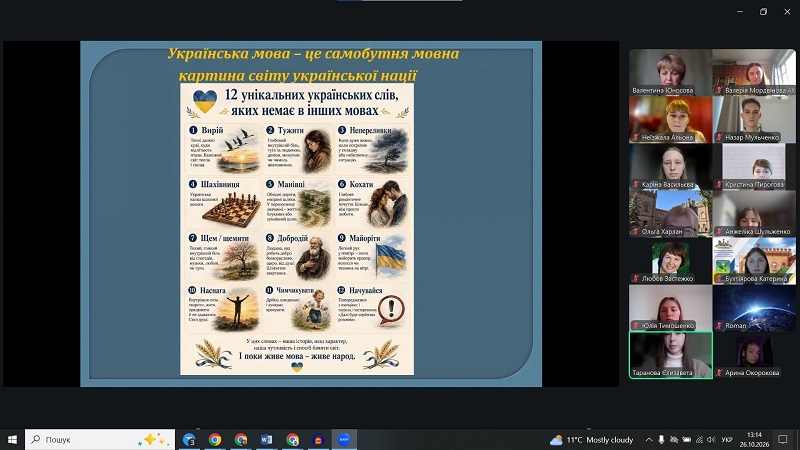
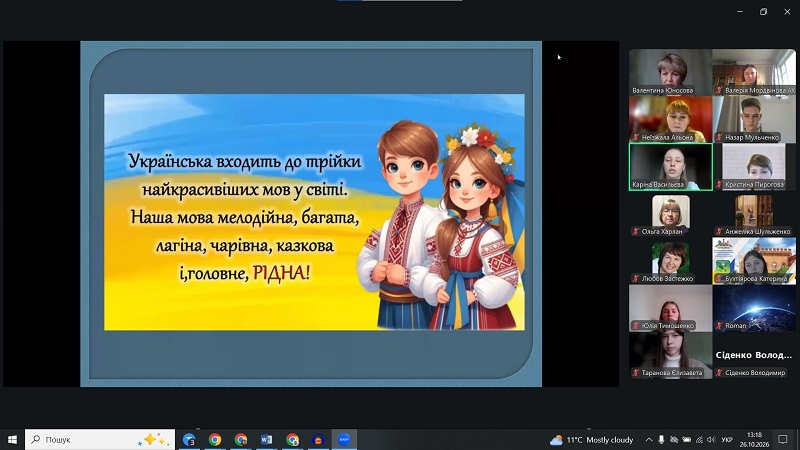
Українська мова в усі часи дивувала світ своєю красою, витонченістю, ніжною мелодикою, внутрішніми ресурсами виражальності й зображальності. Факт, що справді вражає: 1934 року на лінгвістичному конгресі в Парижі провідні фахівці світу визнали українську мову третьою з-поміж усіх мов за мелодійністю, лексичним і фразеологічним багатством, величезними словотвірними можливостями та синтаксичною гнучкістю. Ще більш дивуючим є те, що наша солов’їна має 12 унікальних слів, яких немає в інших мовах: вирій, тужити, непереливки, шахівниця, манівці, кохати, щемити, добродій, майоріти, наснага, чимчикувати, начувайся.
Спікери свята нагадали, що особливістю української мови є те, що вона багата на зменшувальні форми: «мамуся», «татусь», «сонечко» а також дієслівні форми: «їстоньки», «спатоньки». Це демонструє теплоту та емоційну прив’язаність, яка властива українському мовленню. Зменшувально-пестливу форму має, як не дивно, навіть слово «вороги» – «вороженьки».
Вагомий внесок у розвиток слов’янської писемності внесли просвітителі Кирило і Мефодій, розробивши першу впорядковану слов’янську абетку. А також, не можемо оминути вклад Нестора Літописця, адже дослідники вважають, що саме з нього і починається писемна українська мова!
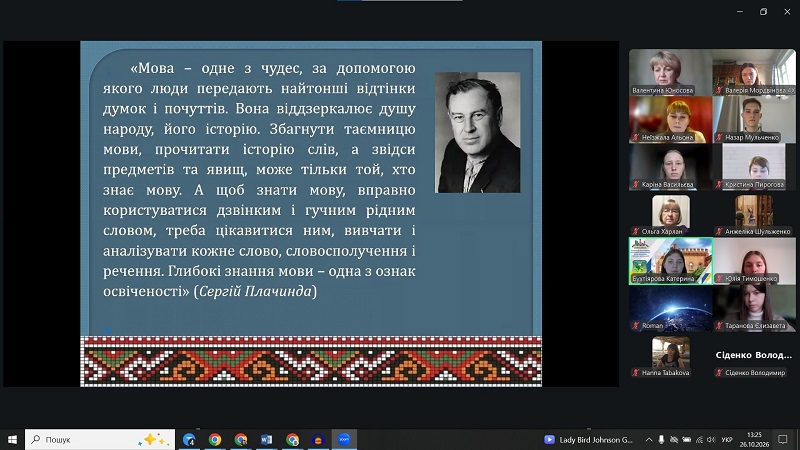
Завдяки студентам ми занурилися у рядки видатних українців про мову, які знайдуть відгук у кожному серці:
Найбiльше i найдорожче добро кожного народу – це його мова, та жива схованка людського духу, його багата скарбниця, в яку народ складає I своє давнє життя i своï сподiванки, розум, досвiд, почування (Панас Мирний).
Мова кожна – джерело творчої духовності. Якщо людина не вірить у повноцінність своєї мови, вона не вірить у свою власну повноцінність, так людина мусить вважати себе людиною другого сорту (Олесь Гончар).
Як нема без зірок небозводу,
Як блакиті без неба нема,
Так і мови нема без народу,
І народу без мови нема.
Для народу свойого велика
Кожна з мов, як творіння вінець,
Люд без мови – то глина безлика,
Без’язика отара овець
Володимир Забаштанський
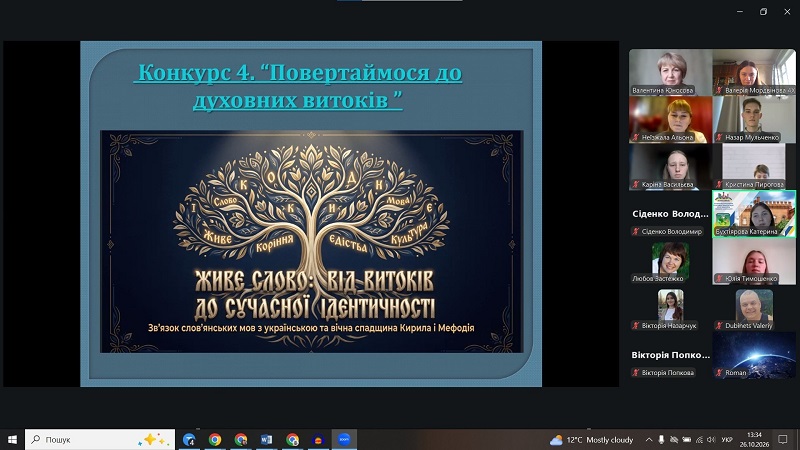
Усі, хто доєднався до заходу, мали змогу взяти участь у мовознавчій грі, яка складалася з 4 раундів. Учасники закінчували прислів’я, виправляли мовні помилки і недоречні слововживання, шукали українські відповідники іншомовним словам, а також поверталися до духовних витоків, дізнаючись значення питомих слів.
Окремою інтерактивною частиною стала вікторина «Чи знаємо ми українську?». Учасники відповідали на цікаві запитання, доводячи наскільки українське слово їм близьке!
Під час заходу було оголошено старт першого етапу Міжнародного конкурсу знавців української мови імені Петра Яцика, який має на меті утвердження державного статусу української мови, піднесення її престижу серед молоді та виховання поваги до культури й традицій українського народу. До участі запрошуються всі охочі. Про деталі буде повідомлено додатково, трохи згодом.
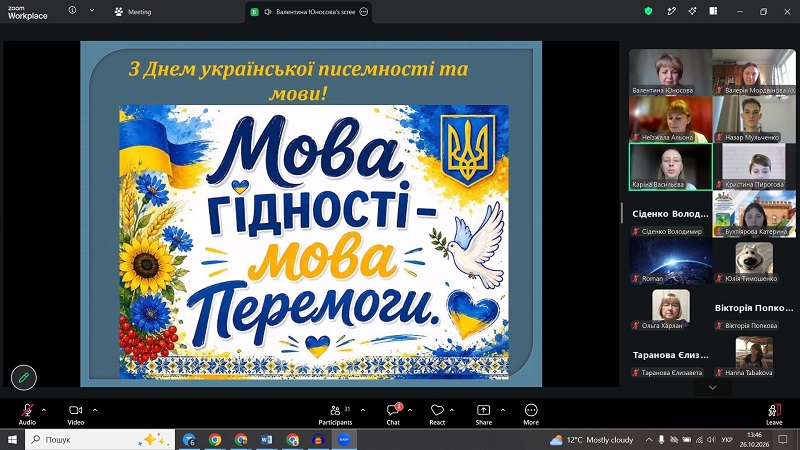
Наші юні філологи зробили цей день і це свято цікавим, інформативним та вкотре нагадали, що українська культура була, є і буде потужною рушійною силою народу! Любімо свою мову, шануймо її історію, плекаймо її красу й багатство! Щиро вітаємо кожного з Днем української писемності та мови!
Мордвінова Валерія, студентка 4Ж-з групи
“Language! You are the mirror of the soul, the country, and the nation!”
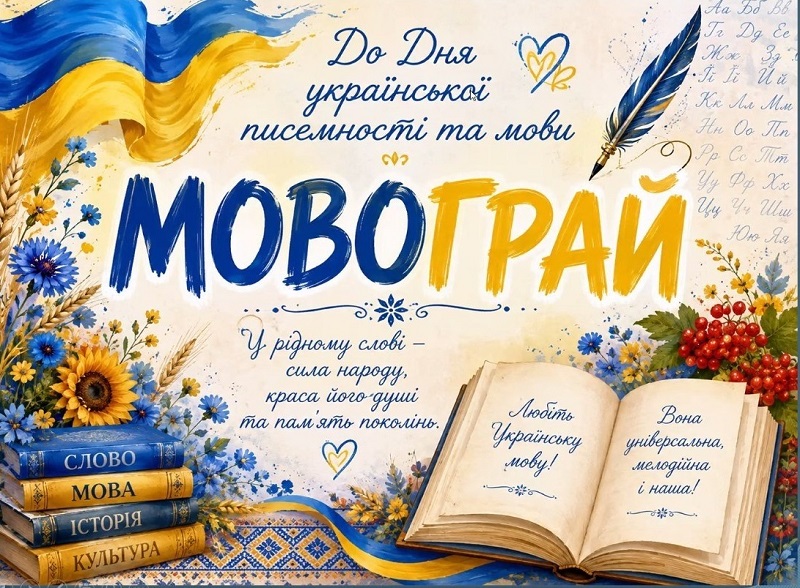
This Monday, the Department of the Ukrainian Language and Journalism hosted an intellectual and artistic celebration called “Movohrai” (Language Play), dedicated to the Day of Ukrainian Writing and Language, which Ukraine celebrates annually on October 27.
Philology students from the 1st to 4th years—Kateryna Bukhtiiarova, Karina Vasylieva, Nazar Mulchenko, Alona Neizzhala, Viktoriia Popkova, Yelyzaveta Taranova, and Yulia Tymoshenko—together with Valentyna Yunosova, PhD in Philological Sciences and Associate Professor of the Department of the Ukrainian Language and Journalism, organized and conducted the event.
This day reminds us of the importance of our native word, of those who preserved it through the centuries, and of our responsibility to future generations. Language is the most faithful messenger from the past to the present, and from the present to the future. Language shapes the national mentality, national culture, and the spirituality of a nation. As Krystyna Pyrohova, Head of the Department, aptly noted during her opening remarks: “…a word can strike, a word can heal, but a word can also sadden…”.
At all times, the Ukrainian language has amazed the world with its beauty, refinement, gentle melody, and rich internal resources for expression and imagery. A truly astonishing fact: in 1934, at a linguistic congress in Paris, the world’s leading experts recognized Ukrainian as the third most melodic language among all languages, praising its lexical and phraseological wealth, immense word-building capabilities, and syntactic flexibility. Even more fascinating is that our “nightingale language” possesses 12 unique words that have no direct equivalents in other languages: vyrii (a warm land where birds migrate), tuzhyty (to pine/grieve deeply), neperelyvky (being in a desperate plight), shakhivnytsia (chessboard), manivtsi (roundabout ways/byways), kokhaty (to love romantically), shchemyty (to ache stingingly), dobrodii (benefactor/gentleman), maiority (to flutter/loom in the distance), nasnaha (inspiration/vital energy), chymchukuvaty (to trudge/stroll along), and nachuvaisia (you’ve been warned/watch out).
The speakers of the celebration reminded the audience that a distinctive feature of the Ukrainian language is its abundance of diminutive forms, such as “mamusia” (mommy), “tatus” (daddy), “sonechko” (little sun), as well as diminutive verb forms like “istonky” (to eat daintily) and “spatonky” (to sleep cozily). This demonstrates the warmth and emotional attachment inherent in Ukrainian speech. Surprisingly, even the word “vorohy” (enemies) has a tender, diminutive form—”vorozhenky”.
A significant contribution to the development of Slavic writing was made by the enlighteners Cyril and Methodius, who developed the first organized Slavic alphabet. Furthermore, we cannot overlook the contribution of Nestor the Chronicler, as researchers believe that written Ukrainian originates precisely with him!
Thanks to the students, we immersed ourselves in the lines written about language by prominent Ukrainians, words that will resonate in every heart:
The greatest and most precious wealth of every nation is its language, that living hiding place of the human spirit, its rich treasury, into which the nation deposits both its ancient life and its hopes, wisdom, experience, and feelings (Panas Myrnyi).
Every language is a source of creative spirituality. If a person does not believe in the worthiness of their language, they do not believe in their own worthiness; thus, such a person must consider themselves second-rate (Oles Honchar).
Everyone who joined the event had the opportunity to participate in a linguistics game consisting of four rounds. The participants completed proverbs, corrected language errors and inappropriate word usage, searched for Ukrainian equivalents of foreign words, and returned to spiritual roots by discovering the meanings of native words.
A separate interactive part was the quiz “Do We Know Ukrainian?”. Participants answered engaging questions, proving just how close the Ukrainian word is to their hearts!
During the event, the start of the first stage of the Petro Jacyk International Ukrainian Language Competition was announced. The competition aims to assert the state status of the Ukrainian language, raise its prestige among the youth, and foster respect for the culture and traditions of the Ukrainian people. Everyone interested is invited to participate. Details will be announced additionally a bit later.
Our young philologists made this day and this celebration interesting, informative, and once again reminded us that Ukrainian culture has been, is, and will remain a powerful driving force of the nation! Let us love our language, honor its history, and cherish its beauty and richness! Sincere congratulations to everyone on the Day of Ukrainian Writing and Language!
Valeriia Mordvinova, 4th-year journalism student (part-time group 4Zh-z)
