
3 червня 2026 року для викладачів і здобувачів вищої освіти Бердянського державного педагогічного університету відбувся онлайн-воркшоп «Developing AI Use Cases for Higher Education» («Розроблення сценаріїв використання ШІ у вищій освіті»).
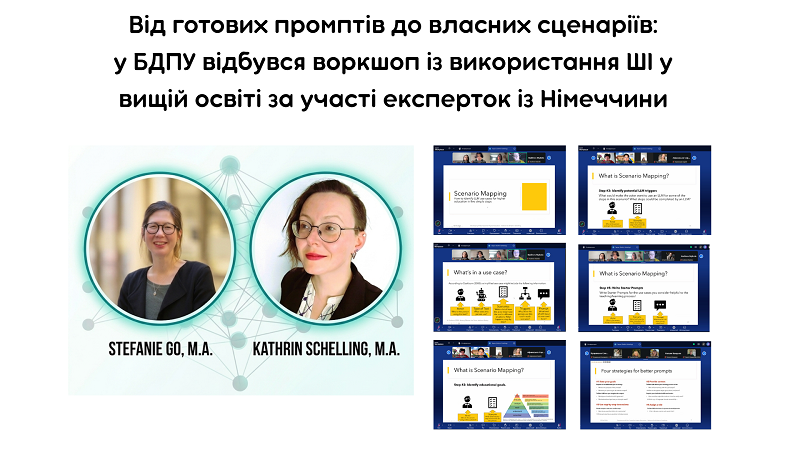
Воркшоп провели запрошені експертки з Німеччини Штефані Ґо та Катрін Шеллінг, які досліджують інтеграцію технологій на основі штучного інтелекту в освітній процес. Штефані Ґо – наукова співробітниця та викладачка Більфельдського університету. У межах свого PhD-проєкту вона вивчає, як студенти й викладачі можуть долучатися до створення та використання навчальних середовищ, посилених ШІ. Катрін Шеллінг –фриланс-копірайтерка, редакторка та PhD-дослідниця. Її проєкт присвячений потребам і очікуванням студентів та викладачів як користувачів освітніх технологій на основі ШІ.
Під час зустрічі учасники розглянули основні принципи роботи великих мовних моделей (LLM) та розглянули базові стратегії створення ефективних промптів: чітке визначення мети, надання контексту, поділ складного завдання на послідовні кроки та визначення ролі, яку має виконувати мовна модель. Окрему увагу приділили тому, чому універсальні добірки готових промптів не завжди відповідають реальним потребам викладачів і студентів. Різні освітні ситуації, дисципліни та навчальні цілі потребують власних сценаріїв використання ШІ.
Під час практичної частини учасники опановували методику Scenario Mapping – картування сценаріїв, яка передбачає п’ять кроків:
- описати навчальну ситуацію;
- визначити освітні цілі;
- з’ясувати, на яких етапах може бути корисним ШІ;
- проаналізувати можливі наслідки його використання;
- сформулювати початкові промпти для обраного сценарію.
Воркшоп став простором для обміну досвідом і формування навичок відповідального використання генеративного ШІ. Учасники обговорили, як застосовувати сучасні цифрові інструменти відповідально та цілеспрямовано – відповідно до педагогічних цілей і реальних потреб університетської спільноти.
За матеріалами
Анастасії Попової, Наталі Цибуляк та Артема Полуляхова
From Ready-Made Prompts to Custom AI Use Cases: BSPU Hosts a Workshop on AI in Higher Education
On 3 June 2026, an online workshop entitled “Developing AI Use Cases for Higher Education” was held for academic staff and students of Berdyansk State Pedagogical University.
The workshop was facilitated by invited experts from Germany, Stefanie Go and Kathrin Schelling, whose research focuses on the integration of artificial intelligence technologies into educational practice. Stefanie Go is a researcher and lecturer at Bielefeld University. Within her PhD project, she explores how students and educators can participate in the design and use of AI-enhanced learning environments. Kathrin Schelling is a freelance copywriter, editor, and PhD researcher whose work examines the needs and expectations of students and educators as users of AI-based educational technologies.
During the session, participants explored the fundamental principles of large language models (LLMs) and discussed key strategies for effective prompt design, including clearly defining objectives, providing context, breaking complex tasks into sequential steps, and assigning a specific role to the language model. Particular attention was given to the limitations of universal prompt collections and the reasons why they often fail to address the actual needs of educators and students. Different educational contexts, disciplines, and learning objectives require tailored AI use cases rather than generic solutions.
In the practical part of the workshop, participants worked with the Scenario Mapping methodology, which involves five steps:
- Describing a learning situation;
- Defining educational objectives;
- Identifying stages where AI can provide value;
- Analysing potential implications of AI use;
- Developing initial prompts for the selected scenario.
The workshop provided a platform for sharing experiences and developing competencies related to the responsible use of generative AI. Participants discussed how contemporary digital tools can be applied thoughtfully and purposefully in alignment with pedagogical goals and the real needs of the university community.
Based on materials prepared by
Anastasiia Popova, Nataliia Tsybuliak, and Artem Poluliakhov
